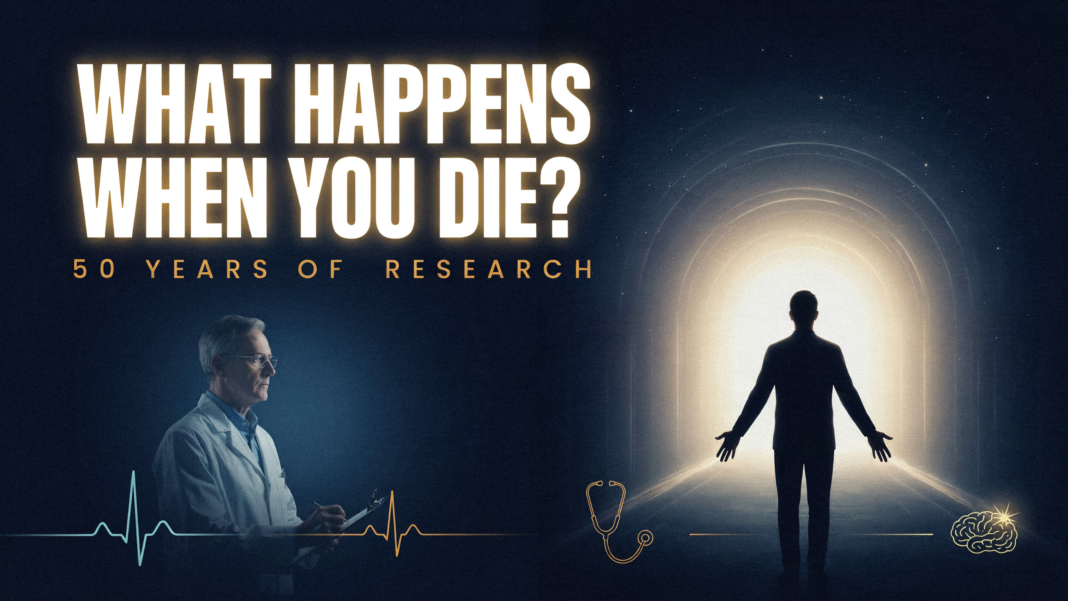
Near-death experiences offer evidence about how people experience medical crises, but they do not establish what happens after irreversible death. Memory, culture, and changes in brain function may shape these accounts. Their personal significance is clear; their implications for an afterlife remain uncertain. What Happens When You Die explores the research.
What Are Near-Death Experiences?
Near-death experiences (NDEs) are vivid, often memorable experiences reported by some people during a close brush with death or a life-threatening medical crisis. Defining NDEs requires distinguishing the experience itself from the medical circumstances surrounding it. Researchers generally use the term for a subjective event associated with perceived proximity to death, not proof that death occurred or that consciousness continued beyond the body.
NDE terminology varies across studies, and definitions may depend on clinical context, participant reports, or standardized questionnaires. Some researchers assess whether an account meets established criteria; others use broader descriptions. This variation can affect estimates of how often NDEs occur and comparisons between studies. Reports are collected retrospectively in many cases, so memory, expectations, cultural frameworks, and medical factors may influence how experiences are described. These influences do not make accounts insincere; they are relevant considerations when interpreting evidence. NDEs are studied in medicine, psychology, and neuroscience, while conclusions about their meaning remain debated and are not settled by reports alone.
What Do People Commonly Experience?
Accounts of near-death experiences vary, but recurring features include a sense of peace, altered time perception, movement through a tunnel, encounters with a light or deceased people, and an apparent separation from the body. Researchers identify these patterns across interviews and surveys, while noting that not every person reports them and that descriptions differ across cultures and individuals.
Commonly reported features include:
- Intense emotions: Feelings may range from calm and acceptance to fear or awe.
- Altered senses: Some describe vivid colors, sounds, or unusual clarity.
- Time changes: Moments may seem extended, compressed, or timeless.
- Encounters: Reports sometimes include deceased relatives, unfamiliar figures, or a bright presence.
- Out-of-body impressions: A person may feel located outside the physical body or observe events from another viewpoint.
These accounts are subjective reports, not proof of an afterlife. Their shared elements offer researchers a basis for comparison, while individual differences remain important. People describing such experiences are part of a broad, diverse group, and no single account represents everyone.
How Might the Brain Produce NDEs?
Researchers have proposed that changes in oxygen levels and brain chemistry during medical crises may contribute to near-death experiences (NDEs). Disruptions in neural activity could also alter perception, memory, and the sense of self. These mechanisms remain under study and do not establish a single explanation for NDEs.
Brain Chemistry and Oxygen
How might a brain under extreme stress generate experiences that feel vivid and otherworldly? During cardiac arrest or severe illness, oxygen deprivation and altered blood flow may disrupt the brain’s chemical balance. Researchers propose that neurotransmitter release and stress hormones could influence memory, emotion, and bodily sensations. These mechanisms remain difficult to study directly, so no single explanation accounts for every near-death experience.
Several factors may contribute:
- Low oxygen can impair normal cellular function.
- Carbon dioxide changes may affect blood acidity and brain chemistry.
- Stress hormones can intensify emotional responses.
- Endogenous chemicals may alter pain and fear.
- Medication, illness, and individual physiology can shape reported experiences.
These possibilities offer biological hypotheses, not proof that all NDEs arise from chemistry alone. People’s accounts vary, and their experiences deserve respectful consideration while evidence is evaluated carefully. Shared inquiry can help communities discuss them without dismissing personal meaning or overstating scientific conclusions.
Neural Activity and Perception
During a near-death experience, disrupted neural activity may alter how the brain integrates sensory signals, constructs a sense of self, and tracks time. Changes in sensory integration could help explain reports of vivid scenes, bodily separation, or unusual movement through time. The visual cortex and connected regions process imagery, so altered activity may contribute to tunnel-like perceptions or bright lights. Memory and attention networks may also shape which sensations become part of a coherent experience. Research has associated such reports with physiological stress and changes in brain function, but evidence does not establish a single neural cause. Experiences vary widely, and no account should be treated as universal. Studying these patterns can help researchers understand how the brain creates perception under extreme conditions while respecting the significance individuals attach to their experiences.
What Does Science Say About NDEs?
Scientific accounts of near-death experiences examine how brain activity, physiology, and psychological factors may produce reported sensations. Researchers assess these explanations using clinical observations and controlled studies. Findings remain limited by challenges in collecting data during life-threatening events and cannot establish whether NDEs provide evidence of an afterlife.
Scientific Explanations for NDEs
Near-death experiences are vivid reports from people who came close to death or believed they were dying, but their causes remain unsettled. Researchers investigate how brain and body changes may produce these accounts. Proposed explanations include:
- Reduced oxygen or altered carbon dioxide levels may affect perception and memory.
- REM sleep mechanisms intruding during wakefulness may contribute to paralysis, vivid imagery, or a sensed presence.
- Temporal lobe activity may help explain unusual sensations, memories, or feelings of presence.
- Changes in brain networks under stress may disrupt the integration of sensory information and self-awareness.
- Endorphins and other neurochemical shifts may influence pain, emotion, and recall.
These mechanisms offer testable possibilities, not a single established explanation. Reports can feel deeply meaningful to those who experience them, while scientific accounts focus on processes that may shape perception during extreme physiological stress. Researchers continue comparing reports with clinical observations and laboratory findings to better understand how such experiences arise.
Limits of NDE Research
Although research has identified physiological processes that may contribute to near-death experiences (NDEs), the evidence does not establish a single cause or determine whether consciousness can persist after death. Research limitations include small, selective samples, retrospective accounts, and inconsistent definitions. Sampling bias may favor survivors able and willing to describe vivid memories, while excluding people who died or could not be interviewed. These gaps prevent firm conclusions about how common particular experiences are or what they mean.
| Evidence offers | Evidence cannot yet show |
|---|---|
| Reports share recurring features | Every account has one cause |
| Brain changes may shape experience | Awareness survives death |
| Survivors’ stories deserve study | Any person’s account proves an afterlife |
Researchers can compare accounts, medical records, and brain measurements, but such methods cannot fully capture subjective experience during serious illness. For families and survivors, uncertainty does not invalidate personal meaning; it marks the boundary between testimony and scientific inference.
Why Do NDEs Differ Across Cultures?
Reports of near-death experiences (NDEs) share recurring features, such as a sense of peace or encounters with deceased people, but their specific imagery and interpretations often reflect cultural and religious expectations. Researchers suggest that memory, prior beliefs, and social context can shape how people describe unusual experiences. Cross-cultural studies find variation in figures, settings, and meanings, while some broad patterns appear across groups. These differences do not establish whether an experience reveals an afterlife; they show how people make sense of it.
Factors associated with cultural interpretations include:
- Religious expectations may influence which beings or destinations are recognized.
- Familiar stories and symbols can provide language for describing events.
- Family and community beliefs may shape later recollection and interpretation.
- Translation and interview methods can affect what researchers record.
- Shared human experiences may contribute to recurring themes across cultures.
Such variation is not evidence that one community’s account is more valid. Comparing reports carefully can help researchers distinguish common features from culturally specific explanations, while respecting the meanings people and their communities attach to these experiences.
Can NDEs Happen Without Being Near Death?
NDE-like experiences are reported outside episodes of imminent medical danger. They may occur during sleep, meditation, fainting, or other altered states of consciousness. These reports suggest that some features associated with NDEs can arise from triggers beyond medical crisis.
NDE-Like Experiences
Near-death-like experiences can occur without a life-threatening medical crisis. Researchers distinguish these reports from experiences during confirmed medical emergencies, while noting that some features overlap. People may describe vivid sensations, altered awareness, or a sense of separation from the body. Such reports are subjective and do not, by themselves, establish what happens after death.
Commonly reported features include:
- A sense of leaving the body
- Unusual clarity or vividness
- Distorted perception of time
- Encounters with meaningful figures
- A feeling of peace or unity
Studies rely largely on personal accounts, so definitions and sampling methods affect findings. NDE storytelling and shared narratives can help people feel understood, but cultural expectations may shape how experiences are described. Careful discussion respects individual accounts while distinguishing interpretation from evidence. Researchers continue to examine similarities without treating every unusual experience as proof of survival after death.
Triggers Beyond Medical Crisis
Similar experiences are reported outside confirmed medical emergencies, including during fainting, sleep paralysis, meditation, extreme stress, or drug use. Researchers distinguish these episodes from events involving documented cardiac arrest or other life-threatening conditions, while noting that their reported features may overlap. Fainting can briefly reduce blood flow to the brain, and sleep paralysis occurs during shifts between sleep and wakefulness; both can involve vivid perceptions or a sense of presence. Meditation and extreme stress may also alter attention, emotion, and bodily awareness. Certain drugs can produce changes in perception and self-experience, although effects vary by substance and person. These accounts show that NDE-like experiences do not always indicate that death was imminent. Their occurrence across different circumstances invites careful study and respectful discussion, without establishing what, if anything, they reveal about an afterlife.
How Do NDEs Change People’s Lives?
Although near-death experiences vary, studies report that they can be followed by lasting changes in people’s attitudes and behavior. Researchers have documented recurring shifts, though their degree and duration differ among individuals. Commonly reported changes include:
- Reduced fear of death, alongside greater acceptance of mortality.
- Increased appreciation for ordinary experiences and relationships.
- Relationship changes, such as stronger empathy or revised priorities with family and friends.
- Personal growth, including reflection on values, purpose, and life choices.
- Greater interest in spirituality, without a uniform change in religious beliefs.
These outcomes are not universal, and some people report difficulty adjusting, emotional distress, or feeling isolated when others dismiss their accounts. Supportive conversations can help individuals make sense of an experience without requiring others to share its interpretation. Studies generally rely on participants’ retrospective reports, so findings describe reported associations rather than proving that an NDE causes lasting change. Even so, accounts suggest that many people reassess how they spend time and connect with others, seeking a renewed sense of meaning and belonging.
What Can NDE Reports Tell Researchers?
What can reports of near-death experiences reveal to researchers? They provide accounts of perceptions and memories reported around life-threatening medical events. Researchers can examine recurring features, such as altered time perception, vivid imagery, or a sense of separation from the body, while also documenting differences among individuals. Such patterns help describe the experience without assuming that every report has the same cause or meaning.
Reliable findings depend on careful research methodologies. Studies may use structured interviews, validated questionnaires, medical records, and comparisons with people who faced similar crises but report no NDE. Researchers must consider memory changes, medication, oxygen levels, cultural expectations, and the timing of interviews. These factors can affect what participants recall and how accounts are interpreted.
Survivor demographics also matter. Age, health history, culture, and access to medical care may shape who is included in studies and how experiences are described. Diverse, well-documented samples can help researchers identify shared themes and meaningful variation, while recognizing that available reports cannot represent every person who undergoes a medical emergency.
Do NDEs Prove an Afterlife?
Do near-death experiences prove that consciousness continues after death? Current evidence does not establish that conclusion. NDEs are reported by people who survived life-threatening events, so their accounts cannot directly confirm what happens after irreversible death. Researchers consider psychological, neurological, and cultural explanations, while acknowledging that some reports remain difficult to interpret.
- Personal accounts: Vivid experiences are meaningful to those who report them but are not, by themselves, proof.
- Clinical context: Brain activity, medication, and bodily stress may contribute to experiences during crises.
- Verification: Claims of accurate perception require controlled, independently confirmed evidence.
- Research limits: Studies often rely on retrospective reports and small samples.
- Scientific conclusion: NDEs prompt questions about consciousness but do not settle them.
For people seeking shared understanding, careful discussion can respect individual experiences without treating belief as established fact. At present, NDEs do not provide conclusive afterlife evidence or demonstrate consciousness survival. Further research may clarify how these experiences arise, while the question of an afterlife remains unresolved.
What Can NDEs Tell Us About Death?
Near-death experiences can reveal how people interpret and remember crises, but they cannot establish what death itself is like. Reports of tunnels, light, or life reviews are experiences recalled by survivors, not observations made after irreversible death. Researchers study them through interviews and clinical records, while recognizing that memory, medication, oxygen deprivation, and cultural expectations may shape accounts.
| Finding | What it may indicate | What it cannot prove |
|---|---|---|
| Vivid imagery | Brain activity during crisis | Consciousness after death |
| Life review | Memory and meaning-making | A literal judgment |
| Peaceful feelings | Emotional response | A universal dying process |
| Lasting changes | Possible shifts in mortality awareness | An afterlife |
Such accounts can nevertheless inform conversations about fear, values, and care. Some survivors describe greater death acceptance, though responses vary and not every person reports an NDE. Shared discussion can help people feel less isolated while preserving uncertainty. Evidence supports studying these experiences as meaningful psychological events; it does not settle what, if anything, follows death.
—————————
Near-death experiences are vivid, meaningful reports arising around life-threatening crises, but their causes remain incompletely understood. Brain and bodily changes, memory, medication, and cultural expectations may shape what survivors recall. Research can clarify these experiences and their effects, yet retrospective accounts cannot establish what happens after irreversible death. For more, read What Happens When You Die. NDEs offer valuable evidence about human perception, memory, and responses to mortality—not scientific proof of an afterlife. People can respect their personal significance while keeping conclusions proportionate to the available evidence.