When outsiders pressure schools to improve academic performance, they often focus on mathematics, science, reading, and writing. These subjects are essential, and schools have good reasons to devote substantial time and resources to them. Yet the emphasis on measurable academic achievement can sometimes leave music, theater, and visual arts competing for whatever time remains.
That approach overlooks what artistic experiences can contribute to a student’s education. Learning an instrument, rehearsing a play, creating a painting, or producing a short film involves sustained effort, observation, experimentation, and the ability to turn an idea into something tangible. These activities also give students opportunities to develop interests and abilities that may be less visible in traditional academic settings.
At Oregon-based Delphian School, an independent K-12 school, the arts are treated as an important part of a well-rounded education. Students can participate in music, theater, ceramics, photography, digital art, and other creative pursuits alongside their academic coursework. The school’s programs reflect a broader argument for education: students benefit from opportunities to develop different kinds of abilities, including those that aren’t easily measured through conventional examinations.
Artistic Work Demands Serious Thinking
Creative activities are sometimes viewed as a break from more intellectually demanding subjects. That distinction doesn’t hold up particularly well when considering what students actually do during artistic work.
A student learning to play the piano must recognize patterns, coordinate physical movements, interpret musical notation, and develop the ability to hear and correct mistakes. A student designing a theater set needs to consider dimensions, materials, visual composition, and the practical requirements of a performance. Filmmaking involves planning, sequencing, communication, and countless decisions about how to present information visually.
Even activities that appear spontaneous usually depend on considerable preparation.
Consider a student creating a ceramic bowl. The process involves learning how clay behaves, developing control over tools and techniques, understanding how the piece will respond to firing, and making decisions about form and appearance. An unsuccessful attempt can reveal something about the material or technique that improves the next one.
These experiences combine creativity with disciplined practice. Students learn that producing something worthwhile often requires patience, attention to detail, and repeated adjustments.
Research Points to Benefits Beyond Artistic Ability
Research has also examined the value of arts education beyond whether students become better musicians, actors, or artists.
In a study published in the Journal of Policy Analysis and Management, researchers Daniel Bowen and Brian Kisida examined an arts education initiative involving 10,548 students in 42 elementary and middle schools in Houston, Texas. Schools were randomly assigned to receive additional arts education experiences through partnerships with local arts organizations and teaching artists.
The researchers found that increased access to arts education reduced disciplinary infractions by 3.6 percentage points, improved writing achievement by 0.13 standard deviations, and produced a small increase in students’ compassion for others. Among elementary school students, who represented most of the sample, the program also improved school engagement and college aspirations.
These findings don’t mean that taking an art class automatically improves performance in unrelated subjects. The results come from a particular initiative, and educational outcomes depend on the quality and structure of students’ experiences. Still, the study offers evidence that arts education can support aspects of student development beyond artistic technique.
Delphian School: The Arts Offer Different Ways to Communicate
Communication is often associated with speaking and writing, but people also communicate through images, movement, music, and performance.
A student performing in a play must consider how an audience will interpret words, expressions, gestures, and timing. A photographer chooses composition and perspective that shape what viewers notice. A musician learns how tempo, dynamics, and phrasing shape a piece’s emotional character.
These forms of expression require students to think carefully about the relationship between what they intend to communicate and what an audience actually experiences.
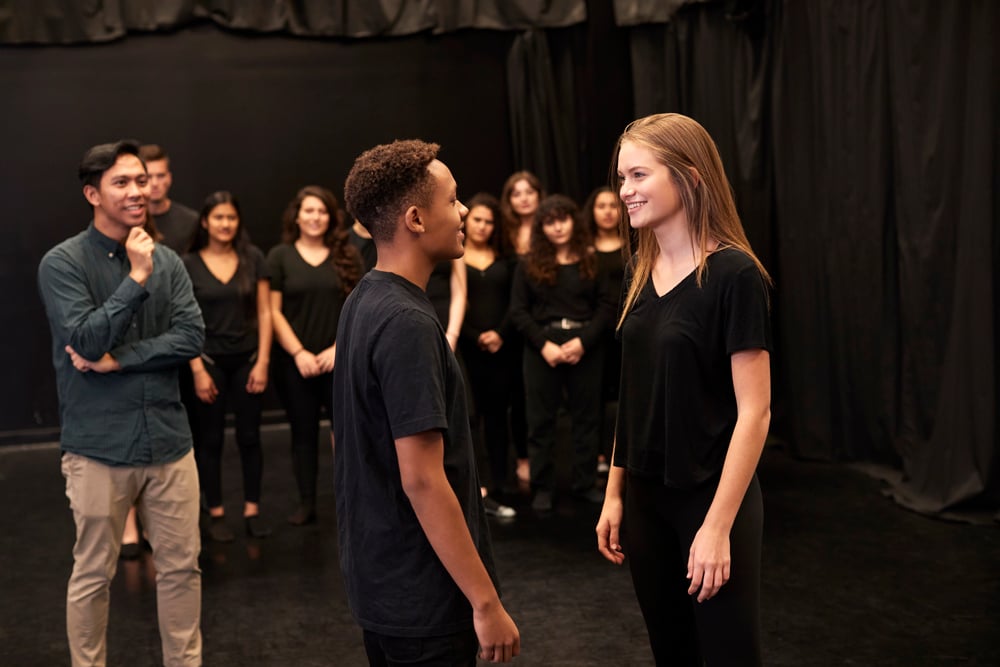
Theater offers a particularly clear example. A student may understand a character’s dialogue but still need to decide how to deliver it convincingly. Tone, pacing, movement, and interaction with other performers all affect the result.
Delphian School’s theater program includes opportunities for students to participate in acting, set design, choreography, costuming, music composition, and other aspects of production. The school has staged productions ranging from Shakespeare’s Twelfth Night and A Midsummer Night’s Dream to musicals such as Mamma Mia! and Guys and Dolls.
These productions let students see how artistic choices shape a finished performance.
Creative Work Makes Revision Visible
Students are frequently told that revision is an important part of learning. In artistic work, the need for revision is often immediately apparent.
A drawing may not capture the intended proportions. A musical passage may sound awkward. A scene may lack the pacing needed to hold an audience’s attention. A film sequence may fail to communicate what its creator intended.
Students can identify the problem, make changes, and observe the difference.
This process encourages a practical relationship with criticism. Feedback becomes information that can improve the work rather than simply a judgment about the person who created it.
A theater director may ask an actor to deliver a line differently. A music instructor may suggest changes to phrasing. An art teacher may encourage a student to reconsider composition or technique. Students learn to evaluate suggestions, experiment with alternatives, and decide what produces a stronger result.
These habits serve them well in many other settings, from academic writing to professional projects. The ability to improve work through careful revision is valuable regardless of whether a student eventually pursues an artistic career.
Arts Programs Can Introduce Students to Unexpected Possibilities
Many young people have limited opportunities to explore different artistic disciplines before reaching high school. Some have never worked with clay, participated in a theatrical production, or used professional recording equipment.
Exposure matters because students cannot always predict which activities will interest them.
A teenager who doesn’t enjoy drawing might discover an aptitude for photography. Someone who is uncomfortable performing onstage may find satisfaction in designing sets or managing technical production. A student who has never considered music seriously may enjoy participating in a choir.
Delphian’s music program offers instruction in instruments including strings, brass, woodwinds, piano, percussion, and guitar. The school also organizes Friday Night Performances, where students can present music, comedy, dance, and other acts before an audience.
The school’s choir program has historically involved 60 to 90 Upper School students, according to Delphian’s published program information. Its varsity choir has also qualified for the Oregon State Choir Championships for more than 20 consecutive years.
These examples demonstrate how a school can create multiple opportunities for artistic participation, from introductory experiences to more demanding performances.
A Well-Rounded Education Needs Different Forms of Learning
Academic subjects provide students with essential knowledge about the world. Mathematics develops quantitative understanding, science introduces methods of investigation, and literature and history help students examine language, ideas, and human experience.
The arts contribute additional experiences that can enrich those foundations.
Students learn to interpret, create, perform, and communicate through different media. They encounter challenges that require both technical ability and imagination. They also gain opportunities to work toward visible or audible outcomes, whether a finished painting, musical performance, or theatrical production.
The Delphian School profile on Boarding School Review describes a curriculum that combines traditional academic subjects with artistic and practical experiences. The school’s approach shows how arts programs can fit into a broader educational philosophy rather than being treated as optional diversions from academic work.
Schools don’t have to choose between strong academics and meaningful artistic opportunities. Both can contribute to students’ development, often in complementary ways.
The Value of Art Extends Beyond School
Most students who participate in school arts programs won’t become professional artists, musicians, or actors. That doesn’t diminish the value of their experiences.
A student who learns guitar may continue playing for enjoyment. Someone who participates in theater may become more comfortable speaking in front of groups. A teenager who discovers photography may carry that interest into adulthood, while another may simply gain a greater appreciation for the work involved in creating art.
These are worthwhile outcomes even when they don’t lead to awards, scholarships, or professional opportunities.
Education should equip students with knowledge and abilities they will need throughout their lives. It can also introduce them to forms of expression, creativity, and enjoyment they might otherwise never discover.
When schools make room for the arts alongside traditional academics, they give students more opportunities to develop those abilities and interests. The result is an educational experience that recognizes the value of learning in more than one form.