Teachers and parents often look for ways to make lessons feel relevant, and small business ideas can provide a useful bridge. Students who understand how a simple shop balances costs and customers gain practical reasoning skills. Busy educators need lessons that fit short class periods and limited preparation time. This article offers general ideas for turning business concepts into classroom activities. The focus stays on learning and curiosity rather than on any particular company or product.
Starting With a Simple Market Activity
Ask students to imagine a small stall selling one product, such as handmade bookmarks or fruit cups. Discuss who might buy the product, why they would choose it and what would make them return. This exercise introduces customer thinking without requiring any real money. Keep the activity short, and let students present their ideas in pairs. Readers may also want to visit technodetails.com.
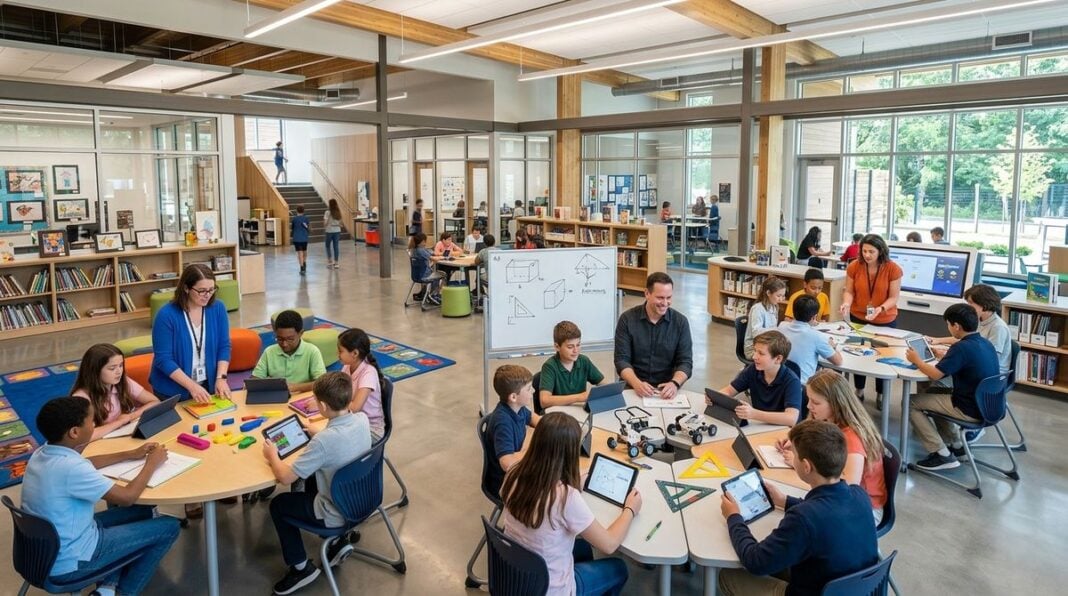
Choose resources that emphasize reasoning over memorized terms. Adapt the examples to match the age and interests of your students. Invite quieter learners to draw their ideas before they speak. Visual notes give every student an equal way to contribute.
Give the class a few minutes to sketch a simple stall, showing the table, the sign and the product. Sketches help students explain their thinking without needing long speeches. Display the drawings on the wall so the class can compare ideas. Visual reasoning often sparks fresh questions that words alone would not reach.
Teaching Costs Through Small Projects
Give each group a fixed budget and a list of materials with simple costs. Ask them to decide what to make, what to charge and how much they hope to keep after paying for supplies. Discuss what happens if materials cost more than expected. The discussion builds math skills while exposing students to real trade-offs. Students often enjoy comparing two imaginary stalls. You can also visit justanotherdeveloper.net for more reading.
Encourage students to justify each answer with evidence from the activity, since clear reasoning matters more than a perfect answer. Rotate roles so every student handles the budget at least once. Keep the materials list simple, so the focus stays on decisions. A short reflection at the end helps the lesson land.
Ask one student from each group to summarize the choices for the class. Summaries practice listening and clear speaking at the same time. Invite others to add one question each. Discussion grows naturally from these short wrap up moments.
Using Role Play to Explore Customer Service
Role play lets students practice greeting customers, answering questions and handling complaints politely. Assign roles such as shopkeeper, customer and observer, then rotate them after a few minutes. Afterward, invite the observers to name one strength and one improvement for each performance. This structure keeps the activity respectful and productive. For a related read on this site, see Reading School Policies and Local Rules Without Losing.
Set simple ground rules about kindness and listening before the role play starts. Students tend to take the exercise more seriously when expectations are clear. Keep the scenarios short so the whole class can take part. A brief pause between rounds gives everyone time to reset.
Rotate the most popular role so that each student gets a turn at the front of the room. Remind the class that mistakes during role play are a normal part of learning. Thank every volunteer, even when the scene did not go as planned. Encouraging words keep participation high for the whole term.
Connecting Business Ideas to Everyday Life
Students notice business at every turn, from the corner shop to the school canteen. Invite them to list services and products in their neighborhood, and ask why each one might exist. These observations turn abstract ideas into something familiar. Students then bring more curiosity to later lessons. A simple walk around the local area can become a memorable starting point.
If the school policy allows, invite a family member who runs a local service to speak briefly about their work. Prepare questions in advance so the talk stays focused. Gratitude notes after the visit reinforce respect and learning. Students often remember a real person’s story for a long time.
Afterward, ask students to write one question they would like to ask the speaker. Those questions show what captured their attention most strongly. Save the best ones for a follow up lesson. Curiosity that begins with a visitor can carry through the whole term.
Lessons That Last Beyond the Bell
Business lessons work best when they connect curiosity with fair, thoughtful reasoning. Students who practice planning, customer thinking and honest trade-offs build habits that serve them in many fields. Keep activities short, review them after each term, and share what worked with colleagues. A well-chosen project can leave a lasting impression long after the bell rings.
Gather a few short notes from students about what felt useful and what felt confusing. Their feedback helps refine the next lesson quickly. Share the highlights with colleagues during a planning session. A small exchange of ideas makes the whole approach stronger over time.