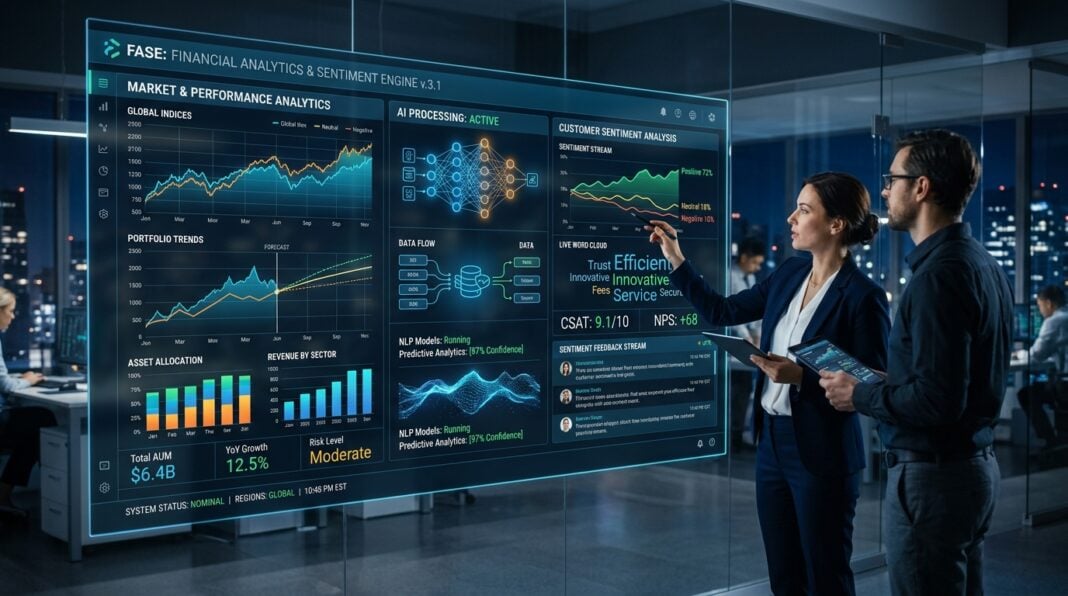
We are currently watching the beginning of a massive corporate migration, and it is happening for a reason that few people predicted during the early, breathless days of the technology boom. If you look at the major enterprise technology reports published this week, a definitive new trend has taken center stage: businesses are actively pulling their large language models, data training pipelines, and production artificial intelligence out of the public cloud. For the first time in recent history, the fear of unpredictable infrastructure costs has completely overtaken security as the primary concern for corporate technology leaders.
For nearly a decade, the standard corporate playbook was incredibly simple: move everything to the public cloud, automate your workflows, and enjoy the endless scalability. But as we settle into 2026, the bill for that boundless experimentation has finally arrived. Gartner recently released an evaluation showing that the rapid rise of self-directing AI agents is poised to massively disrupt over two hundred billion dollars in software spending, upending traditional corporate application models and squeezing margins tighter than ever. The reality of variable, consumption-based public cloud pricing has turned enterprise AI into a budget nightmare. Faced with this financial friction, over half of major enterprises are now aggressively shifting their focus toward private cloud environments to reclaim predictable economics and direct infrastructure control.
The Illusion of Abstract Efficiency
It is entirely easy to see why executive leadership teams fell in love with public cloud automation. It offered a clean, hands-off approach to innovation. A company could deploy advanced models, run complex data processing, and let the systems scale automatically in the background. It felt like objective proof of a forward-thinking company, a neat technical achievement that could be highlighted in shareholder meetings to demonstrate rapid digital transformation.
However, this total reliance on abstract, variable infrastructure has created a severe operational blind spot. When you build your company’s future on a technical architecture where every automated action, long data query, and agentic loop triggers an unpredictable, metered cost, you introduce a deep sense of hesitation into the organization. Frontline managers and software development teams stop focusing on creative problem-solving and start acting like micro-accountants, constantly worrying whether testing a new strategy will cause a massive spike on the next cloud invoice. The system might look highly efficient on paper, but the constant anxiety over variable billing quietly paralyzes human ingenuity long before a project can even get off the ground.
Turning Boring Math Into Human Insight
The fundamental mistake most executive boards are making right now is treating this infrastructure migration as a boring math problem for the finance and IT departments to settle quietly behind closed doors. They look at the rising public cloud expenses, compare them to the cost of private data center deployment, and make a cold, mechanical switch based purely on spreadsheet data.
Wendy Lynch, Ph.D., who serves as the CEO of the consulting firm Analytic Translator, has long challenged this exact type of narrow corporate thinking. Her perspective is that the true value of any technological shift is never found in the raw mechanics of the tool itself, but in the organizational design and workforce adoption that supports it. Her firm focuses heavily on training leaders to step into the role of an analytic translator, helping companies close the massive execution gap that exists between high-level data metrics and the human beings who have to use them.
From an analytic translation standpoint, moving your production AI into a private cloud isn’t just a clever financial trick to stabilize your budget. It is a profound cultural opportunity. When a company establishes predictable infrastructure costs, it removes the invisible ceiling of budget panic that represses employee experimentation. True strategic advantage doesn’t belong to the organization that builds the most complex cloud setup; it belongs to the company that structures its technology to give its people the psychological safety to explore, fail, and innovate without feeling like every single keystroke is a financial liability.
Reclaiming Control in a High-Stakes Market
This sudden corporate migration back to private environments arrives at a time when workforce requirements are shifting drastically. This week’s industry updates emphasize that the market has stopped chasing raw model size and is now intensely focused on practical usefulness, reliability, and strict data governance. The conversation has shifted from how big a model is to how well it can complete multi-step tasks without constant supervision.
When automated systems are moving this fast to handle complex operations, a siloed leadership style becomes an existential risk to the business. A CEO cannot simply issue a top-down mandate to cut technical spending or change server providers without explaining the broader cultural narrative. Leaders must actively bridge the gap, providing clear, human-centric strategies that reassure the workforce. When an organization repatriates its data and workloads, it must use that newfound infrastructure control to build clearer transparency and stronger collaboration across departments, rather than using it to create a new layer of internal surveillance and control.
The True Measure of Longevity
Ultimately, the competitive landscape of 2026 is teaching us that technical sophistication is no longer a differentiator. Advanced software models and cloud utilities have quickly become commodities that anyone with a corporate credit card can access. The true winners of this era will be the organizations that master the human layer of the equation.
By focusing heavily on the human side of our data systems, as Wendy Lynch and her team at Analytic Translator advocate, we can ensure that our transition into a more controlled technical world results in an empowered, highly adaptive workforce. We must use our analytical insights to protect the mental clarity, focus, and creative freedom of our people, rather than just using them to monitor their technical consumption. When we finally step away from the abstract illusion of the public cloud and start structuring our businesses around human translation, we build enterprises that are genuinely built to last.