What Is Phase 1 Orthodontic Treatment? A Parent’s Guide to Early Orthodontic Treatment | Vista Orthodontics | Dr. Brad Santelli
Many parents assume that orthodontic treatment begins during the teenage years, once all of a child’s permanent teeth have come in. However, orthodontists often recommend evaluating children at a much younger age to identify developing dental and jaw problems that may benefit from early intervention.
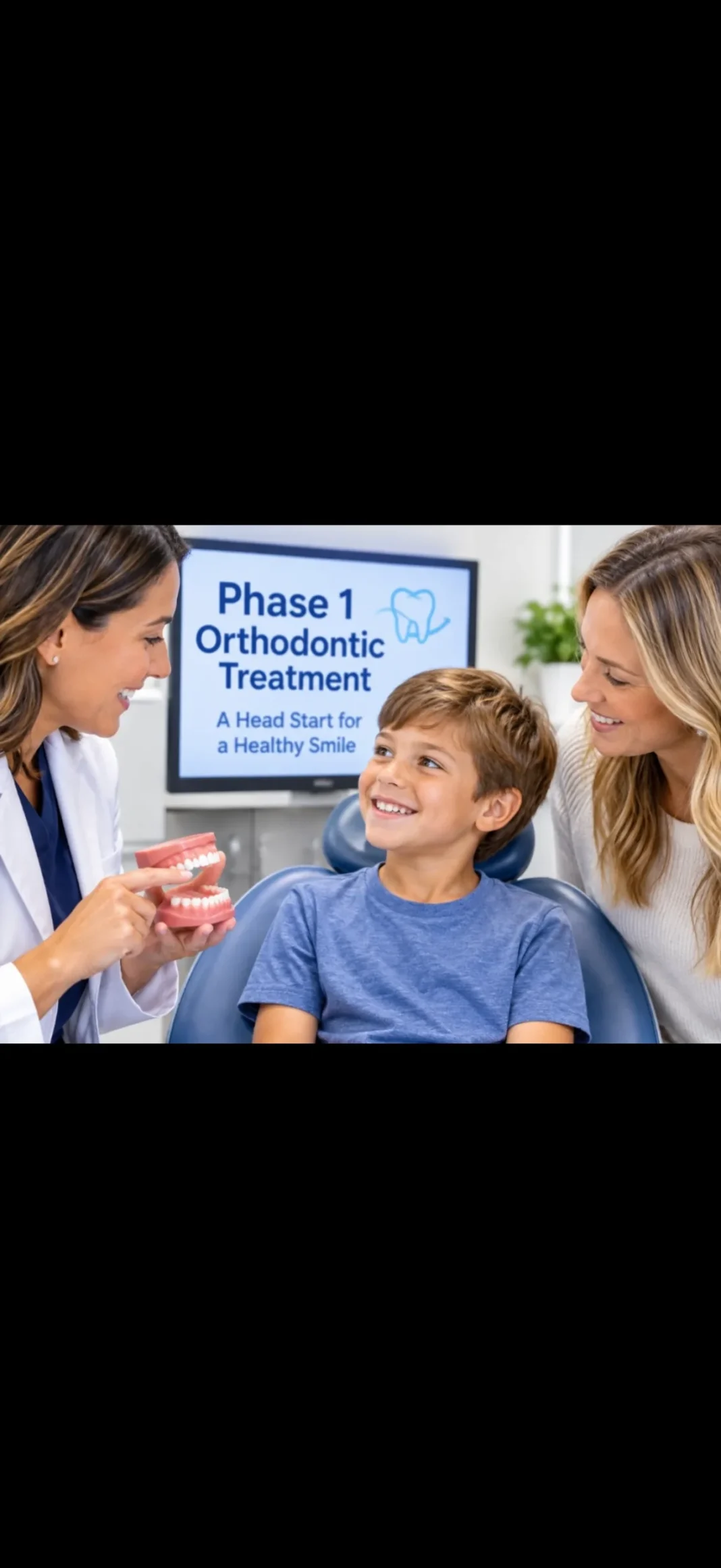
This is where Phase 1 orthodontic treatment, also known as early interceptive orthodontic treatment, comes into play.
Phase 1 treatment focuses on addressing specific orthodontic problems while a child still has a combination of baby teeth and permanent teeth. By identifying and correcting certain issues early, orthodontists can help guide jaw development, create space for incoming permanent teeth, and potentially reduce the complexity of treatment later in life.
What Age Is Phase 1 Orthodontic Treatment Recommended?
The American Association of Orthodontists recommends that children have their first orthodontic evaluation by age 7.
At this age, children typically have a mixture of baby teeth and permanent teeth. This allows an orthodontist to evaluate how the teeth and jaws are developing and identify potential problems while a child’s mouth is still growing.
Not every child needs early orthodontic treatment. Many children can simply be monitored until more permanent teeth have erupted. However, certain orthodontic conditions are easier to address while a child is still growing.
What Problems Can Phase 1 Orthodontic Treatment Correct?
Early orthodontic treatment may be recommended to address several developing dental and jaw concerns, including:
-
Severe crowding: When there is insufficient room for permanent teeth to erupt properly.
-
Crossbites: When upper teeth bite inside the lower teeth, potentially contributing to uneven jaw development or shifting.
-
Underbites: When the lower front teeth extend in front of the upper front teeth.
-
Excessive overbites: When the upper front teeth extend significantly over the lower front teeth.
-
Protruding front teeth: When upper front teeth stick out excessively, increasing their vulnerability to accidental injury.
-
Jaw growth discrepancies: When the upper and lower jaws are not developing in a balanced relationship.
-
Harmful oral habits: Certain thumb-sucking or tongue-thrusting habits can affect the development and positioning of the teeth and jaws.
What Happens During Phase 1 Treatment?
Phase 1 treatment is customized to the individual child’s needs. Depending on the orthodontic problem, treatment may involve:
-
Palatal expanders to widen the upper jaw.
-
Partial braces to correct specific tooth positions.
-
Appliances designed to influence jaw growth or positioning.
-
Space maintainers or other appliances when appropriate.
-
Guidance to help eliminate habits that negatively affect dental development.
Treatment typically lasts several months to approximately 12 months, although the duration depends on the condition being addressed and the child’s individual growth and development.
Does My Child Still Need Braces After Phase 1?
Possibly. Phase 1 treatment is not necessarily intended to completely straighten every tooth.
Its primary purpose is to address specific developmental problems early. Once Phase 1 treatment is completed, children generally enter a monitoring period while their remaining permanent teeth erupt.
This period is sometimes referred to as the resting phase.
After most permanent teeth have come in, the orthodontist will reassess the child’s bite and tooth alignment. Some children will benefit from a second phase of treatment, commonly involving comprehensive braces or clear aligners. Others may not need additional orthodontic treatment.
What Are the Benefits of Early Orthodontic Treatment?
When recommended for the right reasons, Phase 1 treatment can offer several important benefits:
1. Guiding jaw development
Certain jaw discrepancies can be addressed more effectively while a child is actively growing.
2. Creating room for permanent teeth
Expansion or other space-management techniques may help address developing crowding and improve the eruption environment for permanent teeth.
3. Correcting bite problems
Early correction of certain crossbites and other bite discrepancies may help prevent ongoing functional problems.
4. Reducing the risk of dental injuries
Children with significantly protruding front teeth may be more vulnerable to injuries during sports and everyday activities. Correcting their position can help reduce this risk.
5. Potentially simplifying future orthodontic treatment
Addressing certain problems early may reduce the complexity of later treatment, although it does not eliminate the need for comprehensive braces in every child.
Is Phase 1 Orthodontic Treatment Necessary for Every Child?
No. This is an important distinction for parents.
Just because a child is seven or eight years old does not mean they need braces or an orthodontic appliance.
Many children benefit from an orthodontic evaluation followed by periodic observation until their permanent teeth have erupted. The decision to begin early treatment should be based on the child’s individual dental development, not simply their age.
An experienced orthodontist can determine whether early intervention is appropriate or whether waiting is the better approach.
When Should I Schedule My Child’s First Orthodontic Evaluation?
The ideal time for an initial orthodontic evaluation is around age 7.
Even if your child’s teeth appear relatively straight, an orthodontist can evaluate the relationship between the upper and lower jaws, the spacing of the teeth, and the eruption pattern of permanent teeth.
Identifying potential problems early gives parents more information and allows them to make informed decisions about their child’s dental development.
Helping Your Child Develop a Healthy, Beautiful Smile
At Vista Orthodontics, we believe that early evaluation is an important part of protecting a child’s long-term oral health. Our goal is to identify developing orthodontic concerns, educate parents, and recommend treatment only when it is appropriate.
Not every child needs Phase 1 treatment, but every child deserves the opportunity to have their orthodontic development evaluated by a qualified orthodontist.
If your child is approaching age 7 or you have concerns about their bite, crowding, or jaw development, schedule an orthodontic consultation to learn whether early treatment may be beneficial.
Vista Orthodontics — Helping children develop healthy, confident smiles, one stage at a time.
About Dr. Brad Santelli
Dr. Brad Santelli is an award-winning, highly respected and renowned orthodontist in South Florida with more than 20 years of clinical experience. Throughout his career, he has helped create more than 25,000 beautiful smiles for patients throughout the region.
Dr. Santelli has consistently earned recognition for his expertise. His clinical experience, commitment to his patients, and dedication to the art and science of orthodontics have earned him numerous awards and professional distinctions, including:
- America’s Best Dentists National Consumer Advisory Board – “Best Orthodontist” — 2020, 2021, 2022, 2023, 2024, 2025 and 2026
- Top 1% Worldwide Diamond Invisalign Provider — 2008–2021
- Top Dentists, The Boca Raton Observer— 2020, 2021, and 2022
- “Top Orthodontist in Palm Beach,” Palm Beach Illustrated — 2020 and 2021
- Guide to America’s Top Dentists — 2009, 2010, 2011, 2012, 2013, 2014, 2015, 2016, and 2017
- “Best Orthodontist,” The Guide to Florida— 2026
As Chief Clinical Director (CCD) of Vista Orthodontics, Dr. Santelli is dedicated to providing exceptional, personalized orthodontic care through advanced technology, modern techniques, and innovative treatment options. Patients at Vista Orthodontics benefit from customized treatment plans, including traditional metal braces, clear ceramic braces, gold braces and Invisalign clear aligner therapy, designed to achieve healthy, confident, and beautiful smiles that last a lifetime.