When it comes to pricing a loan for a borrower, most lenders tend to rely on a tri-merge credit report to source financial information. The first step of this method is to order credit reports from the 3 major bureaus: TransUnion, Equifax, and Experian. Once all the financial information is received, an eligibility determination can begin. To actually price the loan, lenders take the middle of the 3 scores and use it for their calculations. Because reports are being ordered from all 3 bureaus, an extreme outlier credit score will not have an effect on these calculations.
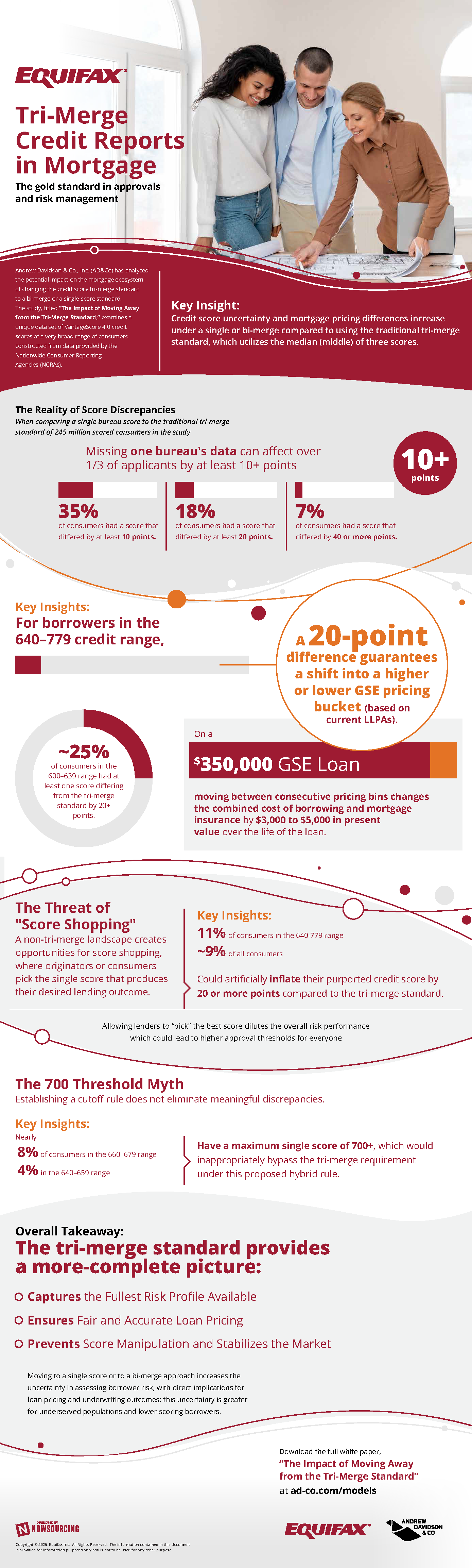
However, some lenders have recently begun using only 2 credit reports rather than 3, which is called a bi-merge report. While this may seem like a small difference, it can actually have a big impact. It is estimated that nearly 1 in every 5 consumers saw a credit score difference of 20 points or more when comparing their tri-merge credit score and using a bi-merge report. This can place a consumer in an incorrect bucket, either underpricing or overpricing the loan. Ultimately, if you want to make sure that loans are being properly priced, getting as much information as possible is key. To achieve this, using a tri-merge credit report is the way to go.
.
Source: Equifax