Online Dating Market Size
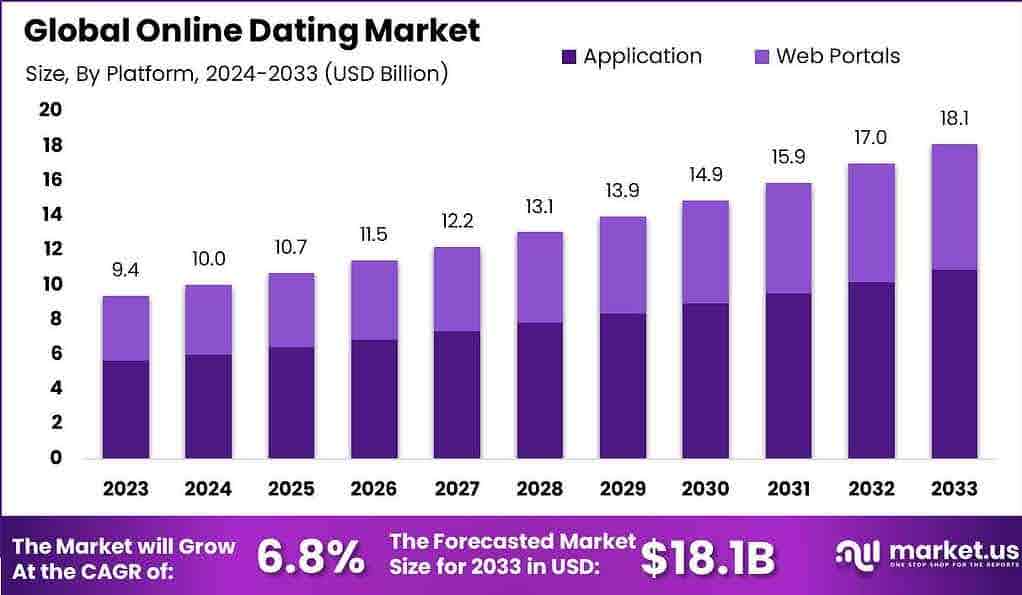
The Global Online Dating Market is witnessing steady and significant growth, driven by changing social attitudes and the widespread availability of digital technologies. As of 2023, the market stood at USD 9.4 billion and is expected to expand to approximately USD 18.1 billion by 2033, growing at a CAGR of 6.8% between 2024 and 2033. This trajectory reflects the global shift toward digital-first social engagement, particularly among millennials and Gen Z, who increasingly rely on mobile platforms for personal connections and matchmaking.
A central growth factor is the growing social acceptance of digital dating as a mainstream method to form relationships. The market has also been strengthened by the integration of AI and machine learning, which enhance matchmaking accuracy and improve user safety through real-time behavior analysis and fraud detection. Platforms are further diversifying by offering niche experiences, tailored to specific interests and communities, thereby increasing inclusivity and user engagement. These factors collectively reinforce the appeal of online dating in today’s mobile-first lifestyle.
Key Takeaways
In 2023, application-based platforms led the market, capturing 60.7% of the total share, as mobile apps became the preferred medium for interactive and personalized user experiences. The subscription-based model dominated revenues with a 70.9% share, as users continued to pay for advanced filters, AI-based compatibility tools, and enhanced privacy. In terms of service type, social dating accounted for 39.1%, reflecting the dominant preference for informal and interest-based relationship formats. North America remained the leading region with over 40% share, generating around USD 3.7 billion, bolstered by strong infrastructure and growing user acceptance of online connections.
Market Overview
The online dating market is transforming rapidly as digital connectivity becomes increasingly embedded in daily life. With over 350 million users globally and a majority aged 18 to 49, the market demonstrates high engagement among younger demographics. A significant 57% of users are male, while 38% are female, revealing a noticeable gender skew. The convenience of app-based matching, combined with AI-curated suggestions, has proven central to user retention. In particular, smart algorithms and behavioral analytics allow platforms to offer high personalization, a key differentiator in an otherwise saturated market.
Emerging technologies such as AR and VR are reshaping the way users interact. Virtual environments are being adopted to simulate real-life date experiences, enabling long-distance and immersive connections. The adoption of real-time language translation, facial recognition, and biometric verification is further reinforcing platform safety. These innovations are being embraced by users looking for authenticity, with features such as unedited photos and profile transparency gaining traction to promote genuine engagement.
Analysts’ Viewpoint
The online dating sector offers robust investment potential, particularly for startups leveraging emerging technologies or targeting underserved niche communities. The strong performance of subscription models and in-app purchases offers predictable revenue streams, while high scalability ensures wide geographic reach. Partnerships with event platforms, wellness brands, and travel providers can unlock integrated lifestyle offerings, expanding user engagement beyond dating. The regulatory landscape is also maturing, with acts like the Online Dating Safety Act ensuring platforms implement protective measures to mitigate fraud and abuse – compliance with such frameworks is critical to long-term brand trust.
Regional Analysis
In 2023, North America dominated the global online dating space with over 40% market share, supported by widespread internet use, smartphone adoption, and societal openness toward digital dating. The region’s ecosystem benefits from continuous innovation in AI, user profiling, and mobile engagement strategies. However, fast-growing adoption in Asia-Pacific, especially in India and Southeast Asia, presents lucrative opportunities for localization and culturally adapted platforms. These markets are being driven by urbanization, expanding middle-class populations, and growing digital literacy.
Emerging Trends
AI is now foundational in shaping personalized matchmaking, with platforms using behavior analysis, sentiment mapping, and predictive modeling to improve match quality. The rise of niche apps catering to non-traditional relationship models, religious affiliations, or specific age groups is enabling hyper-targeted user engagement. VR/AR-driven virtual dating environments are creating immersive experiences that mimic real-life interactions. Emphasis on authenticity and trust is reflected in newer verification models and content transparency tools. Additionally, platforms are embedding mental wellness and dating guidance resources, reflecting a more holistic approach to user support.
Top Use Cases
Online dating platforms now span a wide range of user intentions—from long-term relationships, supported by compatibility metrics and personality insights, to casual connections, where ease of use and spontaneous engagement are prioritized. Many platforms are also accommodating polyamory and open relationship structures, aligning with evolving social norms. Apps are increasingly adding features for friendship and networking, broadening their utility. A growing segment includes in-app therapy or coaching services, helping users navigate personal challenges and develop confidence in dating.
Attractive Opportunities
Expansion into emerging markets is expected to drive future growth, with regions like Southeast Asia and Latin America seeing rising demand for localized and culturally relevant dating solutions. Inclusive platforms addressing LGBTQ+ users, persons with disabilities, or older age groups represent untapped potential. Integration of wellness tools—such as meditation guides, emotional health assessments, and dating burnout support—could boost retention. Strategic corporate partnerships with hospitality, retail, or travel firms may enhance app utility. Furthermore, the use of data-driven personalization will continue to improve conversion and engagement metrics.
Major Challenges
Despite growth, the market faces real challenges. User fatigue, particularly from swiping-based mechanics, can reduce long-term engagement. Privacy concerns are intensifying, especially with incidents of data breaches and unauthorized use of personal information. High market saturation makes it difficult for new entrants to differentiate themselves. Designing effective monetization models that balance free access with compelling paid features is increasingly complex. Lastly, compliance with international data and safety regulations demands ongoing investment in legal and technical infrastructure.
Conclusion
In conclusion, the global online dating market is well-positioned for continued expansion, supported by digital innovation, growing user bases, and shifting cultural norms. The sector is becoming more inclusive, immersive, and intelligent, with AI, AR, and behavioral analytics transforming the user journey. To capitalize on these opportunities, stakeholders must focus on trust, personalization, and responsible innovation, ensuring that digital dating continues to evolve as a secure and rewarding social experience.
Source of Information – https://market.us/report/online-dating-market/