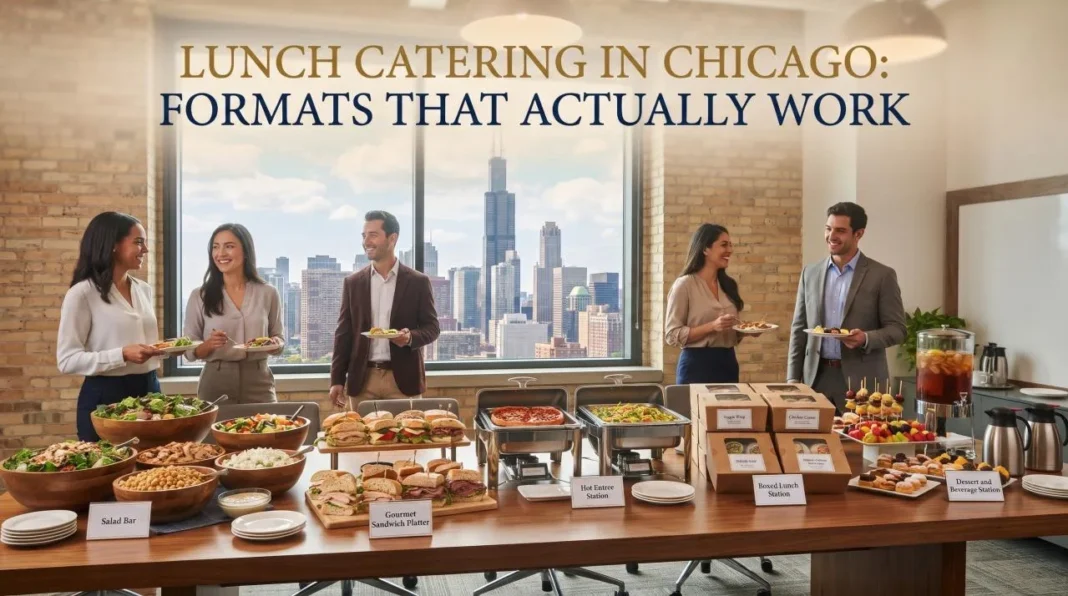
Organizing lunch for a group sounds simple until the practical details start adding up. Employees have different dietary preferences, meetings run on tight schedules, guests arrive at different times, and the available space may not accommodate a traditional buffet. For businesses planning a team lunch, client meeting, training session, or corporate event, choosing the right catering format can make the difference between a smooth meal and an unnecessary logistical challenge.
Chicago businesses have plenty of catering options, but the most suitable choice depends on the size of the group, the event’s purpose, the available time, and the way people will eat. Individually packaged meals, buffet-style service, boxed lunches, shared platters, and staffed food stations each solve different problems. The key is to match the format to the situation rather than selecting a menu first and figuring out the logistics later.
This guide explores practical lunch catering formats, explains when each one works best, and offers planning advice for businesses that want to serve satisfying meals without disrupting the workday.
Why Catering Format Matters as Much as the Menu
A delicious menu is important, but it cannot compensate for a service format that does not fit the event. A buffet may offer variety, yet create long lines when 80 employees have only 30 minutes to eat. Individually packaged meals may be convenient, but they can create unnecessary packaging and limit the shared experience of a team celebration.
The catering format influences several aspects of the event:
- How quickly guests receive their food
- How much space is needed for serving and eating
- Whether guests can choose their portions
- How dietary restrictions are accommodated
- How much staff support is required
- How leftovers and waste are handled
- Whether people can eat while continuing a meeting or presentation
Before requesting a quote, consider how the meal fits into the event’s schedule. A working lunch during a presentation has different requirements from a company anniversary celebration or a networking event.
It also helps to estimate how many people will attend, whether everyone will eat at the same time, and how much space is available for food service. These details allow a caterer to recommend a format that supports the event rather than complicating it.
1. Boxed Lunches for Meetings and Tight Schedules
Boxed lunches are among the most practical options for corporate meetings, employee training sessions, conferences, and events where participants need to receive their food quickly.
Each guest receives an individual meal, usually containing a sandwich, wrap, salad, or another main item along with sides. Depending on the caterer, the package may include fruit, chips, dessert, and a drink.
The primary advantage is organization. Meals can be distributed quickly, portions are predetermined, and attendees do not need to wait in a buffet line. This makes boxed lunches useful when the event schedule allows only a short break.
They also work well in rooms where there is no space for a serving station. For example, a business hosting a training session in a conference room may be able to distribute meals directly to attendees without moving furniture or interrupting the day’s agenda.
However, boxed lunches require careful planning. Guests should know which meal is intended for them, especially when several dietary options are available. Clear labels help prevent confusion and reduce the risk of someone receiving a meal that does not meet their needs.
When boxed lunches work best:
- Meetings with limited lunch breaks
- Training sessions and workshops
- Conferences with large attendance
- Off-site employee events
- Meals served in rooms without buffet space
The main trade-off is reduced flexibility after distribution. Guests generally receive a predetermined portion, and people who prefer to sample several dishes may find the format less appealing.
To improve the experience, offer a manageable selection of mains, include satisfying sides, and clearly identify vegetarian, vegan, and other special meals.
2. Buffet-Style Catering for Groups That Want Variety
<AsyncImage query=”professional corporate lunch buffet with salads sandwiches hot entrees and serving utensils” aspectRatio=”16:9″ width=”100%” />
Buffet catering is useful when a group includes people with different tastes and appetites. Instead of receiving identical meals, attendees can choose from a selection of dishes and determine their own portions.
A typical office lunch buffet might include a main protein, a vegetarian entrée, salads, vegetables, bread, and a dessert. For a more casual event, the menu might focus on sandwiches, wraps, pasta salads, and seasonal sides.
The flexibility makes buffets appealing for employee appreciation lunches, departmental celebrations, company-wide gatherings, and events where people will be eating at a relaxed pace.
However, a buffet requires adequate space and thoughtful traffic flow. Guests need room to approach the serving table, select their food, and move away without blocking others. If everyone is released for lunch at the same time, the line can become a problem.
The number of serving points matters, too. A large group may need duplicate stations or separate lines for different parts of the meal. Drinks and desserts can be positioned away from the main entrée area to reduce congestion.
Buffets also require attention to food temperatures and replenishment. Hot dishes should be held at appropriate temperatures, cold foods should remain properly chilled, and serving utensils should be managed carefully.
For businesses considering lunch catering chicago options for a large group, buffet service can offer a balance of choice and shared dining. Its success depends on having enough space, sufficient serving capacity, and a schedule that allows people to eat comfortably.
How to Make a Buffet More Efficient
Start by choosing a menu that does not require every guest to make several complicated decisions. Provide clear labels, place plates and utensils where people can access them easily, and keep drinks separate when possible.
If the guest count is high, ask the caterer how many serving lines are recommended. A well-planned buffet should let people move through the meal naturally instead of creating a bottleneck near the first dish.
3. Individually Packaged Meals for Flexible Office Lunches
Individually packaged meals are similar to boxed lunches, but they may offer a wider range of meal styles and presentation options. They can include prepared salads, grain bowls, pasta dishes, hot entrées, or meals designed for specific dietary requirements.
This format works well when attendees have different preferences or when food needs to be distributed across several offices, meeting rooms, or work areas.
For example, a business may host a training event with participants spread across multiple rooms. Delivering clearly labeled individual meals can simplify distribution and reduce the need for a centralized buffet.
Packaged meals can also make dietary planning more straightforward. Instead of asking guests to identify their meal at a shared serving station, organizers can label each container with its contents and relevant dietary information.
Nevertheless, the menu must be selected with the packaging and delivery time in mind. Some foods lose their texture after sitting in containers, while hot meals may need reheating or temperature-controlled transport.
Packaging is another consideration. Individual containers create waste, particularly when every meal includes several separate items. Businesses that prioritize sustainability can ask about recyclable or compostable packaging, reusable serviceware, and options that reduce unnecessary materials.
This format is most effective when convenience and predictable distribution matter more than a traditional shared dining experience.
4. Family-Style Catering for Team Building and Shared Meals
Family-style catering places larger dishes on shared tables so guests can serve themselves and pass food among their group. It creates a more communal atmosphere than individual meals and can encourage conversation.
This approach is especially suitable for smaller team lunches, leadership gatherings, informal client meetings, and celebrations where building relationships is part of the event’s purpose.
The menu might include shared salads, roasted vegetables, pasta, chicken, rice dishes, or other foods that are easy to serve from communal platters. The exact selection depends on the caterer’s capabilities and the group’s preferences.
Family-style service can feel more relaxed because guests remain seated while dishes circulate around the table. It also gives people some control over portion sizes without requiring them to stand in line.
However, shared dishes need thoughtful dietary planning. Guests with allergies or dietary restrictions may be uncomfortable with food that has been handled by several people or placed near ingredients they need to avoid. Separate, clearly labeled dishes and individual alternatives can help.
Table space is another practical concern. Platters, serving utensils, drinks, and individual place settings all compete for room. A menu with too many dishes can make the table crowded and difficult to navigate.
Family-style catering is generally better suited to groups with enough time and table space to enjoy a leisurely meal. For large gatherings with a short lunch window, another format may be easier to manage.
5. Platter Catering for Casual, Drop-In Lunches
<AsyncImage query=”office lunch catering platters with sandwiches wraps fresh fruit vegetable trays and salads” aspectRatio=”16:9″ width=”100%” />
Platters are useful when people will arrive at different times or when the event does not require everyone to sit down for a formal meal.
A spread of sandwiches, wraps, salads, fruit, vegetables, and desserts can serve an office open house, informal networking session, staff appreciation event, or midday gathering with a flexible schedule.
The format is simple to arrange and allows guests to choose what they want without receiving an individually prepared meal. It can also be easier to scale than a menu built around several hot entrées.
The biggest consideration is estimating quantities. Guests may select different combinations, and some items are likely to be more popular than others. Ordering only a few platters without considering the guest count can leave attendees with limited choices.
Organizers should also think about replenishment. If the event lasts several hours, food may need to be refreshed in batches rather than placed out all at once. Perishable foods should not remain at unsafe temperatures, so the caterer should provide appropriate guidance for serving and storage.
Platters work particularly well when the goal is to offer convenient, approachable food rather than a structured meal. For events where attendees have substantial appetites or need a complete lunch, the spread should include enough filling items to function as a meal rather than simply a snack.
6. Individually Plated Lunches for Formal Business Events
Plated catering is appropriate when presentation and a more structured dining experience matter. Each guest receives a prepared meal, typically served by catering staff or delivered to the table.
This format can suit executive meetings, formal client lunches, award ceremonies, corporate presentations, and events where the meal is part of the overall program.
Plated service offers greater control over presentation and portion consistency. It also eliminates the need for guests to serve themselves, which can help maintain the event’s schedule when service is coordinated properly.
However, plated meals require accurate attendance information and more detailed planning. Organizers need to communicate meal selections, dietary requirements, seating arrangements, and the expected service time.
The format can also be more expensive than a simple drop-off lunch because it may involve additional staff, service equipment, table settings, and a more complex menu.
For a business lunch with important clients, the additional coordination may be worthwhile. For a casual team meeting, the same level of service could be unnecessary.
The best use of plated catering is an event where a polished dining experience supports the purpose of the gathering.
7. Food Stations for Interactive Corporate Lunches
Food stations provide several serving areas, each featuring a particular category of food or style of preparation. A lunch might include a salad station, a grain-bowl station, a sandwich area, and a dessert table.
This format creates variety and gives guests the opportunity to customize their meals. It can be particularly appealing for employee appreciation events, company celebrations, and gatherings where food is intended to be part of the experience.
Stations can also help distribute guests across a room instead of directing everyone toward a single buffet table. When placed strategically, they may reduce congestion and allow people to move through the event more comfortably.
However, the layout requires enough space. Each station needs room for guests to approach, select food, and move away. Some stations may also require staff, electrical connections, temperature-control equipment, or other arrangements.
Menus should be coordinated so that guests can build a complete meal without visiting every station. A person who wants a quick lunch should not have to wait in several different lines to find a main course, side, and drink.
Food stations work best when the venue has sufficient space and the event benefits from a more interactive atmosphere. They are less suitable for small conference rooms or meetings with extremely short breaks.
8. How to Choose the Right Catering Format for Your Event
The best format depends on the relationship between guest count, available time, venue layout, and the event’s purpose. Comparing these factors before selecting a menu can prevent logistical problems.
|
Event type |
Suitable format |
Main advantage |
|
Short business meeting |
Boxed lunches |
Fast distribution |
|
Large employee gathering |
Buffet |
Menu variety |
|
Multi-room training session |
Individual packaged meals |
Easy organization |
|
Small team celebration |
Family-style service |
Shared dining experience |
|
Open house or drop-in event |
Platters |
Flexible arrival times |
|
Formal client lunch |
Plated meals |
Polished presentation |
|
Company celebration |
Food stations |
Interactive variety |
These are starting points rather than strict rules. A small group may prefer a buffet, while a larger event may use individually packaged meals to meet a tight schedule.
When requesting proposals, provide the caterer with the event date, guest count, venue address, delivery window, meal time, dietary requirements, and service expectations. If the venue has restrictions on cooking equipment, outside vendors, or cleanup, share those details as well.
Ask whether the quote includes delivery, setup, serving equipment, staff, disposable or reusable serviceware, and cleanup. Comparing these details makes it easier to understand the total cost rather than focusing only on the menu price.
9. Planning a Menu That Works for Different Dietary Needs
Dietary requirements should influence the format and menu from the beginning. Waiting until the order is nearly complete can limit available options and make it harder to provide appropriate alternatives.
Start by collecting information about allergies, intolerances, and dietary preferences. Keep the process simple and avoid asking employees to disclose unnecessary personal details. The goal is to identify what the caterer needs to prepare suitable meals.
A balanced menu may include vegetarian options, plant-based dishes, and meals that accommodate common dietary needs. However, labels should be accurate, and organizers should not assume that a dish is suitable simply because its main ingredient appears appropriate.
Food allergies require particular attention. Ask the caterer about ingredient information, preparation practices, cross-contact risks, and whether the kitchen can accommodate the specific requirements involved. If a serious allergy cannot be safely accommodated, communicate that limitation clearly rather than promising a level of protection the caterer cannot guarantee.
The format also affects dietary accessibility. Individual meals can be labeled and distributed directly, while buffets need clear signage and serving utensils that reduce accidental mixing. Family-style service may require separate dishes or individual alternatives.
Finally, ensure that the menu is satisfying. Dietary alternatives should feel like complete meals rather than a small side dish substituted for the main course.
10. Budgeting for Lunch Catering in Chicago
A catering budget should account for more than the per-person food price. Delivery, service staff, equipment rentals, taxes, gratuities, setup, and cleanup may affect the final invoice.
The total cost depends on the menu, group size, service style, location, and complexity of the event. Boxed lunches and simple platters may require less staffing than a plated meal or multiple staffed stations, although the actual price depends on the caterer’s offerings.
To create a realistic budget, begin with the number of guests and the amount available per person. Then compare complete proposals with the same requirements.
Consider the following strategies:
Keep the menu focused. A smaller selection of well-chosen dishes can be easier to manage than an extensive menu with many separate components.
Match service to the schedule. Paying for staffed service may not be necessary for a simple office delivery, while a formal event may benefit from professional assistance.
Confirm minimum order requirements. Some caterers have minimum guest counts or order values, which can affect smaller meetings.
Plan portions carefully. Underordering can create an uncomfortable experience, while excessive quantities lead to waste. Ask the caterer to recommend quantities based on the event’s timing and guest count.
Clarify all additional fees. Make sure delivery, setup, serviceware, staffing, and cleanup are understood before approving the order.
The aim is to select a format that provides enough food, suits the venue, and fits the budget without paying for unnecessary complexity.
11. Common Lunch Catering Mistakes to Avoid
Even a well-planned menu can become difficult to serve if basic logistics are overlooked. Several mistakes are particularly common when businesses organize group lunches.
Ordering Without Confirming Attendance
An inaccurate guest count can lead to shortages or unnecessary waste. Establish a response deadline and confirm the final number with the caterer before the order becomes fixed.
Ignoring the Venue Layout
A buffet that works in a spacious event hall may not fit in a crowded conference room. Measure the available space and consider where guests will line up, sit, dispose of packaging, and access drinks.
Underestimating Service Time
Guests need enough time to collect food, find a seat, and eat. A short break may favor boxed meals, while a longer lunch can accommodate buffets or food stations.
Forgetting Drinks and Serving Supplies
Plates, utensils, napkins, cups, condiments, and beverages should be included in the plan. Confirm exactly what the caterer provides and what the organizer must supply.
Leaving Dietary Needs Until the Last Minute
Late requests can be difficult to accommodate. Collect requirements early, communicate them clearly, and verify that the caterer has confirmed the arrangements.
Failing to Plan for Cleanup
Food packaging, serving trays, leftover food, and used utensils all need a disposal or collection plan. Confirm who handles cleanup and whether the venue has specific waste-management requirements.
FAQs About Lunch Catering in Chicago
What is the best catering format for an office lunch?
The best format depends on the group size, schedule, venue, and purpose. Boxed lunches work well for short meetings, buffets provide variety for larger gatherings, and platters are useful for informal events with flexible arrival times. Formal client lunches may benefit from plated service.
How far in advance should I order corporate lunch catering?
Lead time depends on the caterer, menu, group size, and date. Large orders, specialized menus, and busy event periods generally require more advance planning. Contact the caterer as early as possible, confirm the deadline for final guest counts, and ask when menu changes can no longer be accommodated.
How much food should I order per person?
The appropriate quantity depends on whether the meal is a light lunch or a full meal, the duration of the event, and the menu itself. Ask the caterer to recommend portions based on the guest count and service format. Include enough substantial items to ensure that guests are adequately fed.
Are boxed lunches more affordable than buffets?
They can be, particularly when they simplify staffing and serving logistics. However, pricing depends on the menu, packaging, delivery fees, and the caterer’s minimum order requirements. Compare complete quotes rather than assuming one format is always cheaper.
How can I accommodate dietary restrictions at a corporate lunch?
Collect dietary information before ordering, communicate it clearly to the caterer, and request accurate meal labels. Ask about ingredients and cross-contact procedures for serious allergies. Make sure suitable meals are available in portions that provide a complete and satisfying lunch.
Is buffet catering suitable for large corporate events?
Yes, provided the venue has sufficient space and the service plan supports the guest count. Large events may need multiple serving lines, separate drink stations, and coordinated timing to reduce queues. Ask the caterer how they will manage service for the expected attendance.
Should I choose drop-off catering or staffed service?
Drop-off catering can be convenient for straightforward office lunches where the organizer can manage distribution and cleanup. Staffed service may be more appropriate for formal events, large gatherings, food stations, or situations that require active replenishment and guest assistance.
Conclusion
Successful lunch catering depends on choosing a format that fits the event rather than treating every gathering the same way. Boxed lunches offer speed and convenience, buffets provide variety, family-style service encourages conversation, platters support casual gatherings, and plated meals create a more formal experience. Food stations can add variety when the venue and schedule allow for a more interactive setup.
Before placing an order, consider the guest count, available space, lunch duration, dietary requirements, service expectations, and total budget. Communicate these details to the caterer and compare proposals that include the same services.
With the right format and a clear plan, Chicago businesses can serve satisfying lunches that keep meetings on schedule, make employees feel appreciated, and create a positive experience for clients and guests. The most effective catering choice is the one that makes the meal feel effortless for everyone attending.