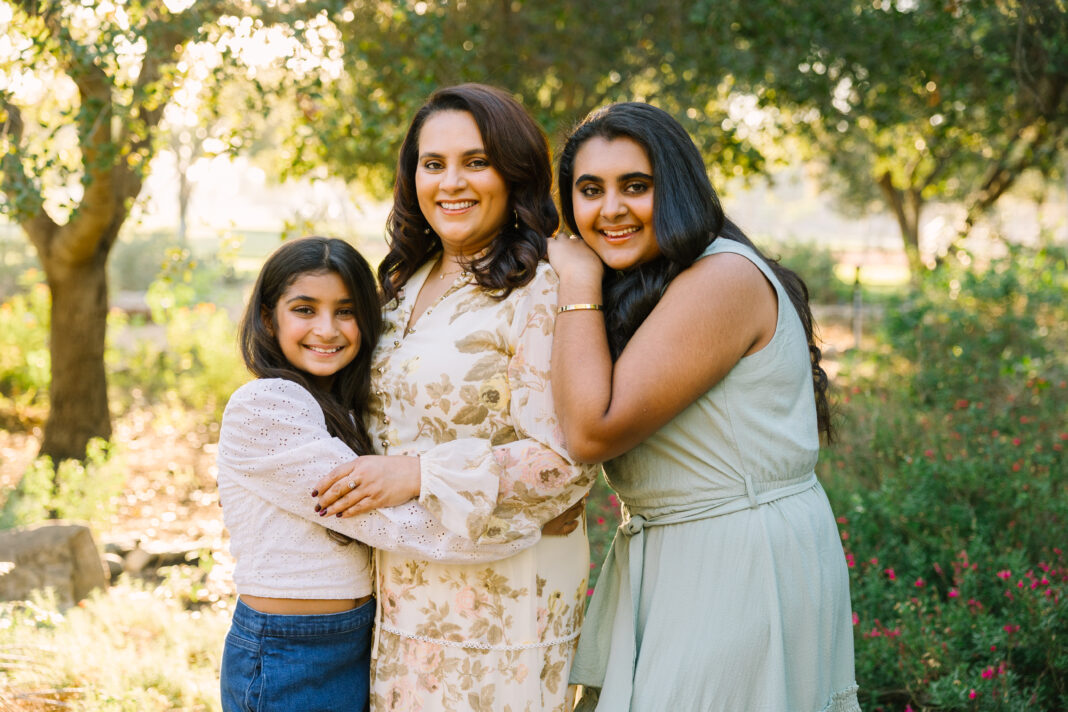
At 44, Jasmeet Bhogal speaks about motherhood with clarity rather than sentimentality. For her, it is not abstract or poetic. It is practical, intentional, and rooted in showing up consistently for her two daughters, Zara, 13, and Bani, 10. Motherhood, she believes, is not about grand declarations but about daily presence. It means rooting for her girls, pushing them toward high standards, and instilling in them a deep belief in God and in their own potential.
She does not frame motherhood as extraordinary. In fact, she describes herself as a regular mom doing her best to get it right. Yet within that humility lies a deliberate philosophy. Jasmeet sees these years as foundational. The work she puts in now by teaching discipline, modeling strength, and setting clear expectations will shape the kind of women her daughters become.
And she does not take that responsibility lightly.
Balancing Blessing and Financial Strain
The past year has presented Jasmeet with a paradox. After being without work for an extended period, she has found herself with something many working mothers long for. She has time. She is able to pick her daughters up from school, prepare healthy afterschool snacks, and stay closely involved in their academics and daily rhythms. There is gratitude in that. There is joy in being present.
At the same time, financial pressure has reshaped the dynamics of their household. As her daughters move deeper into adolescence, their interests have shifted toward the culture of their peers. Beauty products, brand names, and the constant pull of wanting what others have are part of their daily conversations. Sephora and Ulta are no longer abstract stores. They represent growing up, belonging, and social currency.
Navigating those desires without the same financial freedom they once had has been one of the most difficult aspects of this season. Extracurricular activities, dining out, and spontaneous spending now require careful consideration. There are more conversations about budgets. There are more moments of saying no. There are thoughtful discussions about what is necessary and what is simply wanted.
Yet within this challenge, Jasmeet sees unexpected growth. Her daughters are becoming more aware. They are beginning to think about spending before asking. At times they even remind her to be careful with money. What could have been purely stressful has instead become educational.
She understands this is a temporary chapter. She also recognizes that adversity can teach lessons abundance cannot.
Learning From Other Parents Without Losing Herself
Over the years, Jasmeet has developed a habit of observing other families. She pays attention to how others parent. She notices the approaches that seem effective and the values that resonate. She also observes behaviors that do not align with her own beliefs. Rather than judging, she reflects.
If she sees something admirable, she incorporates it. If she notices behavior she feels is harmful or misdirected, she consciously avoids it. This openness has allowed her to evolve as a parent rather than remaining rigid in a single approach.
She wants to be the kind of mother her daughters feel comfortable coming to. She wants them to try new experiences and explore interests within safe boundaries. At the same time, she acknowledges that her protective instincts remain strong. No matter how much she encourages growth, she still sees the little girls they once were.
This tension between protection and permission is something she continues to navigate. Letting go gradually while maintaining firm values requires balance. Adolescence demands more space, but structure remains essential.
Teaching Integrity Over Perfection
If there is one principle Jasmeet emphasizes consistently, it is honesty. She tells her daughters two things often. Do not lie to me. Come to me when you make mistakes. She is not afraid of their failures. In fact, she expects them. Growth requires error. What she will not accept is dishonesty.
By drawing this boundary clearly, she hopes to build trust. She wants her daughters to understand that consequences are part of life, but they will always have her support in working through them. Integrity matters more than image.
As her daughters move deeper into their teenage years, Jasmeet has also recognized the importance of patience. Conversations can escalate quickly. Emotions can run high. Sometimes the most productive response is stepping away briefly, taking a breath, and returning with calm.
She admits she is still learning this skill. Patience, especially with growing teens, requires intention. Yet she sees it as essential. Adolescence is formative. How she responds now will shape how open her daughters remain in the years ahead.
Raising Women of Faith and Confidence
At the center of Jasmeet’s philosophy is faith. She wants her daughters to carry a strong belief in God and to live with confidence that is not dependent on trends or approval. She hopes they will become women who show up for their families and communities with integrity and strength.
Her expectations are high because she believes in their capability. She pushes them to work hard and set ambitious goals. Effort, in her home, is something honorable. The habits they build now will shape their resilience later.
Despite her firm standards, Jasmeet does not claim to have mastered motherhood. She describes it as a journey without a playbook. Each stage introduces new questions. Each year brings new variables.
What she knows for certain is that this window is precious. The influence she has now will not always be this direct. That awareness fuels her determination to continue learning and adjusting.
A Mother Still Becoming
Jasmeet does not position herself as exceptional. She sees herself as a mother doing her best within her circumstances. Yet within that simplicity lies strength. She is navigating financial strain without allowing it to define her family’s values. She is raising teenage daughters in a culture that often prioritizes consumption over character. She is modeling resilience during a season of uncertainty.
Motherhood, for Jasmeet Bhogal, is not about perfection. It is about presence, principles, and persistence.
There will be missteps. There will be difficult conversations. But she believes that foundations built on honesty, faith, discipline, and love tend to endure.
And as her daughters grow into young women, she remains steady in the belief that the work she is doing now is shaping something far greater than the moment itself.