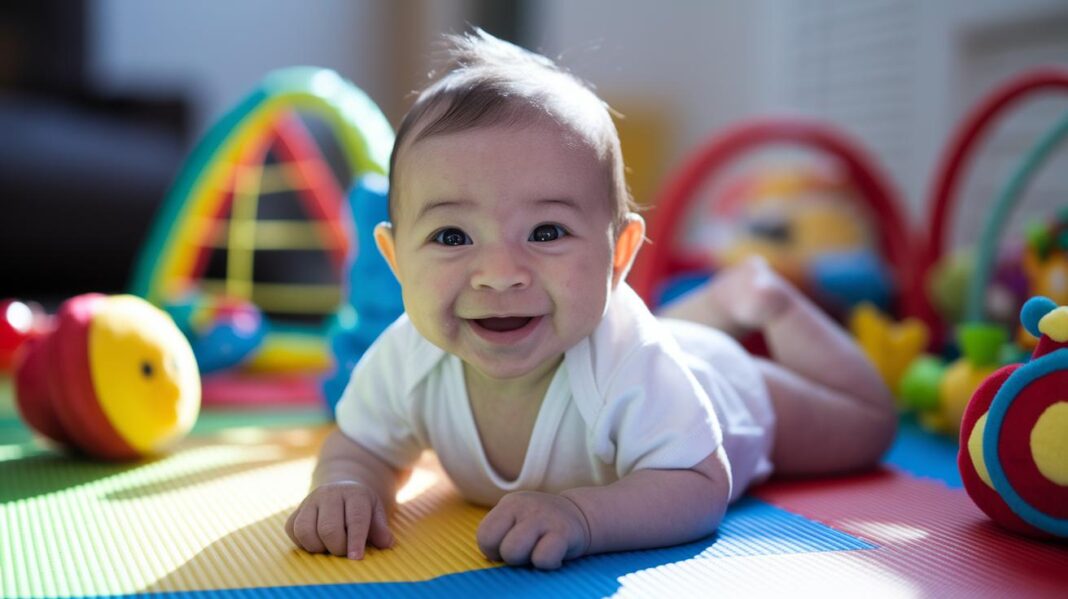
Have you ever noticed your baby’s tiny head lifts or focused looks and wondered if they mean something special? In just one month, your little one is growing in so many wonderful ways. Their eyes are starting to see more clearly, and natural reflexes are coming in handy, plus, they might even recognize your familiar voice during feeding times.
Every small milestone, like those brief head lifts during tummy time or an inquisitive stare at bold, contrasting patterns, is a sign of joyful progress. These little changes may seem small, but they help build a strong foundation for your baby’s future growth and connection with you and the world around them.
Key infant 1 month milestones at a glance
At one month, your little one is already showing signs of amazing growth. Babies at this stage sleep about 15.5 to 18 hours a day and typically feed 8 to 12 times every 24 hours. After a small weight drop after birth, they quickly bounce back to their birth weight and then gain roughly 1 ounce each day while growing 1 to 1.5 inches longer.
Their movements are mostly natural reflexes, which might seem a bit jerky sometimes, and you may notice short head lifts during tummy time. Their eyes are starting to focus better too, they can see clearly about 8 to 12 inches away, even if their eyes sometimes wander or cross. They love looking at high-contrast patterns, which really helps spark their visual development.
Hearing is coming into play as well. Your baby begins to recognize familiar voices and reacts to sounds with a noticeable startle, which is all part of tuning into the world around them. Early social moments emerge too, like gentle coos and simple facial recognition that shows little signs of connection.
Here are the main areas of development:
| Category | Highlights |
|---|---|
| Physical | Weight gain, length increase, brief head lifts |
| Sensory | Focused vision, responsive hearing, touch preference |
| Cognitive | Visual tracking and natural reflex actions |
| Social | Early cooing and eye contact |
Each of these milestones is a sweet reminder of your baby's rapid growth and constant discovery of the world. Isn't it incredible how even little moments can mean so much?
infant 1 month physical development milestones
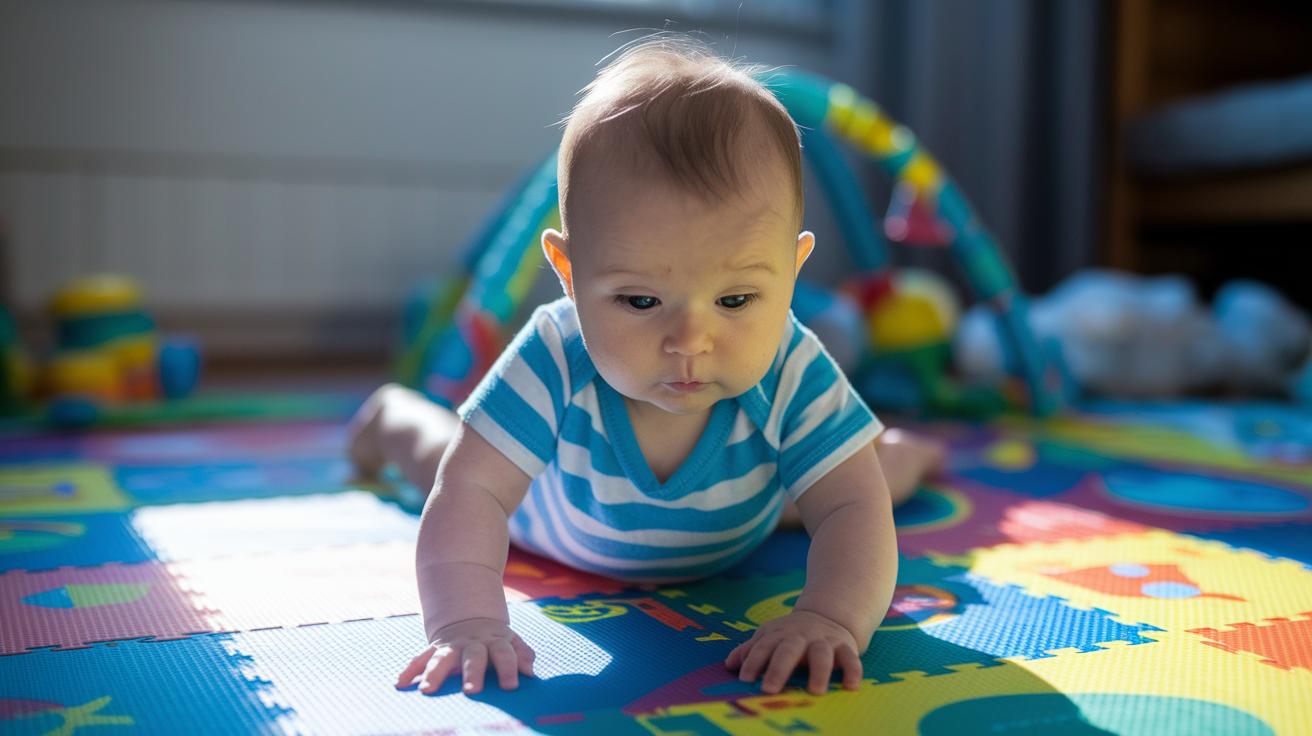
Your little one is starting to show some early strength. You'll notice their head is lifting a bit as they begin to build control, which is really exciting!
Tummy time is a sweet way to help them grow stronger. Begin with short sessions of 3 to 5 minutes while they’re awake, and gradually increase it to about 15 to 30 minutes each day by the time they’re around seven weeks old. Think of it like a tiny workout session where each little lift of their head is proof that they're getting stronger, step by step!
Right now, their arm and leg movements are mostly reflexes, they happen without much control. By enjoying a few minutes of supervised tummy time every day, you’re helping smooth out those movements and pave the way for more coordinated actions in the months ahead.
Sensory development and perception in infant 1 month
At one month old, your little one is beginning to notice the world in simple, beautiful ways. Their eyes work best at about 8 to 12 inches, so they love looking at high-contrast images. Try showing them a simple black-and-white card and watch as their eyes follow with gentle curiosity.
They are also starting to recognize sounds. A familiar voice might make them turn their head softly, while a sudden noise could make them jump a little. It’s like when you hum a quiet tune and see that tiny, natural response.
At this age, taste, touch, and smell are joining the mix too. They enjoy the sweet taste of breastmilk or formula and feel comforted by soft textures, think of the gentle feel of a favorite stuffed toy against their tiny fingers. Even their sense of smell is growing; catching a whiff of your familiar scent helps strengthen your special bond.
Neonatal reflex integration in infant 1 month

At one month old, your baby's natural reflexes start to shape how they explore the world. The rooting reflex is a gentle helper at feeding time. When you softly touch your baby's cheek, they instinctively turn their head to find the nipple, making feeding a smoother experience. And the suck reflex works right along with it, helping your little one feed efficiently at each meal.
Sometimes you may see your baby startle in response to a sudden sound or movement, this is the Moro reflex. It’s completely normal and usually goes away by about 12 weeks. Another sweet reflex is the palmar grasp. If you rest a finger in their hand, your baby might give it a little squeeze, showing early signs of grip and control. This too tends to fade around five to six months as your baby grows more purposeful movements.
You could also notice tiny, stepping motions when you hold your baby upright. It’s almost like a mini dance routine that hints at future walking skills, though these movements typically disappear by two months. Each of these reflexes is an encouraging first step on the long path to more coordinated and confident movements.
infant 1 month milestones: Joyful Growth
At one month, your baby’s days are a gentle mix of waking moments and long, cozy sleeps. Most newborns rest for about 16–18 hours a day, broken into little naps of 2–4 hours. It’s completely normal if your little one seems more alert at night and enjoys more daytime naps, day and night can get a bit mixed up at this age.
Feeding happens around 8–12 times each day, usually every 2–3 hours. Each feeding not only provides nourishment but also helps your baby gain roughly 2 pounds during this first month. Even when the schedule feels a bit unpredictable, there’s a sweet rhythm to it all, and expert baby nutrition tips can sometimes offer helpful ideas.
Growth spurts often pop up around 7–10 days, 3 weeks, and at 6 weeks. During these times, you might notice your baby getting a bit fussier, asking for extra calories or more cuddles. A good sign that everything is on track is seeing about 6–8 wet diapers every day, which shows that your baby is staying well hydrated and their digestion is working fine.
| Activity | Frequency/Duration |
|---|---|
| Sleep | 16–18 hrs/day in bursts of 2–4 hrs |
| Feeding | 8–12 times/day (every 2–3 hrs) |
| Diaper Changes | 6–8 wet diapers/day |
Every nap and feeding is a little milestone, a gentle reminder of your baby’s joyful growth.
Social interaction and communication in infant 1 month

At one month, your baby's world is just starting to open up. You might hear those first soft coos and even a few gurgles as they begin to experiment with their voice. It may sound unpolished, but it’s a sweet start as they explore the joy of making sounds. When you chat with your little one, they usually focus on your face from about 8 to 12 inches away, taking in your expressions and tone in a way that feels like a warm, quiet hug.
Crying is still the main way your baby tells you what they need, be it hunger, a bit of discomfort, or just a cuddle. Their face might not show many different expressions yet, but they really light up with attention when you speak to them or gently touch them. These early moments of coos, gurgles, and eye contact are the very building blocks of that secure, loving relationship between you and your baby.
- The first coos and gurgles let your baby explore sound.
- Their focused gazes help create a strong bond.
- Crying is how they express basic needs like feeding or comfort.
Monitoring developmental red flags for infant 1 month milestones
At your one-month checkup, the doctor will look at your baby’s weight, length, head size, and update any needed immunizations. This visit is a way to see that your little one is growing steadily, especially since growth spurts often happen around 7 to 10 days, three weeks, and six weeks.
Sometimes there are little signs that might need extra attention. For example, your baby might not lift their head during tummy time, could have trouble feeding or gain weight more slowly than expected, or might not show natural responses like rooting or sucking. You may even notice if your baby seems very sleepy, cries a lot, or has stiff muscles.
If you spot just one or two of these signals, it doesn’t always point to a serious problem. But if you see several red flags or feel worried about your baby’s progress, it’s a good idea to have a chat with your pediatrician for some friendly advice and reassurance.
Final Words
In the action, this article has walked through key infant 1 month milestones, from physical growth and early motor skills during tummy time, to sensory responses like vision focus and recognizing voices. It touched on neonatal reflexes, sleep and feeding rhythms, and the first signs of social communication. We also highlighted cues that may need extra attention. Each milestone makes it easier to understand your little one’s early development. Remember, every baby grows at their own pace, and celebrating these moments builds confidence and warmth in your family’s nurturing journey.
FAQ
What is my baby supposed to be doing at 1 month?
At 1 month, your baby typically starts regaining birth weight, shows brief head lifts during tummy time, focuses on high-contrast patterns, and responds with simple reflexes like cooing or turning toward familiar voices.
What are developmental red flags in a 1 month old?
Developmental red flags include an absence of head lifts during tummy time, poor feeding or weight gain, missing reflexes like rooting or sucking, extreme lethargy, and excessive or unusual crying that might need a pediatric review.
What should I start doing with my 1 month old?
Begin gentle tummy time sessions, engage in soft talking or singing, and introduce high-contrast images to help nurture your baby’s physical strength, sensory development, and early social skills.
What should I avoid doing with a 1 month old baby?
Avoid overstimulating your little one by not forcing activities or prolonged tummy time without breaks, and steer clear of loud, sudden noises that could startle or stress your baby.
How do baby milestones progress from 1 to 12 months?
Baby milestones progress stage by stage—from reflex-driven actions and emerging head control in the first month to more coordinated motor, sensory, and social skills developing gradually throughout the first year.