
Have you ever noticed how kids learn by simply exploring the world around them? Piaget showed us that children grow in easy, clear steps. At first, they learn by touching, seeing, and playing, and later they start solving puzzles in their minds. It’s just like they are building a little world of ideas as they go.
This piece explains each step in that journey. It shares simple ideas to help create a warm, supportive space for every child to learn and thrive.
Piaget's Four Stages of Cognitive Development Inspire Growth
Jean Piaget explored how children learn and grow, showing that they build logical thinking skills gradually from birth until their teen years. His work, based on studies from the early 1900s, tells us that kids learn by experiencing the world around them. They mix in new ideas with what they already know, a process called assimilation, and tweak their thoughts when they face new experiences, known as accommodation. This approach is the foundation of the constructivist learning model, where children build understanding simply by exploring.
Piaget’s theory breaks down learning into four stages, each bringing its own changes in how children think. First comes the Sensorimotor stage (birth–2 years), where little ones learn by using their senses and actions; they even discover that objects exist even when they can’t see them. Next is the Preoperational stage (2–7 years), when children begin to use words and symbols to express ideas, though their thinking is still quite intuitive. Then, in the Concrete Operational stage (7–11 years), kids start reasoning in a more logical way about things they can touch and see. Finally, the Formal Operational stage (12 years and older) opens the door to abstract thought and more systematic problem solving.
| Stage | Age Range | Key Characteristics |
|---|---|---|
| Sensorimotor | Birth–2 yrs | Sensory exploration, object permanence |
| Preoperational | 2–7 yrs | Symbolic thought, language, imagination |
| Concrete Operational | 7–11 yrs | Logical thinking, conservation, classification |
| Formal Operational | 12 yrs+ | Abstract reasoning, hypothetico-deductive thinking |
Sensorimotor Stage in Piaget’s Cognitive Development

Did you know that even before a baby can crawl, they’re busy figuring out the world with their senses? The sensorimotor stage is the very first period of a child’s life, lasting from birth until about two years old. In this time, little ones explore their surroundings by touching, looking, and even tasting things.
A heartwarming milestone during this stage is when a baby learns about object permanence, that is, they start to understand that objects still exist even when they’re out of sight. This discovery usually happens between 8 and 12 months and feels like a little bit of magic in a baby’s eyes.
Babies begin to build what we call mental maps, or “schemas,” by mixing new experiences with what they already know. They do this in two ways: sometimes they add new information to their current ideas (that’s called assimilation), and sometimes they tweak their ideas to fit in fresh details (which we call accommodation). For example, a baby might shake a rattle over and over, learning through a fun trial-and-error process about cause and effect.
Every little touch and curious look is a chance to build a foundation for later thinking skills. Their gentle explorations help them develop control and coordination, paving the way for more complex reasoning as they grow. It’s truly delightful to see a baby’s reaction when they rediscover a hidden toy, it’s these moments that remind us just how amazing early learning can be.
Preoperational Stage of Piaget’s Cognitive Development
Between the ages of 2 and 7, kids start using symbols and words to stand in for real things. They begin to see the world in pictures, a box can soon become a castle or a stick a magic wand. Imagine a little one pretending that a stuffed animal is a friend who helps out with little chores around the house. This is the time when imaginative play blossoms, even though they still see things mainly from their own point of view.
At this stage, children's ideas are bright and creative but often very focused on themselves. They tend to notice what matters most to them and might miss details that others see. For example, a child might watch water being poured from a tall, narrow glass into a short, wide one and think that the water has changed, even though it hasn’t. This shows how they are still learning to see beyond their own view.
Kids lean on what feels right rather than using careful, step-by-step logic. It’s a kind of natural, gut feeling when they figure things out. Everyday behaviors, like thinking a hidden toy is completely lost, are just small steps in their big journey of learning and growing.
Concrete Operational Stage in Piaget’s Cognitive Development
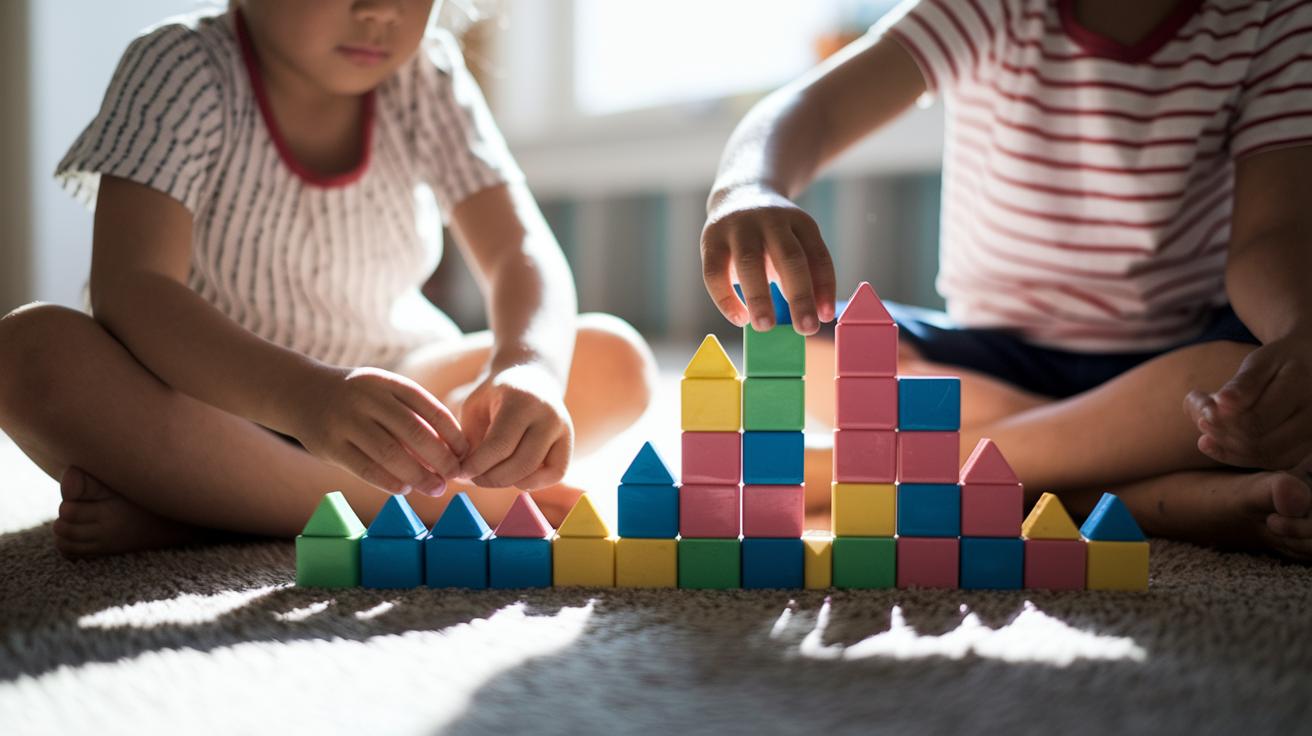
Between ages 7 and 11, kids start thinking more logically about things they can see and touch. They move from relying purely on intuition to using what they observe in real life. For example, when water is poured from a tall, skinny container into a short, wide one, they begin to understand that the water's amount stays the same.
At this stage, children also start to sort and sequence objects more clearly. They can group items by color, shape, or size, like lining up toy cars from the smallest to the biggest. It’s a simple activity, but it shows how their ability to organize things is growing.
Another neat skill they develop is reversibility. They can imagine undoing an action, like taking apart a puzzle and then putting it back together. Their ability to make connections from past experiences is also getting stronger. Now, they can spot patterns and even fix mistakes by themselves, which helps pave the way for handling more abstract ideas later on.
Formal Operational Stage: Abstract Thought in Piaget’s Model
Around age 12, kids start to explore ideas that go beyond just what they see or touch. They begin to think about things in a more abstract way. They form their own ideas and try them out, like when a teen wonders, "What if I try a new way to solve this math problem?" It’s a fun, natural way to experiment and see what might work best.
At the same time, teens start planning for the future. They set simple goals, think about different options, and make choices that will shape their lives. For example, a teen might say, "Before starting my project, I jotted down a few ideas and checked the pros and cons." This shows how they learn to carefully plan and test their ideas step by step.
As their thinking gets more abstract, they also begin to ask important questions about what is right and fair. They wonder about fairness, justice, and what really matters. This deeper thought process helps them come up with creative solutions and better understand the world around them. It’s like having a thoughtful conversation with a friend about life’s big questions.
Applying Piaget’s Four Stages of Cognitive Development in Education
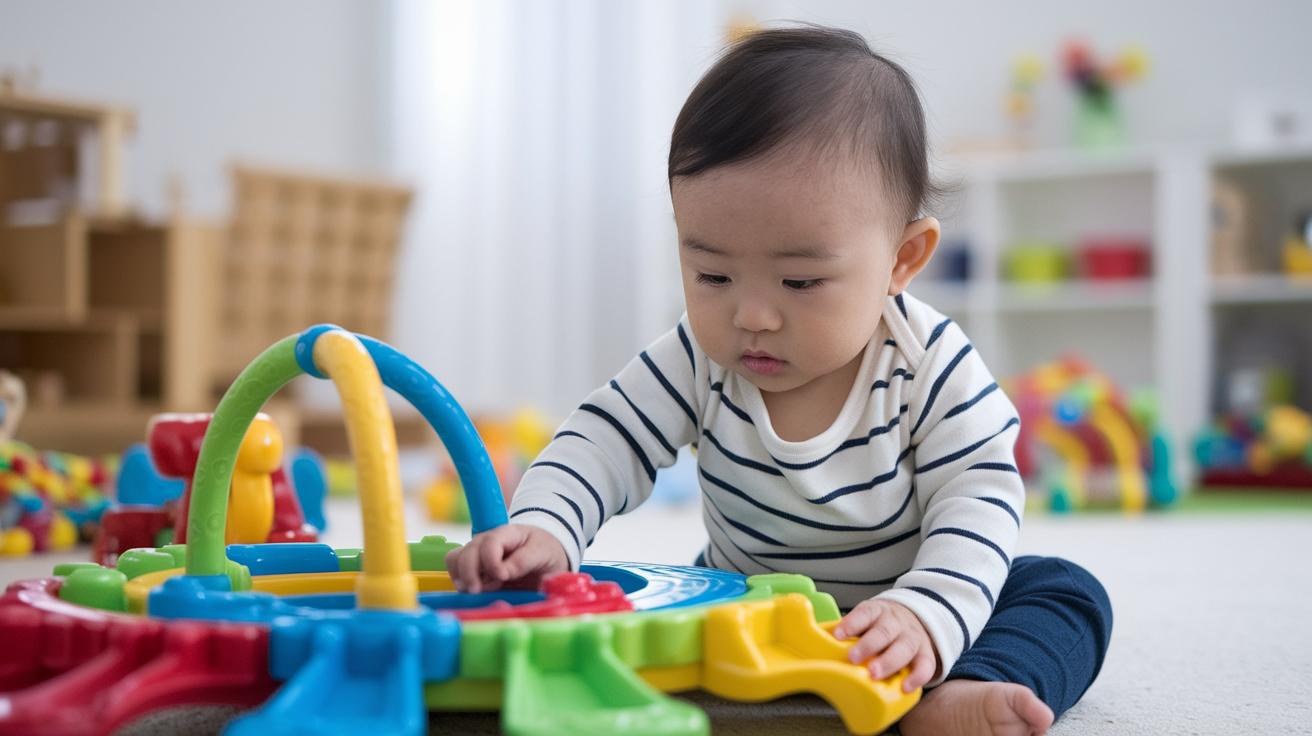
Parents and teachers can use Piaget’s ideas about how kids learn to plan fun activities that fit each age. For babies, simple sensory and motor activities, like feeling soft fabrics or exploring a safe toy, spark curiosity and help build a strong base for learning later on.
When children hit preschool age, they really enjoy pretend play. Imagine a play area where a simple cardboard box can turn into a house or even a spaceship. This kind of imaginative fun encourages them to use their words and ideas, just right for the Preoperational stage.
For school-age kids, hands-on projects can make learning a blast. Simple puzzles, sorting games, or group activities let them see patterns and relationships clearly. Plus, little group chats where they explain their ideas help them practice logical thinking during the Concrete Operational stage.
As kids become teenagers, their minds start to handle more complex ideas. Projects that ask them to solve problems, like looking into environmental issues or social topics, let them work with abstract ideas. It’s a great way for them to practice critical thinking as they step into the Formal Operational stage.
Many teachers also choose a classroom approach that celebrates exploration and conversation with friends. Using ideas from trusted research on early childhood learning can inspire creative, hands-on lessons that spark curiosity and learning.
- Sensory activities for infants
- Pretend and language games for preschoolers
- Logic and sorting tasks for school-age children
- Abstract, problem-solving projects for teens
Critiques and Contemporary Perspectives on Piaget’s Four Stages of Cognitive Development
Some experts feel that Piaget's ideas didn’t give enough credit to how social and cultural settings shape our learning. His work was really groundbreaking, but it often came from studying small groups of kids in fixed age groups. That means in everyday life, children might learn in ways that don’t fit neatly into these boxes. For example, a child playing with building blocks might talk through what they're doing and pick up skills sooner than the guidelines suggest.
Recent studies show that the boundaries between these learning stages are not as strict as they once seemed. Instead of following a set path, many kids mix different skills at the same time. A child might start to think abstractly while still loving sensory play. This tells us that every child grows in their own special way, something that Piaget’s model doesn’t fully capture.
Other ideas, like Vygotsky’s sociocultural theory, remind us that kids learn best through solving problems with others and chatting with caregivers or friends. This perspective adds a new angle to learning, sometimes even challenging Piaget’s original ideas. It shows that our interactions can boost growth and open up fresh ways to understand child development.
Modern research builds on Piaget’s early work while also considering important social factors and the uniqueness of each child. This updated view helps teachers and parents create learning activities that see children as whole, unique individuals rather than just fitting boxes.
Final Words
In the action, we explored how children build logical thinking through Piaget’s four stages of cognitive development. We saw how infants form bonds with their world in the Sensorimotor stage, how symbolic play and language blossom in the Preoperational stage, and how logical reasoning develops during the Concrete Operational stage. We also touched on the growth of abstract thought in the Formal Operational stage and how these insights shape educational practices. Every step offers fresh hope and practical ideas for nurturing a curious, confident young mind.
FAQ
What does Piaget’s stages of cognitive development PDF include?
The Piaget’s PDF outlines his theory of how children build thinking skills through four clear stages from infancy through adolescence, offering easy-to-read charts and summaries.
What is Jean Piaget’s theory of cognitive development?
Jean Piaget’s theory shows how children actively construct knowledge during four sequential stages, moving from hands-on exploration to abstract reasoning as they grow.
How is Piaget’s theory applied in education?
Piaget’s theory helps shape activities and lessons that match a child’s developmental stage, using sensory play for young children and abstract challenges for older students.
What defines the Sensorimotor stage in Piaget’s theory?
The Sensorimotor stage involves infants exploring their world through senses and movement, forming early schemas and grasping object permanence.
What are the key traits of the Preoperational stage?
In the Preoperational stage, children start using symbols and language to represent objects, yet their thinking is still marked by imaginative ideas and limited logic.
What happens during the Concrete Operational stage?
During the Concrete Operational stage, children develop logical thinking about real objects, mastering tasks like conservation and classification based on hands-on experience.
What are the four stages of cognitive development according to Piaget?
The four stages include Sensorimotor (birth–2 years), Preoperational (2–7 years), Concrete Operational (7–11 years), and Formal Operational (12 years and older), each marking a new level of thinking.
What are the four main aspects of cognitive development in Piaget’s theory?
They include learning through direct sensory experiences, using symbols and language, developing logical reasoning with tangible items, and evolving toward abstract thought.
How does Piaget’s theory compare to Vygotsky’s theory of cognitive development?
While Piaget emphasizes individual discovery through distinct stages, Vygotsky stresses the role of social and cultural interactions in shaping learning.