Have you ever stopped to think if your baby’s first laughs or the way they roll over mean something more special? Recent CDC guidelines tell us that about 75% of babies hit these milestones, not just 50%, giving you even more reasons to celebrate the little victories every day.
This friendly guide gently walks you through your baby’s growth month by month, from those tiny coos to the big, bold movements. Each smile, every babble, and every little grasp is a sign of healthy progress, a step toward a bright future. It’s a reminder that your baby is growing at their own pace, and that natural pace is something to be proud of.
Month-by-Month CDC Growth Indicators for Infant Development
The CDC has refreshed its "Learn the Signs. Act Early" program for the first time since 2004. Now, 75% of babies reach each skill instead of just 50%. This guide looks at big movements like rolling over, tiny actions like grasping objects, early talking, social smiles, and even babies figuring things out. Picture your little one’s eyes lighting up when they see a bright, spinning mobile, each skill is a little victory.
Crawling is now something to encourage rather than a strict deadline, giving you more room to see your baby grow at their own pace. The focus is on milestones at 2, 4, 6, 9, and 12 months so you can easily follow along. This handy snapshot lets parents and caregivers celebrate everyday wins and feel sure that their baby is on track.
| Age | Gross Motor | Fine Motor | Communication | Social-Emotional | Cognitive |
|---|---|---|---|---|---|
| Newborn–1 mo | Reflexive movements | Grasp reflex | Cooing sounds | Quiet alertness | Basic sensory responses |
| 2 mo | Lifts head briefly | Tracks objects | Coos | Social smiles | Beginnings of visual tracking |
| 4 mo | Rolls over partially | Grasps a rattle | Turns toward sounds | Enjoys interactions | Recognizes familiar faces |
| 6 mo | Sits with support | Reaches for objects | Babbles | Expresses pleasure | Explores cause and effect |
| 9 mo | Sits without support | Transfers objects between hands | Babbles with variation | May show stranger anxiety | Begins to understand object permanence |
| 12 mo | May start to stand/walk | Uses a pincer grasp | Says mama/dada | Waves, shows affection | Imitates simple actions |
Keeping a simple chart like this helps you celebrate every little step your baby takes. Take a look at the table to see how your baby is doing compared to the updated CDC milestones. Every small achievement is a moment of joy, like hearing your baby babble a new sound for the first time.
Physical and Motor Skill Progression in CDC Infant Milestones
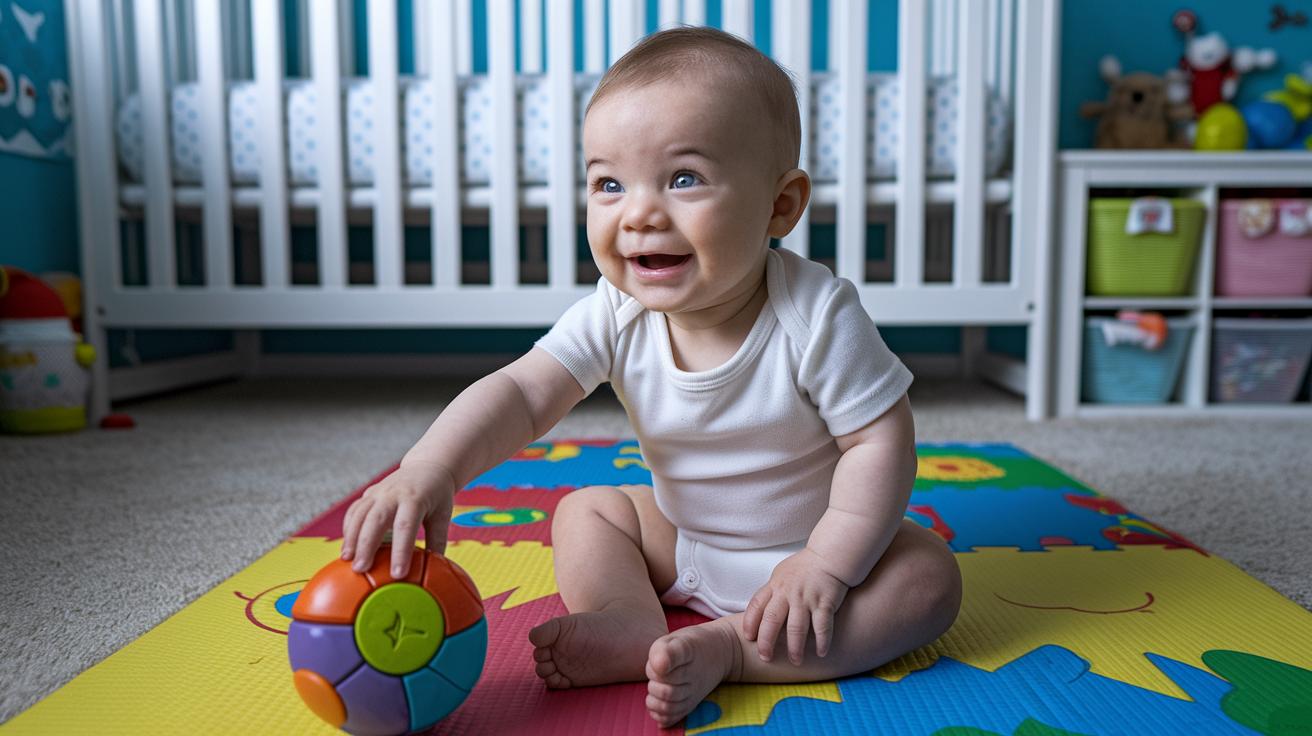
Revised CDC guidelines show that 75 percent of babies reach important motor milestones on time. In this guide, we look at two types of movements: big, whole-body actions like rolling or walking (gross motor skills), and smaller hand movements (fine motor skills). When your baby grabs a rattle at 4 months, it’s a sign of early fine motor development that helps build more precise skills later.
- At 2 months: Baby lifts their head briefly while on their tummy.
- At 4 months: They roll over, marking a big step in gross motor skills.
- At 4 months: They also grasp a rattle, using their hands in a new way.
- At 6 months: With a little help, they start sitting up, beginning to explore movement on their own.
- At 9 months: They can sit without support, showing a stronger core.
- At 9 months: They move objects from one hand to the other, refining their fine motor skills.
- At 12 months: Baby may start walking on their own, imagine the joy of that first step!
- At 12 months: They use a pincer grasp to pick up small items, showing more refined hand control.
Practical tips include offering plenty of safe tummy time to help build neck and shoulder muscles and placing toys just out of reach so that reaching and grasping become fun challenges. Big movements set the stage for exploring the world, while small hand movements support everyday tasks like self-feeding and playing. All these steps work together to boost overall physical growth and everyday skills.
Cognitive and Sensory Discovery Benchmarks in CDC Infant Milestones
CDC guidelines tell us that early behaviors show more than simply checking boxes. For example, when your baby visually follows moving objects at 2 months, it’s more than just a reflex, it’s a sign that their focus is starting to develop. Watching these moments helps you see how your little one is beginning to make sense of the world.
When your baby turns toward sounds around 4 months or begins exploring cause and effect between 6 and 9 months, it’s a gentle hint to join in their play. Try making soft sounds or dropping a favorite toy to see how they respond. Imagine picking up your baby’s rattle, shaking it gently, and noticing their curious eyes tracking the noise, it’s a playful way to boost their learning.
By 9 months, your baby may start to understand that things still exist even when they can’t see them, which can feel very reassuring. And by 12 months, when they begin to mimic your sounds or expressions, it marks a big step in early communication. When you mirror their actions, you’re not just playing; you’re nurturing their growing social and thinking skills.
Language and Social-Emotional Milestones According to CDC Guidelines
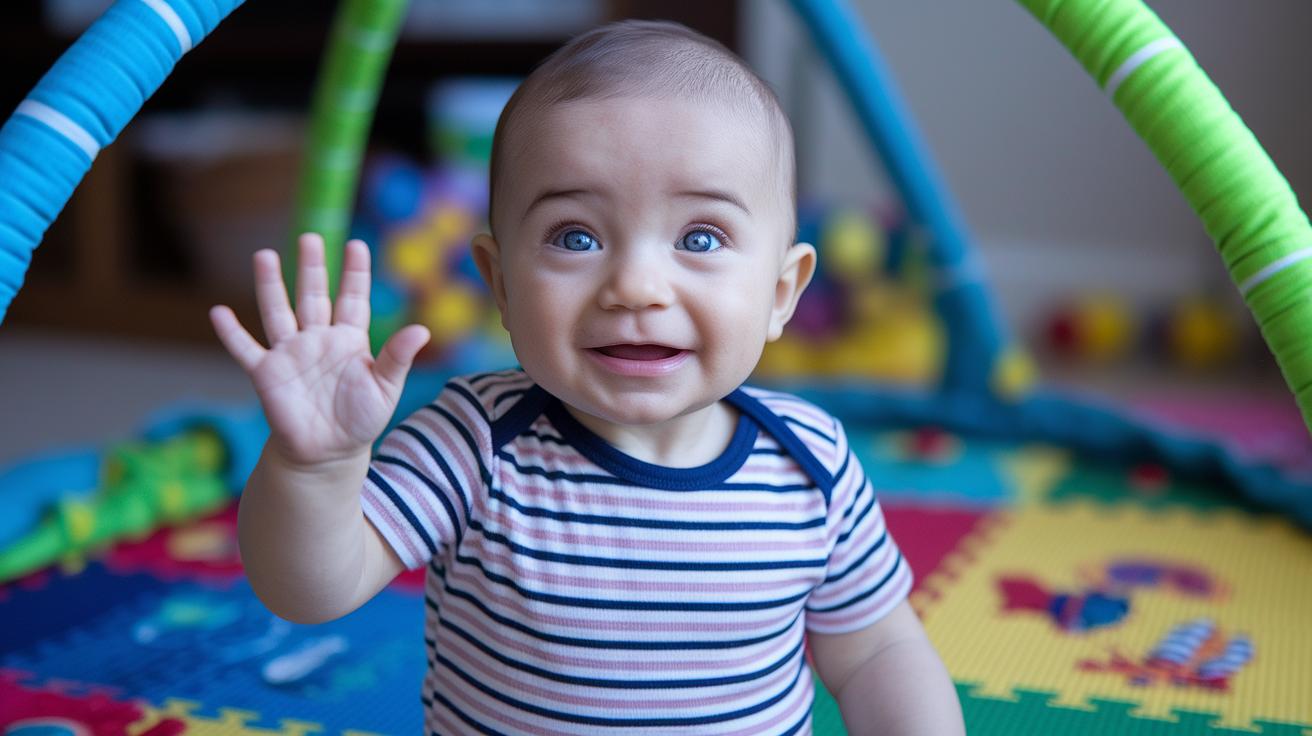
The CDC now checks for milestones by looking at the age range when most children show these skills instead of sticking to an average. When your little one starts babbling by 9 months or says mama or dada by 12 months, it’s more than just the cutest sound, it’s a sign that their language is naturally growing and ready for more detailed conversation. It’s like watching the very first sparks of chat that grow with every new sound and smile.
During those early months, you might notice your baby giving back a smile or showing a hint of stranger anxiety by 9 months. These little signals tell you that their emotional awareness is starting to blossom. Imagine catching a smile that lights up your heart, each one is a gentle reminder of how these early moments pave the way for deeper, more meaningful interactions later on.
By 12 months, simple actions like waving show a lovely mix of language and emotional growth. When your baby waves goodbye, it isn’t just a cute gesture, it reflects a growing understanding of social cues and a readiness for more back-and-forth moments. Picture a familiar face leaving and your little one giving a tiny wave, quietly saying they’re ready to join in on life’s little conversations.
Early Detection and Guidelines for Developmental Delays in CDC Infant Milestones
It’s important to keep an eye on your baby’s milestones. If your little one hasn’t smiled by four months, started to babble by nine months, or isn’t using simple gestures like pointing or waving by their first birthday, these might be early signs to watch. Even small things like consistent stiffness or unusual floppiness warrant a chat with your pediatrician. Think of it like a car’s dashboard light, if something doesn’t feel right, it’s best to have it looked at right away.
Noticing these signs can feel a bit worrisome, but catching them early really makes a difference. Imagine waiting for a friend who rarely shows up, you wouldn’t just ignore that, right? By reaching out to experts like a speech-language pathologist, occupational therapist, or physical therapist, you can get a clearer picture of what’s happening. This quick, proactive step helps give your child the best possible start.
Keeping track of these simple behaviors is part of looking after your child’s early growth. And if you ever have doubts about how things are going, the “Learn the Signs. Act Early” program is there to encourage a conversation with your healthcare provider. That way, if any concerns arise, they can be handled quickly with the right kind of support.
CDC Infant Milestone Resources and Next Steps

The CDC gives you free milestone checklists in PDF form, a handy mobile app to track your baby's steps, and friendly guides called "Watch Me! Celebrating Milestones and Sharing Concerns." Imagine having a neat progress chart printed out and pinned on your fridge so you can quickly mark every adorable smile and babble. You can even log each new skill on the CDC Milestone Tracker App (https://www.cdc.gov/ncbddd/actearly/milestone-tracker.html) to keep a clear record of your baby's growth, all matching up with the updated Learn the Signs program.
These tools make it easy for you to keep tabs on your little one's progress and share their milestones with your healthcare provider. Picture scribbling down that first brave crawl and then marking it on your DIY printable tracker, it’s such a small act but can really lift your spirits. These resources are designed to make keeping track of your baby's growth simple and reassuring, helping you celebrate every single step along the way.
Final Words
In the action of unfolding month-by-month growth, we explored physical, cognitive, language, and social-emotional progress. The guide walked us through CDC infant milestones, highlighting key ages for rolling, babbling, smiling, and more.
Every step reassures us that careful observation and gentle support make a difference. Using the updated cdc infant milestones, we're able to celebrate small wins and stay informed, leaving us feeling optimistic about each new milestone ahead.
FAQ
What is a developmental milestones PDF?
A developmental milestones PDF explains key CDC benchmarks in infant growth, including physical, social, and cognitive markers, offered as a clear, downloadable checklist.
What are CDC milestones?
CDC milestones identify essential infant skills in areas like gross motor, fine motor, communication, social-emotional, and cognitive development based on the Learn the Signs. Act Early program.
What does a baby milestones chart from 0-12 months include?
A baby milestones chart from 0-12 months lists age-by-age progress in skills such as tracking, grasping, babbling, and walking, reflecting updated CDC development indicators.
How do baby milestones progress month by month?
Baby milestones progress month by month by tracking improvements in physical, language, and social skills, marking key checkpoints at ages 2, 4, 6, 9, and 12 months.
What are the differences between new CDC milestones and old guidelines?
New CDC milestones raise the standard from 50% to 75% of infants reaching each skill and shift some behaviors like crawling to being encouraged rather than required.
Is there a CDC milestones checklist PDF available?
A CDC milestones checklist PDF is available for download so you can easily print and track your infant’s physical, language, and social-emotional growth.
What is a developmental milestones chart?
A developmental milestones chart visually maps out age-specific skills across motor, communication, and cognitive areas, helping parents monitor their child’s progress per CDC guidelines.
Can I download a developmental milestones PDF for free?
Yes, you can download a developmental milestones PDF for free to keep track of your baby’s progress and compare it with the updated CDC benchmarks.
Did the CDC change milestones for babies?
The CDC did change infant milestones by raising the expected skill attainment to 75% and redefining certain behaviors like crawling to better match overall development.
What is the CDC’s milestone tracker?
The CDC’s milestone tracker is an online tool and mobile app that lets you log and monitor your infant’s progress against current developmental benchmarks.
What are normal milestones for infant development?
Normal infant milestones include physical skills like rolling, sitting, and walking, along with social, communication, and cognitive achievements that align with CDC guidelines.
Did the CDC say crawling is no longer a milestone?
The CDC now considers crawling an encouraged behavior rather than a strict milestone, highlighting a broader view of developmental progress in infants.