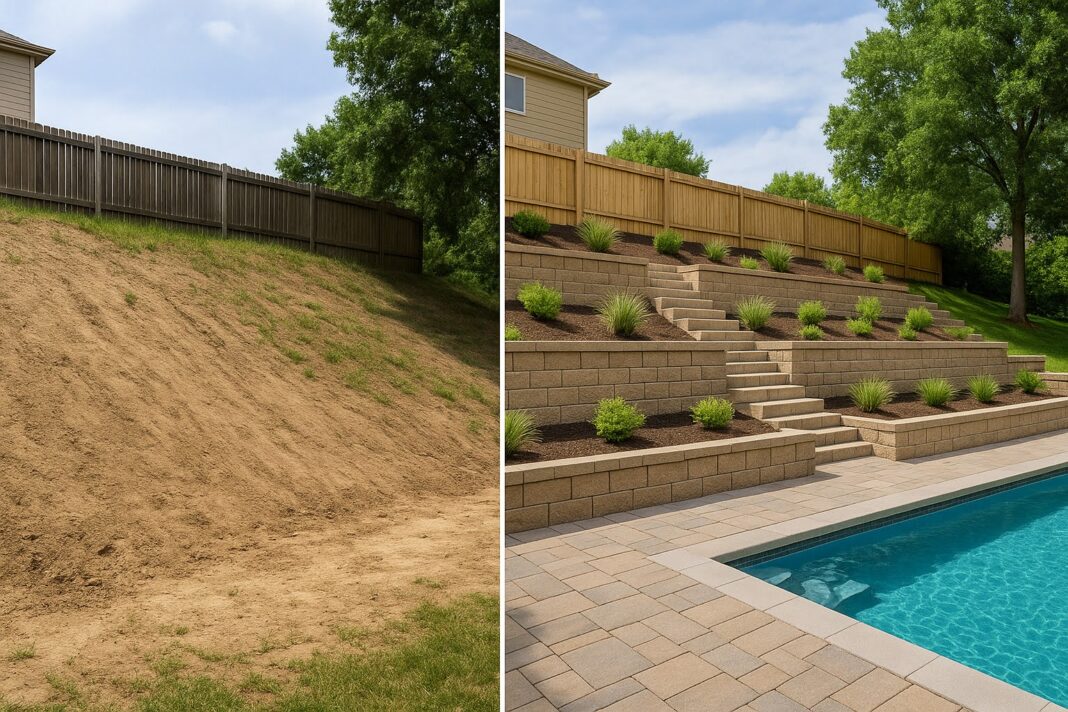
Building on a slope presents both opportunity and challenge. The natural grade can offer stunning views, improved drainage, and privacy, but only when managed properly. Without proper planning, slopes can cause soil erosion, structural instability, and water runoff issues.
Whether you’re designing a backyard oasis or considering new construction, the right combination of retaining walls, terraces, and elevation techniques can transform a problem slope into a beautiful, functional space.
Why Sloped Lots Need Special Treatment
Slopes put pressure on structures. Gravity pulls soil and water downhill, leading to potential damage over time. Poor drainage on slopes increases the risk of erosion, pooling, and instability. Retaining walls and terraces solve these problems by providing support, slowing water runoff, and creating level ground for landscaping or construction.
Slopes are also common in regions like Henderson, Nevada, where residential neighborhoods are carved into hillsides. Local firms such as Vista Pools LLC often design and install water features and landscapes in these elevated settings, using creative grading and engineering to prevent runoff from damaging pools, patios, or gardens.
Retaining Walls: Structure and Support
Retaining walls are essential in slope construction. They hold soil in place, reduce erosion, and create flat spaces. Depending on the slope’s size and function, walls may be built with concrete block, poured concrete, stone, timber, or gabion baskets.
Key Benefits:
Prevents soil from sliding
Helps control water flow
Provides level areas for patios, driveways, or gardens
Enhances curb appeal with built-in seating or lighting
Design Tips:
Walls over four feet typically require engineering
Always use proper drainage behind the wall to prevent hydrostatic pressure
Consider tiered walls to reduce visual bulk and manage elevation changes in stages
When done correctly, retaining walls are not only functional but aesthetically pleasing.
Terracing: Beauty with Purpose
Terracing is the art of cutting a slope into flat platforms or steps. These “mini-plains” allow for planting, seating, or even small lawn areas. Each terrace is supported by a retaining wall or natural embankment.
Why Terrace?
Slows down water and prevents erosion
Adds visual rhythm and usable space
Works well for gardens, paths, and small water features
Terracing is ideal for medium to steep slopes where a single retaining wall would be too tall or invasive.
Tricks That Make Sloped Yards Work
Smart design solves complex problems. Here are techniques to maximize your slope without constant maintenance:
1. Use Deep-Rooted Plants
Plant ground cover with strong roots to stabilize the soil and reduce runoff. Native grasses, creeping thyme, and junipers are excellent choices.
2. Add Gravel Drainage
Behind retaining walls or under patios, gravel improves water movement. Without it, water builds up and weakens the structure.
3. Integrate Stairs or Stepping Paths
Make movement safe and natural. Stairs or large pavers work better than slick ramps on steep grades.
4. Position Pools Carefully
Pools on a slope must be built into the terrain or supported by elevated platforms. Local experts like Vista Pools LLC handle pool design for sloped lots, using advanced engineering to ensure stability, proper water flow, and easy maintenance.
And if you’re investing in a pool, keep it clean with top-rated pool cleaning services in Henderson NV to protect your investment.
Planning Tips Before You Build
Get a Site Survey: Understand the grade, drainage paths, and soil type
Consult Professionals: Builders, landscape architects, or engineers can spot future problems
Check Local Codes: Many cities require permits or inspections for retaining walls
Plan Drainage Early: Water must be directed away from structures and neighboring properties
Sloped lots can increase construction costs, but with good design, they add value and character to your property.
FAQs
Do I need a retaining wall for every slope?
Not always. Mild slopes can be managed with grading, plantings, or small terraces. Steeper grades usually require structural support.
What is the best material for retaining walls?
It depends on your budget and style. Concrete block and poured concrete are durable and popular. Timber is affordable but less long-lasting.
Can I build a pool on a sloped yard?
Yes, but it requires custom design and possibly structural supports. Experienced builders like Vista Pools LLC can handle sloped pool installations.
Are terraces hard to maintain?
No. Once built, they require basic upkeep like any garden bed. Good drainage and low-maintenance plants make a difference.
How do I keep my slope from eroding?
Use retaining walls, plant ground cover, and control water runoff with gravel or drains.
Final Word
Sloped properties offer beauty and complexity. With the right retaining walls, terraces, and strategies, you can turn uneven ground into usable, attractive space. Smart planning and good construction are essential.
From supporting pool installations to framing lush gardens, slopes are no longer obstacles. They’re design opportunities.
For those in the Southwest, companies like Vista Pools LLC and trusted pool cleaning services in Henderson NV bring practical solutions to hillside properties—ensuring your slope supports, rather than sabotages, your dream outdoor space.