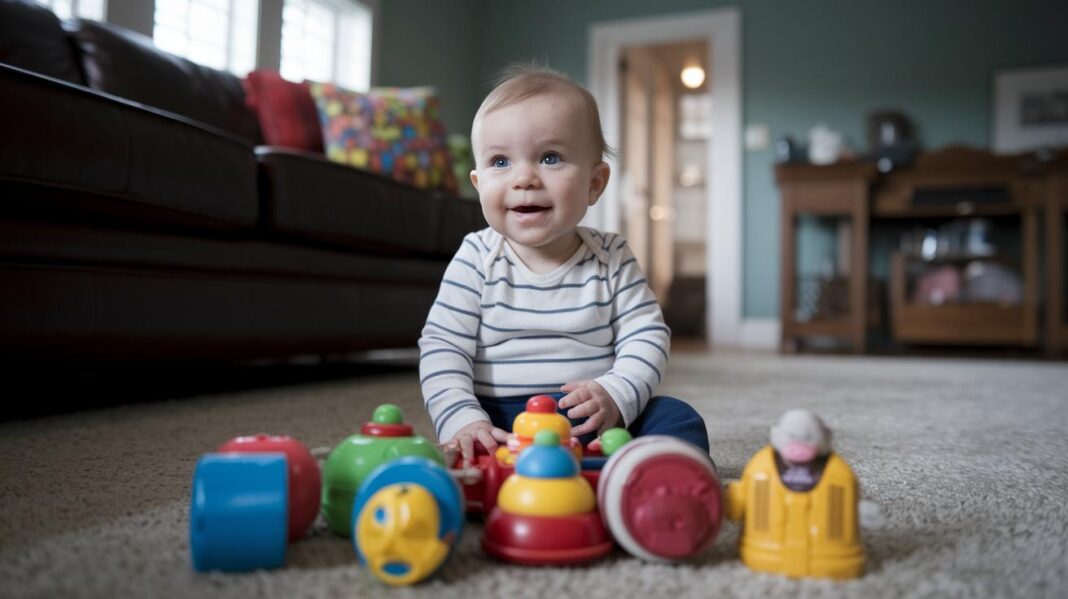
Have you ever noticed how your baby's smile can light up a whole room? Each little coo or giggle is like a tiny cheer for all the progress they're making. In this post, we take a warm, month-by-month look at these early milestones, giving you a friendly roadmap of your little one’s growth. Let’s celebrate every small victory as your baby blossoms into their very best self.
Infant Growth Milestones by Month
Tracking your baby's growth every month gives you a gentle roadmap of their little achievements. It helps set clear, realistic expectations by showing how your little one develops in small, meaningful steps. Celebrating even the tiniest progress can brighten your day and keep you informed about the wonderful changes ahead.
| Month | Physical | Cognitive | Language | Social |
|---|---|---|---|---|
| 1 Month | Snuggling, sleeping, feeding | Basic sensory responses | Soft cooing sounds | Quiet bonding with a caregiver |
| 2 Months | More alert and smoother movements | Notices things nearby | First early vocal sounds | Begins forging a family connection |
| 3 Months | Moves more actively | Follows objects with their eyes | Smiles socially and coos | Grows closer to caregivers |
| 4 Months | Better hearing, touch, and vision with intentional arm and leg movements | Responds to sights and sounds | Makes clearer babbling sounds | Expresses joy through smiles and laughter |
| 5 Months | Sits with support; shows signs of readiness for solid foods | Curiosity about objects increases | Starts exploring babbling | Shows excitement during play time |
| 6 Months | Reaches for objects and shows better coordination | Begins to understand that objects exist even when out of sight | Improves babbling and sound play | Responds warmly to familiar faces |
| 7 Months | Sits on their own | Improves hand-eye coordination | Varies babbling sounds | Loves interactive play |
| 8 Months | Reaches and grabs with purpose | Explores their surroundings more actively | Makes a range of sounds | Plays happily with familiar faces |
| 9 Months | May start crawling while personality emerges | Begins to mimic actions | Uses different vocal sounds | May show anxiety around strangers |
| 10 Months | Crawls or scoots and practices fine motor skills | Improves memory and problem-solving abilities | Tries out simple words | Builds deeper bonds with caregivers |
| 11 Months | Pulls up to stand and moves along furniture | Shows early problem-solving skills | Might say simple phrases | Interacts more during play |
| 12 Months | Takes first steps and uses gestures like “bye-bye” | Actively explores the world | Says “mama/dada” and a few simple words | Displays open affection |
Remember, every baby is unique. These milestones are just a flexible guide and not a
Infant Growth Milestones Tracker: Tools and Tips for Parents

Watching your little one grow can be such a joy. Keeping track of every tiny win helps you feel sure about their progress. It also makes it easy to notice small changes over time, which can be really handy during doctor visits and at home.
You might like using milestone apps that send you friendly reminders so you never miss an update. Or try printing monthly PDFs from trusted pediatric groups for a quick glance. Some moms love keeping a weekly photo journal to capture each memorable moment. Others jot down everyday milestones in a developmental journal, making it a fun daily habit. And why not use pediatric check-ups as a chance to review your baby’s progress? There are even playful logs that let you record your observations in a hands-on way.
Mixing digital tools with simple printables gives you the flexibility to fit tracking into even the busiest days. When you blend casual, everyday notes with regular doctor check-ups, you get a complete picture of your baby’s journey. Each day then becomes a special opportunity to celebrate the little steps that add up to big, beautiful successes.
Infant Growth Milestones: Physical and Cognitive Stages
Every tiny movement a baby makes does more than build muscle. When they roll, sit, or crawl, they’re also lighting up brain pathways that help them learn about cause and effect. Picture a baby reaching for a toy, not just practicing motor skills but sparking early problem-solving and curiosity as they discover that a gentle shake produces a sound.
These early steps also pave the way for language and social growth. When a baby explores and handles objects, they’re quietly laying the groundwork for recognizing faces, sounds, and even learning to mimic simple gestures like a parent’s wave. Each little attempt builds a bridge from physical control to forming meaningful connections.
Each new motor skill gives them the confidence to interact with their world. As they master these movements, they sharpen their senses and start communicating in little smiles and baby gestures. It’s amazing how a simple smile at a familiar face can show the growing link between their physical progress and social bonding.
Infant Growth Milestones: Recognizing Atypical Development
Every baby grows at their own pace, and it’s completely normal to see small differences. Still, sometimes a few signs might mean your little one needs a bit of extra attention. It can feel a bit worrying when your child doesn’t hit every milestone exactly on schedule. Just remember that many of these differences are perfectly normal, but knowing what to watch for can help you decide when it’s time to give your doctor a call.
For example, if your baby hasn’t started giving social smiles by the time they’re 3 months old, it could be a hint that their social engagement is taking a little longer to develop. Similarly, if you haven’t heard any babbling by around 6 months, it might suggest that their early language skills are coming in late. And if your baby isn’t able to sit with a bit of support by about 9 months, this might mean that their physical milestones need a little extra help. Keeping an eye on these cues, along with knowing your baby’s usual rhythm, can make you feel more confident as you watch their growth.
Regular pediatric screenings at 9, 18, and 24 months are really helpful for checking on overall development. So if you notice any of these signs, it’s a good idea to talk with your doctor or even a specialist. Early intervention can provide the needed support, helping your baby thrive as they grow.
Infant Growth Milestones Resources: Printable Checklists and Guides
If you’re looking for a simple way to track your baby’s growth, free milestone checklists from trusted groups like the CDC and AAP are a great start. These printable charts help you spot changes in growth, motor skills, and language, and they work nicely with digital apps so you can check on things anytime. I remember being surprised the first time I saw the CDC checklist, it showed me how each little milestone can add up to a lifetime of memories.
Creating your own milestone journal or poster can make tracking even more special. It’s fun and personal, imagine writing down the day your child said their first word, adding a cute photo, and keeping that memory alive. It turns everyday moments into treasured keepsakes.
Local parenting groups, pediatric guides, and handy handouts can give you extra support as you watch your child grow. These resources pair well with printed checklists, mixing expert advice with everyday tips. For even more insight, you might want to explore readings on "stages of childhood development" and "language development milestones" for clear, expert-backed guidance.
Final Words
In the action, this article showed a clear, month-by-month look at infant growth milestones, highlighting cuddling, babbling, first steps, and more. We shared practical tools like apps, printables, and photo logs that help track baby progress as well as tips for spotting when development might need a closer look. The guide on physical, cognitive, language, and social changes gives a friendly, hands-on approach to parenting. Every baby grows at its own pace, and using this overview can inspire confidence as you watch those precious milestones unfold.
FAQ
Q: What does an infant growth milestones chart show?
A: The infant growth milestones chart shows typical physical, cognitive, language, and social development from birth to 12 months. It helps parents track progress and set clear expectations for their baby’s growth.
Q: What are normal milestones for infant development?
A: Normal milestones include social smiling, cooing, rolling, sitting, crawling, and early steps. Such markers guide parents in understanding that babies grow and learn at their own steady pace.
Q: What are the five developmental milestones in a baby’s first year?
A: The five developmental milestones usually cover physical (motor skills), cognitive (thinking), language (communication), social (interaction), and emotional (feelings) areas, which together shape a baby’s overall progress.
Q: What is considered the hardest month for a baby?
A: Many caregivers find that around 4 to 6 months can be challenging due to rapid changes in physical and cognitive abilities, often causing increased fussiness and adjustment in sleep patterns.
Q: What can a baby typically do from 0 to 12 months?
A: From 0 to 12 months, babies start with basic needs like feeding and sleeping, then develop to smile, coo, roll, sit, babble, crawl, and take first steps, with each month adding new skills.
Q: Where can I find a developmental milestones PDF or checklist?
A: Developmental milestones PDFs and checklists are available from trusted sources like CDC and AAP. These tools offer a handy, printable guide to help parents track their baby’s progress month by month.