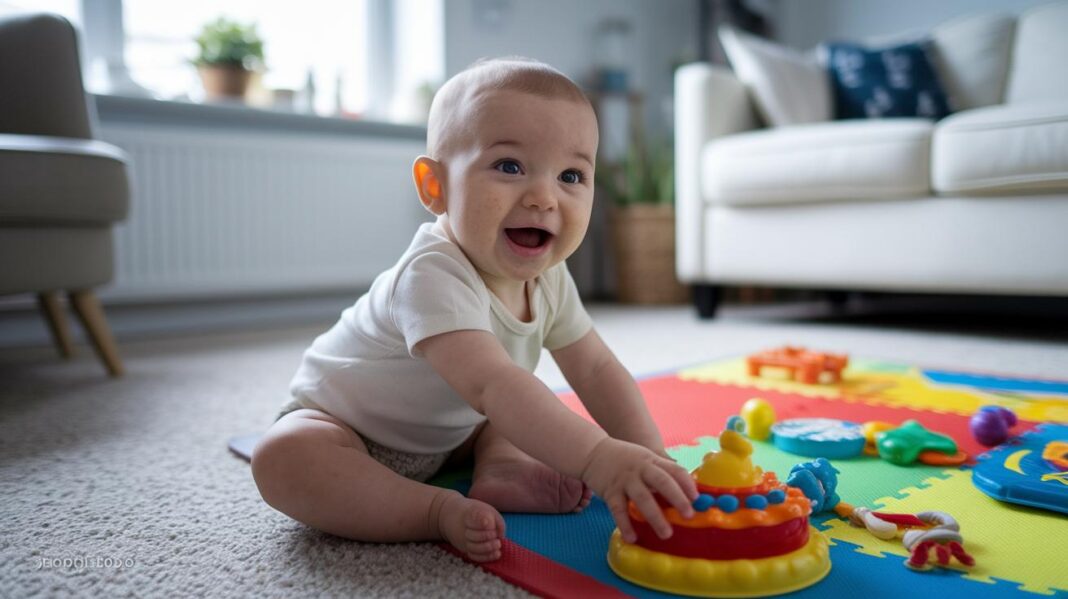
Have you seen your nine-month-old explore like a little adventurer? At this stage, your baby might be crawling, pulling up to stand, or even cruising around with that charming, wobbly gait that melts your heart. Their sweet babbling turns into joyful sounds as they learn that even hidden objects still exist.
Today, let’s chat about these fun milestones and what they mean for your baby’s growth. Each small step and sound is a sign of progress that turns everyday moments into warm celebrations.
9-Month Infant Milestones Overview at a Glance
At nine months, your little one starts showing off some fun new moves and sounds. They might crawl, scoot, or pull up on the furniture, and sometimes they even cruise around while holding on for dear life. Have you ever seen them glide along the couch like a tiny explorer, enjoying each wobbly step?
During playtime, you may notice that they now understand objects still exist even when hidden. For instance, they might look for a toy that’s been put out of sight, as if it had never left. Their babbling gets livelier too, sounding out words like "mama" or "dada" when they call out for you or another loved one. And yes, those social smiles come with a side of mild stranger anxiety when a new face appears.
Growth stays steady, too. On average, your baby gains about 0.5 to 1 pound each month, grows around 0.5 inches in length, and their head gets a little bigger by about 0.25 inches monthly. Sleep is super important at this stage, most babies clock in about 14 hours in a day, with 11 to 12 hours at night and a couple of naps during the day.
Feeding usually involves 2 to 3 meals of solid foods, like grains, fruits, and vegetables, along with 3 to 5 feeds of breast milk or formula. Regular pediatric checkups help keep an eye on all these wonderful changes as your baby grows.
Gross Motor Skill Achievements by Nine Months
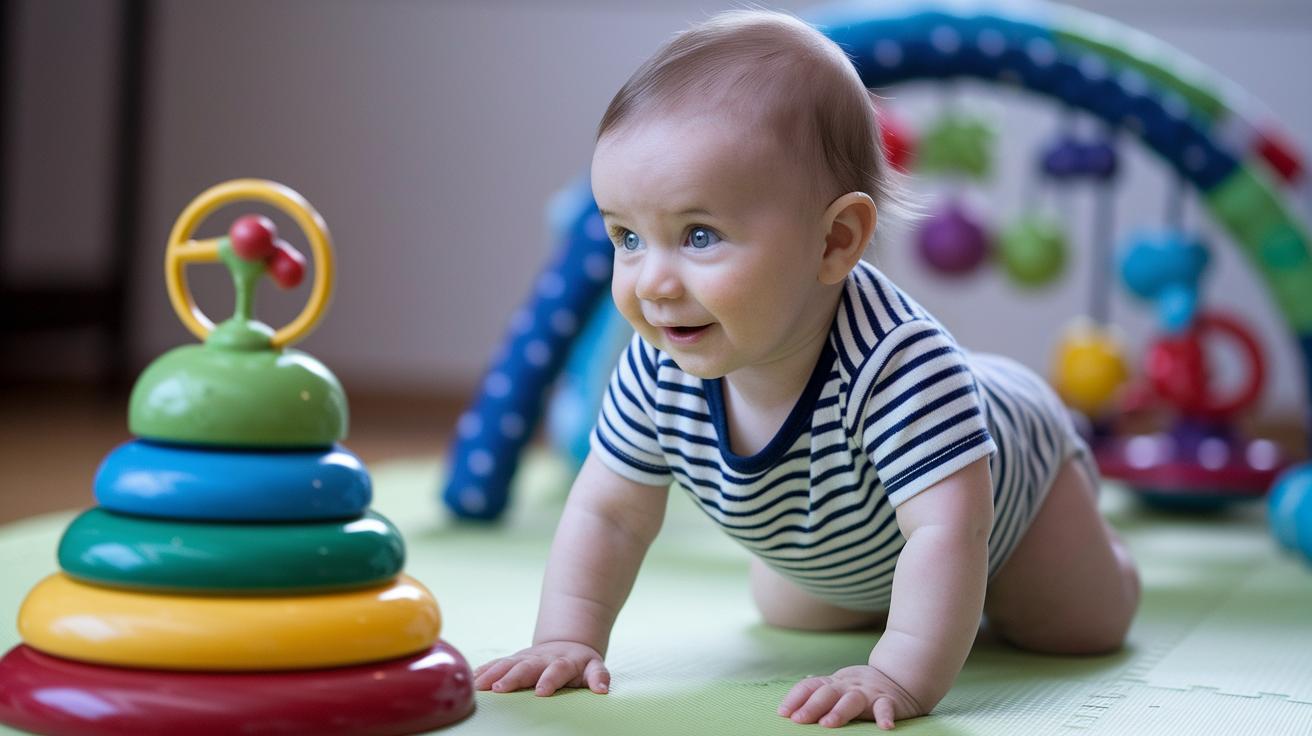
By nine months, your little one starts to show off their moving skills. You might notice them crawling or scooting across the floor, a sign that all those tummy times are really building up their neck and back muscles.
Most babies begin to pull themselves up by holding onto furniture between 8 and 11 months. Once they can stand, they often cruise along the edges of a sofa or table. It’s a milestone that brings many happy cheers from parents. You might also see your baby shifting positions while sitting on their own, showing that their balance and coordination are getting stronger with each wiggle.
Every crawl, pull, or cruise is a small step toward growing strength. Even little movements, like scooting toward a bright toy, help boost muscle control and balance. Try placing some soft objects within easy reach or set up a cozy, safe space where your baby can explore while you watch with a smile.
Fine Motor Progress in 9-Month-Old Infants
By nine months, your little one starts to explore the world using their hands. You might notice them picking up small bits of food or tiny toys with a thumb-and-index finger pinch. When they move objects from one hand to the other, it means they’re getting better at matching what they see with their movements.
Each time your baby bangs a toy or stacks a couple of soft blocks, they're learning and growing those fine motor skills. Try giving them safe finger foods to practice self-feeding and explore different textures. For instance, if they grab a piece of soft fruit, it shows they're learning how to hold things with care, sort of like how little hands turn the pages of a board book.
Simple fun activities like reaching for scattered items or gently nudging toys can help improve their coordination even more. Encouraging these small interactions with safe, age-appropriate objects supports their progress at this precious stage. Every playful moment builds stronger, more confident little hands as they discover their world.
Cognitive Milestones and Object Permanence at Nine Months
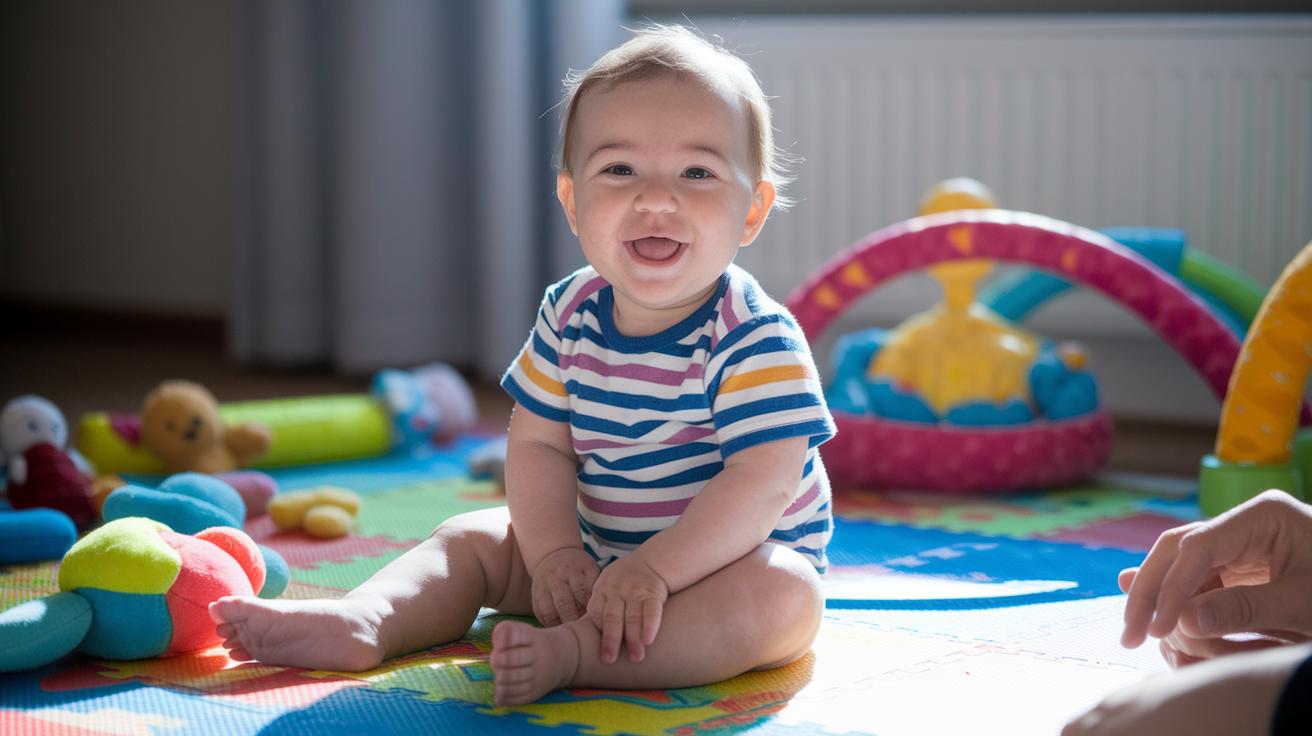
At nine months, your little one becomes a curious detective, exploring every nook and cranny of their world. When you hide a favorite toy under a blanket or behind a cushion, they might eagerly lift the cloth to reveal it, showing their growing grasp of object permanence.
Each playful moment is a gentle lesson in cause and effect. For instance, your baby might drop a small toy repeatedly and learn that letting go makes it fall. Try spreading a few soft toys on a mat and watch them joyfully knock them over, discovering what happens next.
Your baby is also learning by copying you. If you start clapping during playtime, they often try to mimic your claps. This simple imitation is a charming sign of early problem-solving skills, as if they're figuring out that actions lead to reactions.
Encouraging these little experiments can build their confidence and curiosity. Whether it's shaking a rattle or gently tapping two soft blocks together, each sound and movement invites them to explore further. Isn’t it wonderful to see such big discoveries happening one small step at a time?
Infant milestones 9 months: Joyful Progress Ahead
At nine months, your little one starts making an enchanting mix of sounds like “ba-ba” and “da-da” as their babbling turns into early language play. It’s amazing to see them begin to match these sounds with real meaning, almost like a secret language you both share. They respond to their name and recognize simple words like “no,” setting up the building blocks for future chatting.
Besides the sounds, your baby is learning to communicate with gestures too. A cheerful wave or a little point toward a favorite toy tells you exactly what they need, even if the words aren’t clear yet. Imagine that sweet moment when your baby points excitedly at something and adds a soft “ba-ba”, it’s their unique way of connecting.
Chat with your baby throughout your day, whether at playtime or during snack time. These everyday talks help them turn sounds into meaningful conversation and keep that delightful progress going.
Social and Emotional Engagement Benchmarks at 9 Months
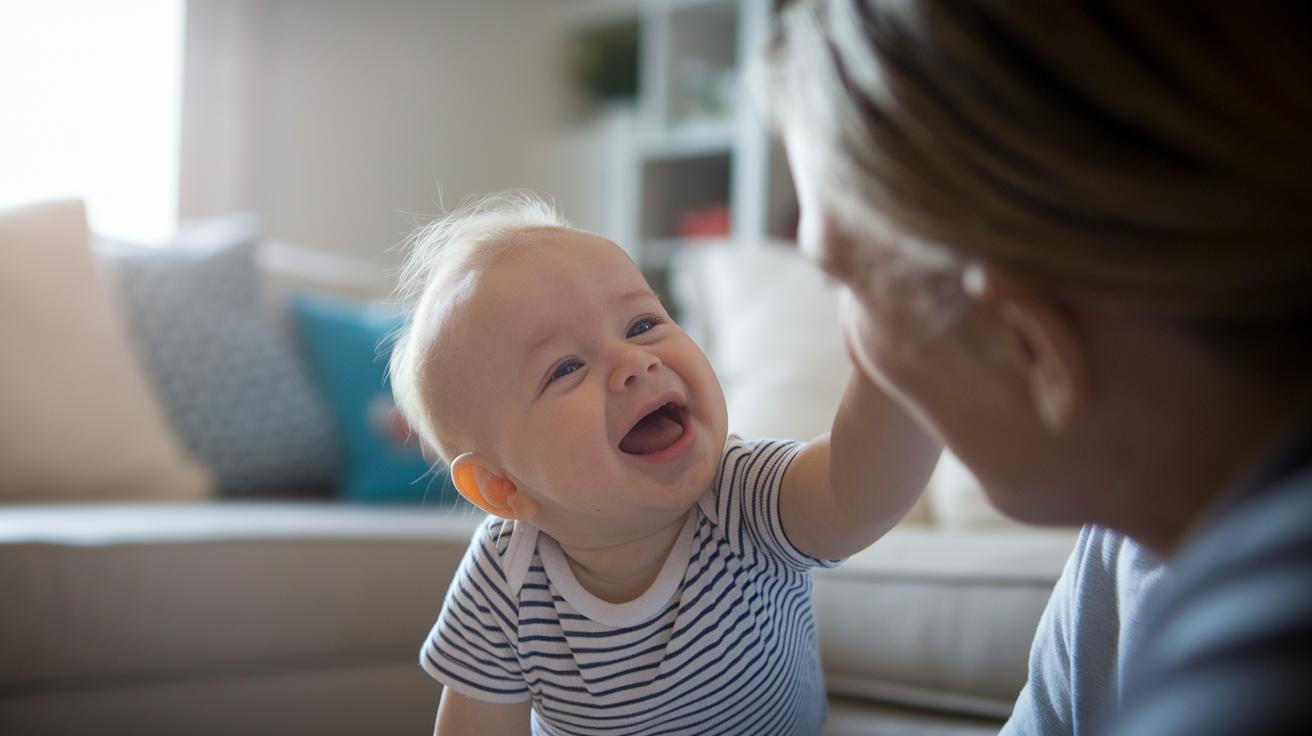
When your baby reaches nine months, you start noticing little social smiles and giggles during playful moments like playing peek-a-boo. Imagine those joyful laughs lighting up your day as you share a simple game together. Their little facial expressions, a soft frown or a big smile, can tell you so much about how they feel.
At this stage, your baby might also begin using gestures like pointing when they want something. These sweet, silent signals help kickstart their language skills and let you know when they need a hug or a bit of comfort.
- Smiling warmly at familiar faces
- Laughing brightly during interactive play
- Pointing to express what they need
- Showing gentle reactions when meeting new people
Watching these small moments gives you a nice peek into their growing social and emotional world, and it reminds you how wonderfully they're discovering the joy of connecting with others.
Nutrition Schedule and Growth Markers for Nine-Month Babies
At nine months, your little one usually enjoys 2 to 3 solid meals a day along with 3 to 5 milk feeds of either breast milk or formula. These meals generally include servings of about a quarter to a half cup of grains, fruits, vegetables, dairy, and protein. It can be fun to mix up the textures so your baby can start practicing self-feeding. Imagine your baby excitedly grabbing a soft piece of fruit, feeling its texture, and exploring its taste while learning to dab food on their face.
Balanced, nutrient-rich foods help support steady growth, typically around a half to one pound weight gain and a half-inch increase in length every month. Regular visits to the pediatrician are a warm reminder that these milestones are being met while keeping an eye on both nutrition and new motor skills.
| Meal Type | Serving Size |
|---|---|
| Solids | 2 to 3 meals, ¼ to ½ cup each |
| Milk Feeds | 3 to 5 feeds of breast milk or formula |
Sleep Pattern Transitions in 9-Month-Old Infants
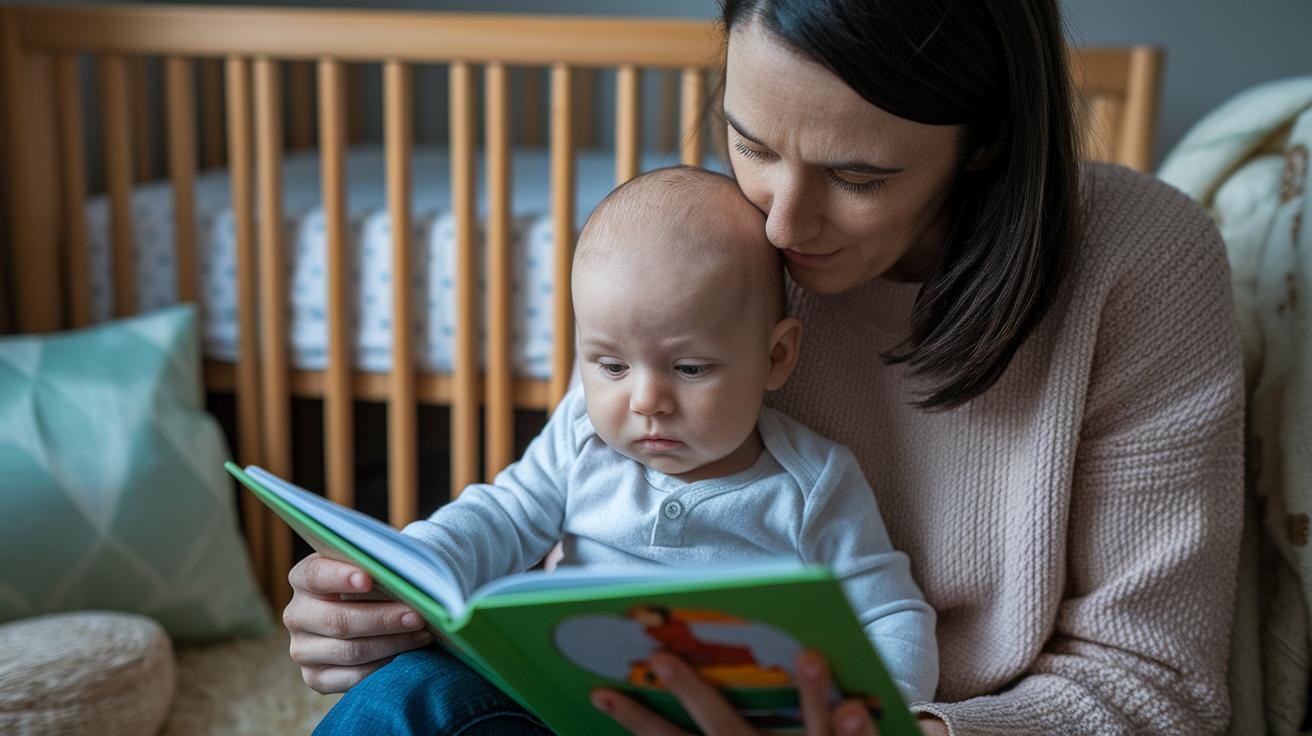
At nine months, your little one usually gets about 14 hours of sleep in a day. They enjoy roughly 11 to 12 hours of nighttime sleep and often take two naps that add up to around 2 to 3 hours. When they’re awake, they tend to be active for nearly 3 hours before needing another little break.
Creating a calming bedtime routine can really help. For example, you might lower the lights and play soft lullabies, almost like whispering, "Imagine a gentle song wrapping you in a warm hug." Whether it’s reading a short picture book or enjoying a quiet cuddle, these small actions can gently signal that it’s time to wind down.
A steady nighttime routine not only helps your baby sleep better but also builds a comforting sense of security during these important sleep transitions.
Infant milestones 9 months: Joyful Progress Ahead
Every day can feel extra special with little twists added to your routine. For example, during tummy time, try humming a gentle lullaby. It can help your baby lift her head while feeling calm and safe. You might also mix up sensory play by letting your baby feel something smooth beside something a little rough, this keeps playtime fresh and exciting.
You can also make peek-a-boo even more fun by changing your voice. Maybe start with a quiet whisper and then surprise her with a cheerful greeting. During board book time, read a line out loud, pause, and let your baby respond with babbles and smiles. And when you play pull-to-stand games, pair the movement with kind, upbeat words that encourage her little efforts.
- Tummy time with soft lullabies to create a calm space
- Sensory play that mixes smooth and slightly rough textures
- Peek-a-boo with varied voice tones for extra fun
- Board book time with pauses to invite babbles and smiles
- Pull-to-stand games paired with cheerful, encouraging words
Identifying Delays and When to Seek Help for 9-Month Milestones
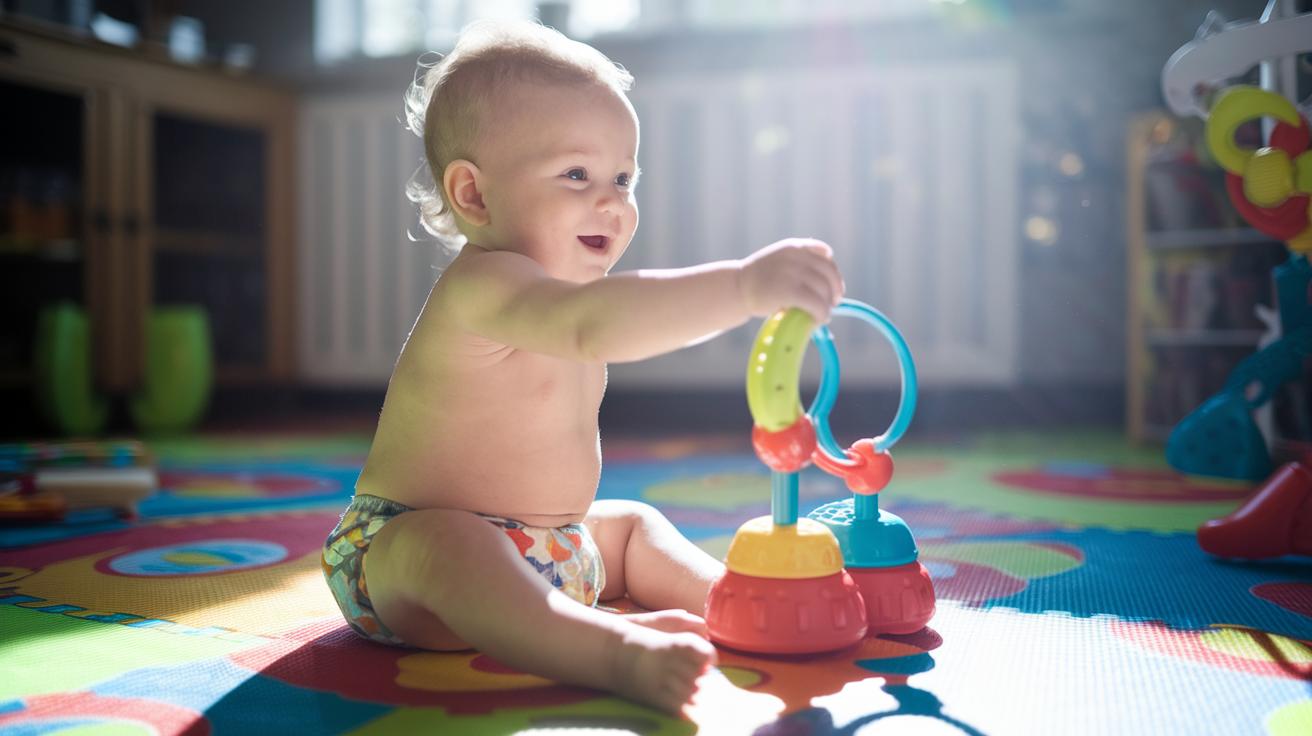
At nine months, your little one is busy exploring their world, and it can feel reassuring to know what to expect. But sometimes, you might notice a few hints that it’s time to check in with a doctor. For example, if your baby isn’t rolling or crawling by around 10 to 11 months, or if they haven’t developed a pincer grasp (using their thumb and finger to pick things up) by 12 months, it might be a good idea to get a second opinion.
It's also important to keep an eye out for signs like not babbling much, having very few social smiles, or limited eye contact. Have you ever noticed how your baby lights up when you smile, or how they might start saying simple sounds like “ba-ba” or “da-da”? If these moments are missing, it could be time to reach out to your pediatrician.
Here are some things to watch for:
- Not rolling or crawling by 10–11 months
- Not showing a pincer grasp by 12 months
- Limited or no babbling
- Few social smiles or reduced eye contact
CDC developmental checklists can be a handy guide. If you notice two or more of these points, it might be worth having a chat with your pediatrician to see if early intervention could help.
Final Words
In the action of watching your little one grow and explore, the blog has quickly covered key insights around infant milestones 9 months. You’ve got a clear look at physical steps like crawling and pulling to stand, careful pincer grasp developments, early babbling, and social smiles that warm your heart. The guide also shared practical tips for nutrition, sleep routines, and nurturing activities at home. Keep embracing each moment with hope and joy, every small achievement is a sign of a bright, growing future.
FAQ
What should babies be doing at 9 months in terms of milestones?
At 9 months, babies typically crawl or scoot, pull themselves to stand, use a pincer grasp for small items, and show social smiles and some stranger anxiety.
What are some cognitive milestones for a 9-month-old baby?
A 9-month-old shows object permanence by searching for hidden toys, imitates simple actions like clapping, and uses exploratory play to practice problem-solving.
How many words should a 9-month-old say?
A 9-month-old usually focuses on varied babbling and may start linking “mama” and “dada” with parents rather than having a set vocabulary of words.
What developmental red flags should parents watch for at 9 months?
Red flags include no crawling or rolling by 10 to 11 months, absence of a pincer grasp, little babbling, and limited social smiling or eye contact, all of which may warrant a pediatric check.
What activities can boost brain development in a 9-month-old?
Engaging in tummy time, interactive games like peek-a-boo, sensory play with different textures, and reading board books with rhymes all support brain and motor development.
What milestones might be expected as a baby moves from 9 to 10 months?
By 10 months, many babies build on earlier skills by beginning to stand with help, using simple words more, and showing increased interaction during play.
What is the typical weight for a 9-month-old baby?
A 9-month-old generally gains about 0.5 to 1 pound each month, though growth varies and regular pediatric checkups help monitor progress.
What behavior issues might be seen in some 9-month-old babies?
Some 9-month-olds may show increased clinginess or fussiness, often related to stranger anxiety, but persistent challenges should be discussed with a pediatrician.