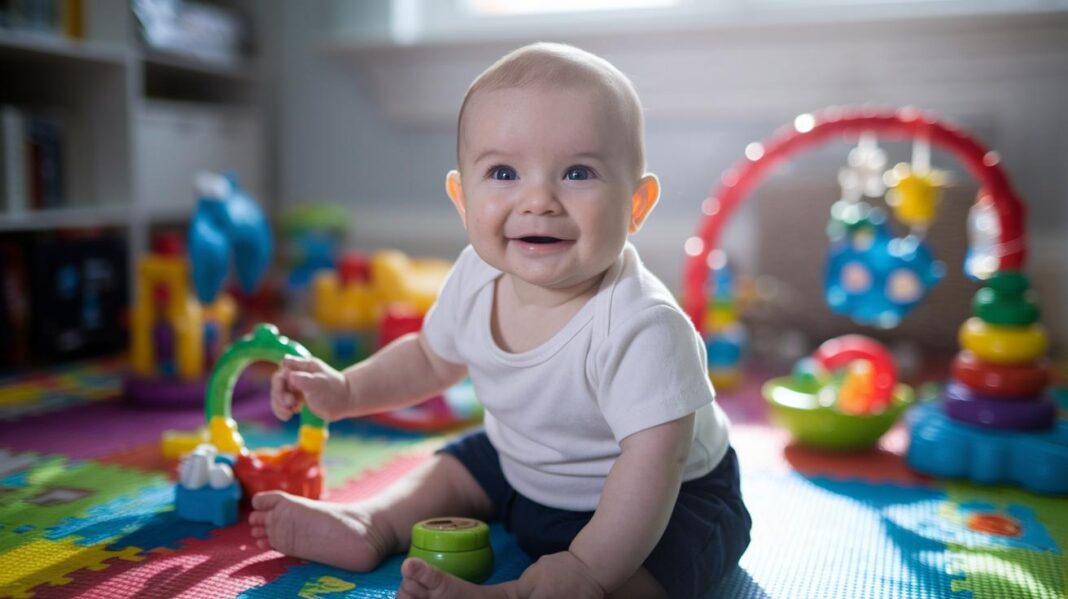
Have you ever noticed how fast your little one grows? At five months old, your baby begins to show movements that make your heart smile. You might see them rolling over, pushing up during tummy time, and even lifting both their head and legs.
These sweet milestones show that your baby is building muscle and learning how to coordinate their body. And when you catch those early babbles and bright smiles, it feels like your baby is ready to explore even more.
It’s moments like these that bring comfort, knowing that your little one is thriving every day.
5-month old milestones: Baby Thriving Now
By five months, you might be seeing some sweet, exciting changes in your baby. Around 22–26 weeks, little ones often start to roll over during tummy time, pushing up on their elbows or forearms, and even lifting their legs and head together. These movements are signs of growing muscles and better coordination. You might also notice your baby becoming more alert, eagerly reaching for toys with bright colors and distinct patterns, and gifting you those heartwarming social smiles.
Sleep and feeding become comforting routines now. Your baby typically gets about 14–16 hours of sleep each day, usually around 11–12 hours at night with a few naps during the day, and feeds 4–6 times, matching those little hunger spurts of rapid growth. Even early communication is budding, with those adorable babbles and coos hinting at the start of language exploration.
- Physical Skills: Rolling over during tummy time and lifting both head and legs.
- Sleep and Feeding: About 14–16 hours of sleep with 4–6 feeds a day.
- Early Communication: Simple babbling, like “baba” and “gaga,” starting to emerge.
- Visual and Social Engagement: A growing interest in colorful toys and warm social smiles.
It’s really wonderful to keep an eye on these little milestones. They reassure you that your baby is thriving and quietly building the skills for even more interactive adventures ahead. And remember, these changes are all part of a natural and loving journey, each day brings a small, encouraging step forward.
Physical Development Milestones at Five Months
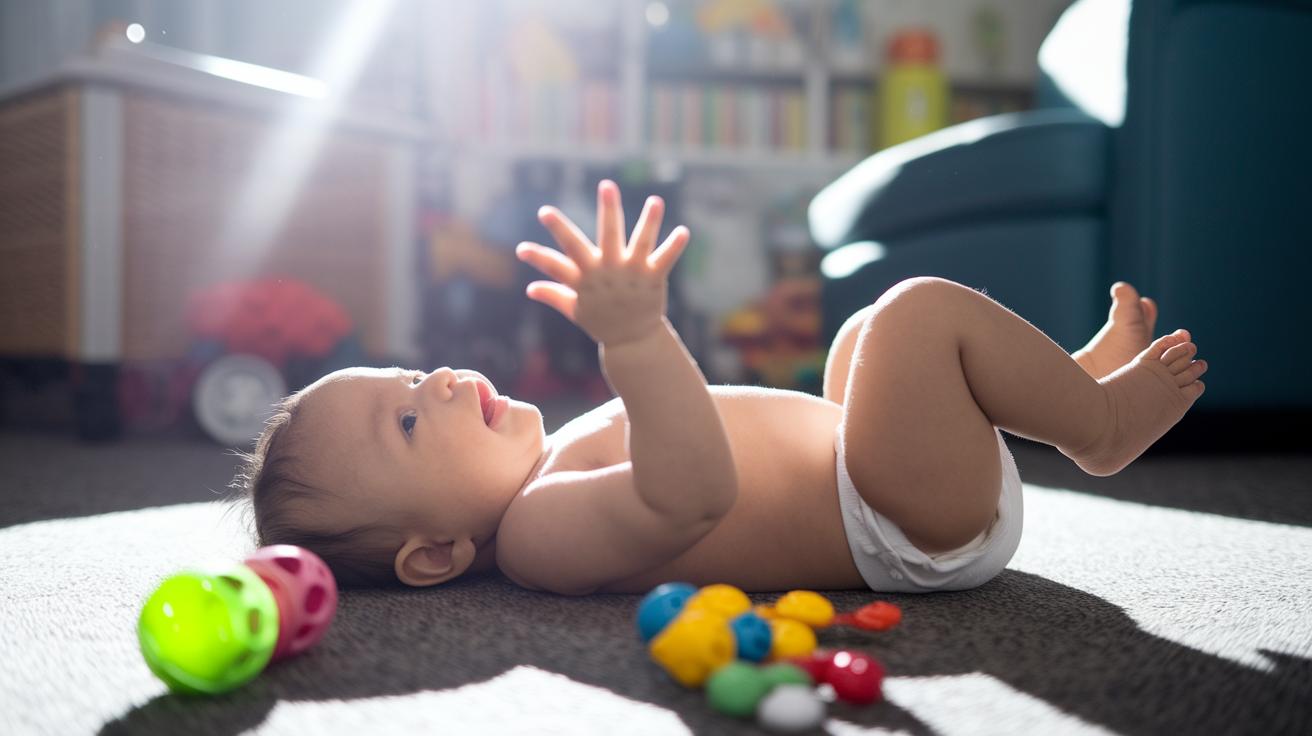
At five months, your baby is showing off some new muscle strength. During tummy time, you might notice them using their forearms to push up, rolling over, or even lifting their head and legs. These little moves are signs that their neck and tummy muscles are getting stronger. Each wiggle and roll builds up to sitting with a bit of help later on.
| Milestone | Typical Age Range | Observation Tip |
|---|---|---|
| Forearm push-ups | 20–24 weeks | Place a toy in front |
| Roll over | 22–26 weeks | Supervise on a soft surface |
| Head/leg lift | 21–25 weeks | Encourage during tummy time |
| Sit with support | 24–28 weeks | Use a pillow cushion |
You can try simple exercises to help build those muscles even more. For example, gently placing a favorite toy just out of reach encourages them to stretch and move a little further. And by supporting their head or giving a little cheer during those forearm push-ups, you make tummy time fun and full of little victories. These playful moments help boost both strength and balance, letting you enjoy every milestone along the way.
Cognitive and Sensory Growth in Month Five
At five months, your little one begins to explore their body in such a sweet and playful way. They reach out to touch, grab, and even bring objects to their mouth to feel the different textures and shapes. Every time they try to pick up a toy, it’s a sign of growing hand-eye coordination and a blossoming curiosity about the world around them. Watching them hold a soft, cuddly toy close to their face is pure magic and shows just how independent they're starting to become. It’s little moments like these that bring so much joy every day.
Their eyes are growing sharper too. Now, babies can follow moving objects with more focus and are drawn to bright, bold colors. Whether it’s a toy that wiggles or a piece of patterned cloth, these visual delights help them start to understand different shapes and designs. Each time they fixate on something interesting, it’s a clear sign of their growing brain power. It’s amazing to see how their hands and eyes work together as they explore, setting the stage for even more exciting discoveries ahead.
Social, Emotional, and Early Language Cues at Five Months
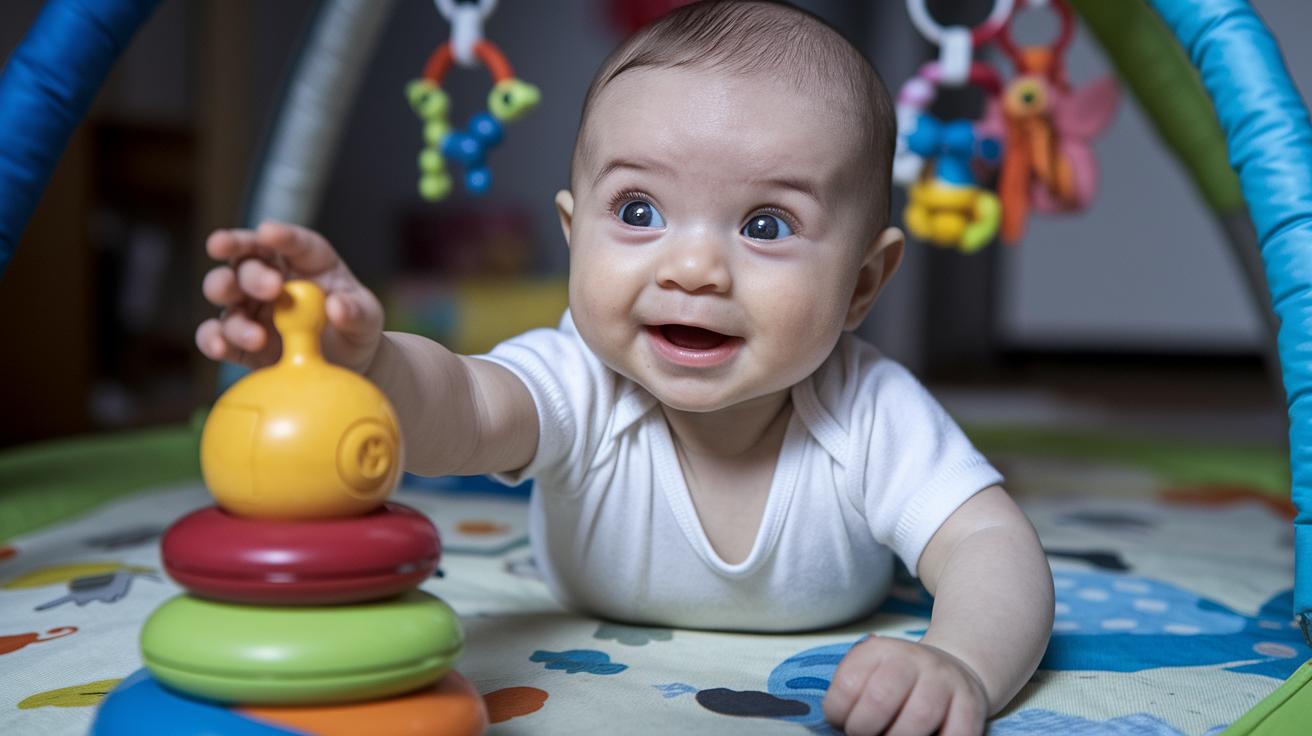
At five months, your baby looks right at you with big, caring eyes and sometimes smiles like they're greeting an old friend. These moments, like a playful peek-a-boo, bring a warm connection that lights up both of your worlds.
Babbling is turning into a fun way to chat. You might hear simple sounds like "da," "ma," and "ba," along with soft coos that add a little melody to their day. Every little sound is a step in learning how to share feelings without words. It helps them play with their voice, setting the stage for understanding language later, much like the tips in our language development milestones. Enjoy watching your baby experiment with these playful sounds, and feel free to join in with soft, tender responses.
Sometimes, you might notice a small frown or extra fussiness, especially when teething brings sore gums and a bit of drool. These changes are little signals that your baby’s emotions are starting to bloom. They remind you that, just like us, babies have ups and downs as they grow. Embrace these moments as gentle clues to the expanding world of their feelings.
Monitoring Progress and When to Seek Guidance for 5-Month Milestones
Going for routine pediatric checkups at 2, 4, and 6 months is a gentle way to see how your baby is growing. During these visits, your doctor will notice little steps like your baby reaching for a toy or smiling back. It also gives you the chance to ask any questions if you spot changes in your baby's development.
Sometimes, certain signs might mean it's time to talk with your doctor. Have you ever noticed if your baby isn’t reaching for toys during play, isn’t making eye contact or smiling back at you, can’t push up on their arms during tummy time, or isn’t making soft, cooing sounds when you interact? These might be hints that a little extra attention could be needed.
At home, you can easily keep an eye on how your baby is doing. Take a few quiet moments each day to watch how they interact with their world. If you see that your baby isn’t reaching for toys or isn’t reacting to your smiles, it might be wise to bring it up at your next well-child visit. Remember, these small observations can help catch any issues early on.
Final Words
In the action, we explored key baby developments. The post reviewed physical skills like rolling and head lifts, sleep and feeding routines, early communication cues like babbling, and visual and social engagement through smiles and color interest.
We also touched on muscle-control exercises and tracking routine observations. Keeping an eye on 5-month old milestones can help guide simple home exercises and timely checks with your pediatrician. It’s amazing to see these small steps adding up to a strong start in your baby’s growth!
FAQ
What should a baby be doing at 5 months?
At 5 months, a baby is expected to roll over during tummy time, lift their head and legs, start babbling, and show interest in bright colors and patterns as part of their growing motor and social skills.
What are some key milestones on a 5-month-old checklist?
A 5-month-old checklist includes rolling over, improved sleep and feeding routines, early babbling, and engaging visual and social behaviors like smiling and eye contact during play.
What fine motor skills should a 5-month-old have?
By 5 months, a baby shows emerging fine motor skills by reaching for toys, grasping objects, and using both hands to explore, coordinating their eyesight with hand movements.
What activities help support a 5-month-old’s development?
Engaging a 5-month-old with tummy time, colorful toys, peek-a-boo games, and gentle talking encourages physical strength, hand-eye coordination, and social interaction during this key growth phase.
What do CDC guidelines say about 5-month-old milestones?
CDC guidelines note that at 5 months, babies should show rolling, babbling, and social smiles. Routine pediatric visits help monitor these developmental benchmarks to ensure healthy progress.
How do milestones vary from 3 to 7 months?
Development varies as babies progress: 3-month-olds develop basic head control, 4-month-olds start rolling, 5-month-olds build muscle strength and communication, 6-month-olds may sit with support, and 7-month-olds become more curious and active.