Have you ever stopped to wonder if a simple chat with your child could shape their future? Research from the University of North Carolina found that the everyday words you share can really boost a child's language skills.
Imagine talking with your little one during breakfast, playtime, or bedtime. It might seem like nothing special at first, but these quiet moments lay a strong foundation for growth.
Let's explore together how your kind words guide your child's development and why these small, comforting chats matter so much.
Essential Elements of Parental Influence on Language Development
A study from the University of North Carolina took a close look at how parents chat with their 2- to 3-year-olds at home. Researchers spent time observing daily play and conversations, and a year later, they checked how the children were doing with language. They discovered that the number of words and the mix of words parents use can really help predict a child's language scores later on. It turns out that when dads use lots of different words during play, it gives their little ones a great boost. Moms, while their variety of words was a bit less of a predictor, still played a big role thanks to their warm and caring responses. It really shows that everyday chats, just talking while feeding, playing, or reading, can make a big difference in building strong language skills.
Here’s what really matters:
- Quantity: This is all about how many words you speak with your child during your daily routines. Think about that lively conversation during mealtime, it all adds up to help them pick up listening and speaking skills naturally.
- Quality: Here, it’s the variety and richness of the words that count. For example, when a dad says, “Look at the bright blue sky and soft, green grass,” it paints a clear picture for the child, broadening their vocabulary one pretty image at a time.
- Responsiveness: This is about how you react during your interactions. Simple gestures like nodding, smiling, or asking a quick follow-up question make your child feel heard and valued. And when they feel that, they’re more likely to chime in and keep the conversation going.
Each of these elements, how much you speak, the colorful words you choose, and that loving responsiveness, work together to nurture your child’s language. It’s amazing how those little moments can build big skills over time.
Research Insights on Caregiver Communication Impact
Did you know that simple chats with your little one really count? Researchers found that everyday conversations can help your child learn language better. One study at UNC recorded fun interactions between 2-year-olds and their parents at home. They looked at natural play and friendly talk to see how it affects language skills one year later.
Another study from Vanderbilt discovered that when parents take a lead in talking and guiding, it makes a big difference for children with challenges like autism (ASD). Families who share a rich mix of words with their children see stronger speaking skills by age 3 than kids who only hear words from childcare providers.
These findings show us that our daily words with our kids help boost their early language learning and overall speech.
| Study | Participants | Main Finding |
|---|---|---|
| UNC Study | 2-year-olds and their parents | Playing together with varied words leads to better language scores |
| Vanderbilt Research | Children with ASD and developmental delays | Parent-led speech helps boost communication |
| Family Language Input | 3-year-old children | Everyday family dialogue is more effective than non-family childcare |
All this research tells us that chatting with our children in everyday routines makes a real difference.
Parental Communication Styles Shaping Early Vocabulary Growth
Every day, little chats help toddlers try out new words while building both listening and speaking skills. Studies now show that even a bit of eye contact or a friendly hand wave can boost how they understand language. You might be surprised to learn that in one study, babies whose parents paired words with lively gestures reached language goals faster.
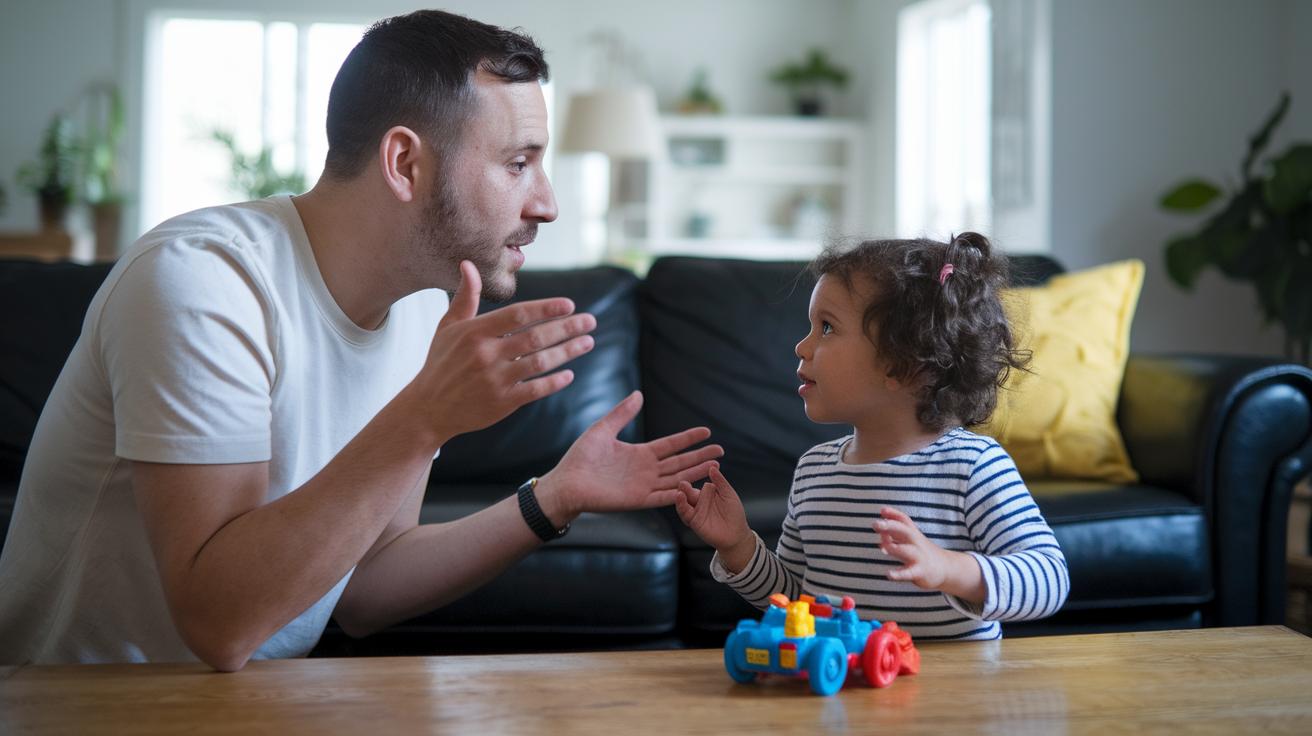
Dads play an important role in this learning journey. Research from UNC shows that when dads combine clear, varied language with simple gestures, it helps kids connect words with their meanings. Imagine a dad saying, "That red ball bounces high as you laugh," while pointing at the ball. This friendly way of talking not only adds new words to a child’s world but also shows how facial expressions and hand movements can keep a conversation fun and natural.
Moms are just as amazing. With gentle words, warm smiles, and light touches, they invite their little ones to join in the conversation. Studies looking at families from many different backgrounds tell us that these caring signals help kids know when it's their turn to speak and support early language growth. Think of a mom softly asking, "See the soft, fluffy bunny?" while nodding, encouraging her toddler to share their own thoughts.
| Parent | Verbal Engagement | Nonverbal Cues |
|---|---|---|
| Dads | Clear, varied words | Pointing and animated gestures |
| Moms | Soft, inviting phrases | Warm smiles, nodding, gentle touches |
Using clear words alongside friendly gestures creates a warm and interactive space that helps toddlers hit those language milestones.
Integrating Language-Promoting Routines at Home
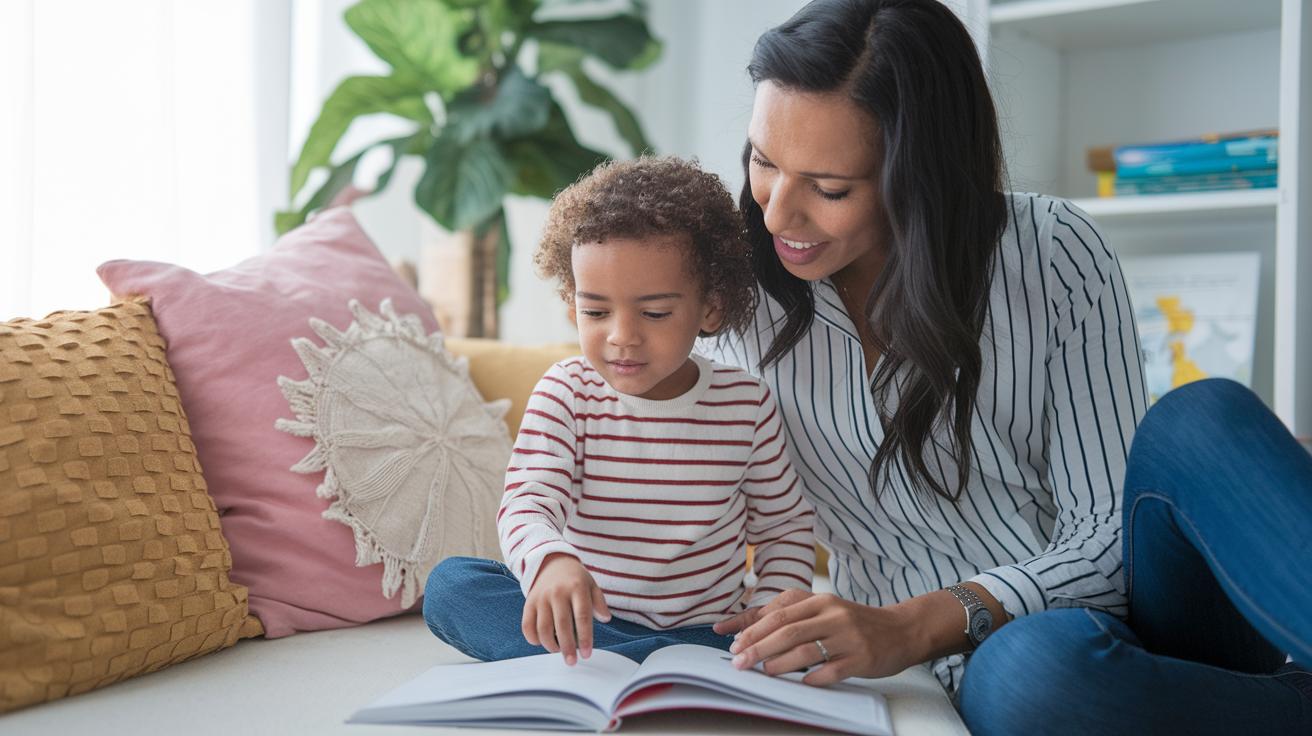
Everyday habits can really help kids learn new words when you add little touches to their environment. Instead of sticking with the same old methods, try marking special spots, like a small reading corner with soft light and bright decorations. While playing, you might ask, "What colors do you see in your room?" This gentle question helps boost both language and observation skills without feeling forced.
At mealtime, use your surroundings to spark fresh talks. Instead of asking the usual questions, try something new like, "What sounds do the utensils make?" or "How does your food look today?" These fun questions not only build vocabulary but also invite sensory experiences linked to everyday moments.
At bedtime, turn reading into a lively, interactive session. You could use shadow puppets or calm background music and ask, "How does that sound make you feel?" This mix of storytelling and play helps develop narrative skills while creating a relaxing, sensory-rich end to the day.
Stick with these friendly ideas day after day. Whether you're at the table, during play, or in a cozy corner, these simple cues naturally teach your child to observe, describe, and engage with the world around them.
Collaborative Strategies with Speech-Language Therapists for Developmental Support
Working hand in hand with a speech-language therapist (SLT, a professional who supports speech development) can truly boost your child’s progress. When you join forces with your SLT, setting goals together, swapping helpful ideas, and staying flexible during everyday routines, it feels just like a warm team effort. Imagine planning a family dinner where everyone brings their favorite dish; every little bit adds up to a nourishing time that strengthens your child's speech skills. I once heard a parent say, "I tweaked our playtime chat to match my child's mood and, with the SLT's advice, our approach changed everything."
In your everyday life, look for chances to mix therapy ideas into regular activities. A simple chat over a snack or a stroll in the park can turn into a natural practice session for speech. When you gently add the tips suggested by your SLT, learning happens in familiar, comfy settings, making speech practice feel fun and becoming part of your busy day. For example, while reading a story, you might ask, "What do you think happens next?" to keep the chat lively.
Teletherapy is another handy way to connect with your SLT. Virtual sessions work well when you add in visual tools like flashcards or a small whiteboard at home. This not only gives your child more chances to join in actively but also helps you feel more confident in guiding their communication, turning therapy into a shared, everyday journey.
Measuring Progress: Tracking Childhood Speech Milestones

Watching your little one learn to speak at home can feel like a warm surprise each day. It’s a simple way to see them growing in how they share with you. Keeping a little log of these moments not only helps you notice exciting changes but also gives you handy notes to share with a doctor if needed. Plus, seeing those first words pop up is just magical.
At about 6 to 8 months, your baby starts playing with sounds. They might make gentle coos and repeat little syllable sounds, kind of like humming a soft tune before words take shape.
Around their first birthday, many children begin saying words like mama or dada. It’s amazing how these simple words start to express their needs and feelings, adding a special touch to family moments.
By 18 months, you might notice that your child’s word list grows quickly, almost like a tiny language explosion! They begin to recognize and name playthings, food, and other everyday objects with delight.
At 2 years old, many toddlers mix two words together. You could hear phrases like more juice or big truck, little hints that their language skills are blossoming even more.
When they’re about 3 years old, many kids start forming simple sentences and asking easy questions. It’s a clear sign that they’re developing their ability to share thoughts and connect with you in deeper ways.
Final Words
In the action, we explored how everyday conversations shape a child’s early language skills. The study from the University of North Carolina shows that quality and quantity in speech along with soothing responsiveness make a difference. We looked at practical routines, research findings, and tips from speech-language experts. All these insights reinforce the role of parental influence on language development. It’s encouraging to see how daily interactions can boost growth and create lasting bonds between parent and child. Stay positive, keep talking, and enjoy each moment together.
FAQ
Parental influence on language development pdf
A PDF on parental influence on language development explains how caregivers’ active speech and interaction guide children’s early language skills with research examples and practical tips for boosting vocabulary and communication.
Parental influence on language development examples
Examples of parental influence on language development include engaging in daily conversations, reading together, and modeling diverse vocabulary to help children build robust language skills and improve their communication.
Parental influence on language development essay
An essay on parental influence on language development explores how quality verbal input and responsive interactions support early learning by shaping a child’s vocabulary, communication abilities, and overall developmental outcomes.
Parents’ role in language development pdf
A PDF on parents’ role in language development offers research findings, practical guidance, and illustrative examples that show how caregivers can support and boost early language skills through everyday interactions.
Effect of parent interaction on language development in children
The effect of parent interaction on language development in children is seen when engaging, diverse verbal input and responsive behaviors promote vocabulary growth, clearer speech, and stronger overall communication skills.
What is language development
Language development is the process during which children learn to understand, produce, and expand their vocabulary through listening, conversation, and daily interactions that build effective communication skills.
Early language development is so important because
Early language development is important because it forms the base for learning, improves social interactions, and sets the stage for future academic success by nurturing how children communicate and understand the world.
Google Scholar
Google Scholar is an online service that provides access to scholarly articles, research papers, and studies, including many that examine parental influence and strategies for boosting language development in children.
How do parents influence language development?
Parents influence language development by engaging in regular, meaningful conversations, offering diverse vocabulary, and providing responsive feedback that encourages children to practice speaking and build language skills.
Is a parenting factor related to language development?
A parenting factor, such as the quality of caregiver interactions, is related to language development as it supports effective communication and helps children learn and practice new words in daily contexts.
What are the five factors that influence language development?
The five factors influencing language development include the amount of speech, vocabulary diversity, responsiveness, conversational turn-taking, and engaging language routines that collectively enhance a child’s communication skills.
How does parental influence affect child development?
Parental influence affects child development by shaping communication skills, encouraging cognitive growth, and fostering social interactions through regular, supportive conversations and interactive language-driven activities.