Have you ever thought about why your baby's first meal is so special? Breast milk isn’t just food, it’s a natural bundle of power that grows with your baby. In the beginning, colostrum (that first, special milk) is rich in protein, giving your little one a strong start and helping build their defenses. Then, as your baby grows, regular breast milk offers a steady, balanced mix of nutrients to keep up with their changing needs. Nature has designed it just right to help your baby thrive from day one.
How much protein in breast milk: Amazing Facts

Colostrum is the very first milk your baby gets. It comes packed with protein, about 2.0 to 2.5 grams per 100 mL, to help kick-start growth and boost natural defenses. Think of it as a powerful starter pack, full of essential nutrients for those precious early days.
A few weeks in, breast milk changes into what we call mature milk. This milk usually has around 1 gram of protein per 100 mL, sometimes ranging from 0.9 to 1.2 grams. In an 8-ounce cup, that works out to about 2.4 grams of protein. It’s normal for protein levels to vary a bit from one mom to another and change as your baby’s needs grow.
Protein makes up roughly 6% of the total calories in mature milk, giving your baby energy and supporting growth. Breast milk has two main types of protein: caseins and whey. Caseins provide the important building blocks (amino acids) and help move minerals like calcium and phosphorus to your little one. Whey proteins, such as lactoferrin and alpha-lactalbumin, lend a hand to the immune system and help with nutrient absorption. This balance makes breast milk the perfect, natural food for your baby.
Protein Levels Across Lactation Stages in Breast Milk

It's pretty amazing how breast milk changes to meet your baby's needs. In those first few days, colostrum is super rich in protein to help your little one grow and build a strong immune system. Colostrum (days 1–3) carries about 2.0 to 2.5 g of protein per 100 mL. Then, as milk transitions (days 4–14), the protein content drops to roughly 1.4 g per 100 mL. Once the milk matures (after day 14), it usually offers around 0.9 to 1.2 g per 100 mL. Isn't it wonderful how nature adjusts to support your baby's changing needs?
| Stage | Protein per 100 mL (g) | Protein per 8-oz Cup (g) |
|---|---|---|
| Colostrum | 2.0–2.5 | 4.7–5.9 |
| Transitional | ~1.4 | ~3.3 |
| Mature | 0.9–1.2 | 2.1–2.8 |
The table shows a clear pattern: as your baby grows, the protein in the milk gently decreases. This means that in the early days when extra protein is needed, colostrum is there to help. Later, the milk adjusts so your baby gets just the right amount to keep growing strong without overloading their tiny tummy. Really, it’s a thoughtful process that makes every feeding special.
Understanding Breast Milk Protein Composition: Casein and Whey

When you look at human milk, you'll see it has two main types of proteins: whey and casein. In the first weeks after birth, about 60% of the proteins are whey, which helps kickstart your baby's digestion and immune system. As time goes on, the mix settles into an even 50:50 balance, matching your baby's changing needs perfectly.
Whey proteins include helpers like lactoferrin, α-lactalbumin, and immunoglobulins. These little proteins boost your baby's natural defenses, helping to fight off germs and absorb important nutrients. Meanwhile, casein provides essential building blocks, amino acids, and also helps carry key minerals such as calcium and phosphorus, which are crucial for growth.
This careful mix of whey and casein makes it easier for your baby to digest the milk and enjoy all its benefits. Think of it like a well-loved family recipe where each ingredient works together to support overall health while nurturing a strong immune system. Every sip is like a nourishing hug for your little one.
Comparing Protein in Breast Milk vs Cow’s Milk
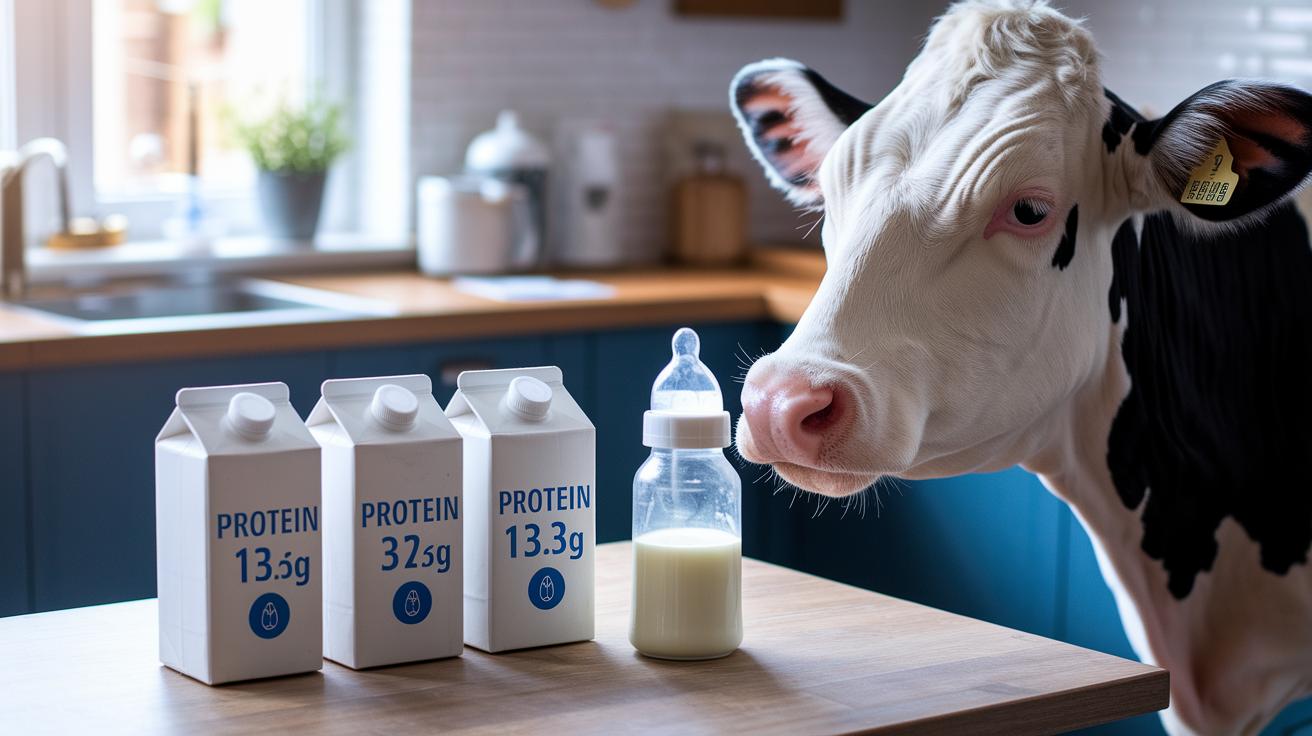
Cow’s milk packs about 3.3 grams of protein in every 100 mL, while human milk only offers around 1 gram for the same amount. This big difference in numbers helps explain why cow’s milk can be harder for little ones to digest. It’s a bit like comparing strong building blocks that might be too tough for a baby’s tender start.
The mix of whey and casein proteins also changes the story. Human milk has about 60% whey and 40% casein, making it gentle on a baby’s tummy. On the flip side, cow’s milk has roughly 20% whey and 80% casein, which might be a lot for a baby’s delicate system. Think of it as a smoother, kinder blend that’s just made to support a baby’s early growth.
Human milk also comes loaded with special proteins like lysozyme and lactoferrin. These helpers boost the immune system and make sure important nutrients are absorbed well. They work hard to create a safe, cozy space for a baby to grow and thrive.
Too much protein from cow’s milk can put extra strain on a baby’s kidneys, which aren’t quite ready for that kind of load. Human milk, with its balanced protein levels, supports healthy growth while keeping little organs comfortable. Isn't it amazing how the right balance makes all the difference?
Calculating Your Infant’s Daily Protein Intake from Breast Milk

When your baby is exclusively breastfed from birth to 6 months, they usually drink about 750 to 800 mL of milk each day. This helps give you a basic idea of just how much nutrition they’re getting. For more details on what typical feeding volumes look like, feel free to take a look at our guide to infant feeding by clicking here: guide to infant feeding.
Breast milk usually has about 1 gram of protein per 100 mL. So, if your little one drinks 750 to 800 mL in a day, that adds up to around 7.5 to 8 grams of protein daily. Of course, if your baby feeds more often or drinks larger amounts, they might be getting even more protein. It can be really useful to keep track of how much they consume to make sure they’re getting all they need for healthy growth.
Here’s an easy way to work out your baby’s protein intake:
- Find out the total amount of milk (in mL) your baby drinks each day.
- Multiply that number by 1 gram of protein per 100 mL.
- The answer you get is the total grams of protein your baby gets each day.
It’s really that simple. By using this method, you can feel more certain that your baby is on track with their protein intake. Plus, watching their growth and developmental milestones becomes a little less worrying when you know they’re getting the nutrition they need.
Factors That Influence Protein Levels in Breast Milk

Protein levels in breast milk shift as your baby grows. Right after birth, colostrum (that first, special milk) comes packed with extra protein to boost your baby's growth and help protect their tiny body. As your milk changes over time, the protein slowly drops to better match your baby's evolving needs. It's really amazing how nature adapts just for you and your little one.
What you eat plays a part too. A balanced diet rich in protein can help keep your milk just right for your baby. Taking a little extra care with healthy food choices shows how much you care. For more easy tips on eating well during pregnancy, check out our resource on pregnancy health diet. Your body works so hard, and a few mindful eats can make a real difference.
Staying well hydrated and feeding your baby when they’re ready is important as well. Drinking enough fluids can help maintain the perfect protein balance in your milk. And if there are special situations like a preterm birth or other health matters, your milk might adjust even more to give your baby just what they need.
Health Implications of Breast Milk Protein for Infant Growth

Protein in breast milk really helps your baby grow strong. It builds up muscles, helps organs develop, and gives their immune system a little boost to keep common bugs at bay. Imagine it as a gentle push that makes your little one a bit more resilient each day.
Every time your baby feeds, they’re getting just the right amount of protein, about 1.5 grams per kilogram of body weight. It’s pretty amazing how nature works, right? As long as you’re eating a balanced diet, healthy, exclusively breastfed infants rarely need extra supplementation. Each feeding is a tender moment that naturally helps them grow steadily.
Also, human milk comes with little helpers called bioactive peptides. Have you ever noticed how sometimes little things work quietly in the background? These peptides help your baby’s gut mature and protect them from infections, paving the way for a healthier future as they explore the world.
Final Words
In the action, this post walked through protein values from rich colostrum to balanced mature milk. It broke down the two main protein types, discussed differences from cow’s milk, and even showed how to calculate daily protein intake. Small sections explored what affects these levels and highlighted how these nutrients help support infant growth.
When you ask, how much protein in breast milk, think of it as part of a nurturing blend that supports healthy growth and well-being.
FAQ
What is the typical protein content in breast milk per 100 mL?
The typical protein content in mature breast milk is around 1 g per 100 mL, while colostrum has about 2.0–2.5 g per 100 mL to support newborns’ initial needs.
How much protein is in breast milk per liter?
Based on mature milk’s average, there is roughly 10 g of protein per liter since it contains about 1 g per 100 mL, offering the right balance for infant growth.
What are the calories per 100 mL in breast milk, and how is protein related?
Breast milk calories vary, but protein makes up about 6% of the total calories in mature milk, playing a small yet important role in overall nutrition.
Is breast milk made from blood?
Breast milk is not made from blood; it is produced in the mammary glands using nutrients from the mother’s blood to create a complete, natural food for the baby.
Is breast milk a good source of protein for infants?
Breast milk offers a well-balanced source of protein that meets an infant’s growth needs while fitting perfectly into their overall nutrition and digestive system.
Why do bodybuilders drink breast milk?
Some bodybuilders choose breast milk because it contains a mix of bioactive proteins and nutrients, although it is primarily meant to support the development of infants.
Is breast milk 100% milk?
Breast milk is a complete nutritional fluid designed solely for infants, providing the perfect mix of proteins, fats, and carbohydrates that change with the baby’s needs.
What is the 4 4 4 rule for breast milk?
The 4 4 4 rule generally refers to a feeding guideline that helps caregivers manage feeding frequency, volume, and timing to ensure infants receive balanced nutrition.
How is breast milk analyzed for its nutrient composition?
Breast milk analysis involves testing for protein, fat, and carbohydrate levels to understand its nutritional profile, which supports infant health and development.
What is a breast milk pump?
A breast milk pump is a device that helps mothers express and store milk so babies can be fed when direct breastfeeding isn’t possible, offering flexibility in feeding routines.